

 iscover
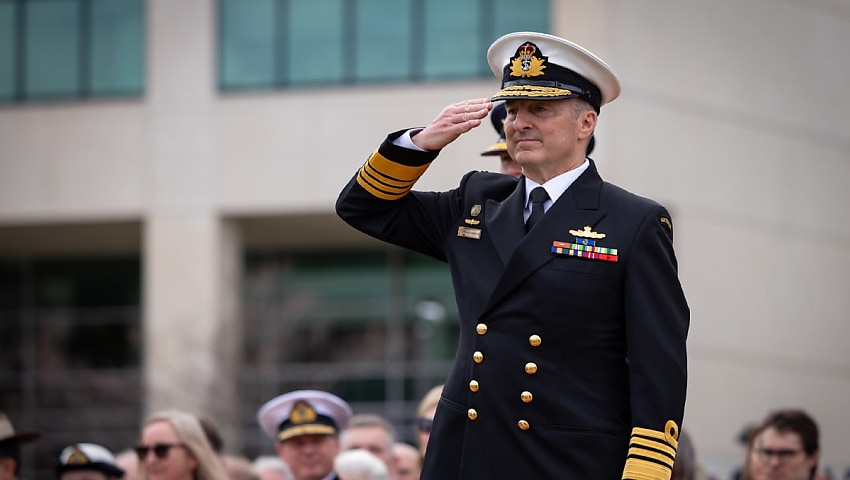
Chief of the Defence Force Admiral David Johnston AC has used an address to the ANU National Security College Conference to provide a clear-eyed assessment of the nation’s resilience, preparedness and need for enhanced preparedness in the face of mounting geopolitical tensions and competition.
As circumstances in the Middle East and Eastern Europe continue to deteriorate – posing a greater threat to Australia’s economic, political, strategic and social stability and security – the conversation about our national preparedness and resilience is becoming an increasingly public phenomenon.
No longer protected by our long celebrated “Tyranny of Distance”, average Australians are increasingly feeling the ramifications of events on the other side of the world, whether in empty supermarket shelves, delayed Amazon deliveries or more recently, in the back pocket as petrol price increases begin to bite.
In light of this, Chief of the Defence Force Admiral David Johnston AC has used an address to the 2026 ANU National Security College Conference, with this year’s event titled “Securing our Future: a ready and resilient Australia”, in which he unpacked the myriad of challenges facing Australia and Australians and the level of preparedness and resilience existing and which can be built up rapidly as the world around us burns.
ADML Johnston begins with what he described as “scene-setting” comments, saying, “We are characterised by a world that is more connected than ever before, which has brought us many benefits – economic growth, cultural exchange, rapid technological advancement and, of course, innovation.
“However, in an era of increasing uncertainty and conflict – and I would recognise that in the years of 2024 and 2025 the globe has experienced more state-on-state conflict than at any time since the end of the Second World War, so we are in a period of great uncertainty and conflict – that the interconnectedness that we enjoy also has serious implications for our national security.
“Almost every aspect of our day-to-day lives that we take for granted – the ability to commute to work, contact our friends and family around the world or, as in my household, order nearly anything to our door at the push of a button – is increasingly vulnerable to disruption or attack,” ADML Johnston said.
However, where Australia has fallen short in the past is the micro level of impacts of national security that have long been overlooked by average Australians and are now becoming part of the common lexicon and concerns raised from boardrooms to weekend barbecues.

ADML Johnston stressed this paradigm shift that is beginning to take place, saying, “National security is something that touches all Australians, whether they are conscious of it or not, and that reality makes public understanding, preparedness and resilience more important than ever before. These vulnerabilities extend across Australian society, business and communities.”
What is becoming increasingly clear is that the traditionally siloed approach to national security that characterises Australia’s discourse is no longer fit for purpose and is something that is, as ADML Johnston explained, a “prerequisite” but it will ultimately require a more direct, considered and honest conversation with the Australian public from the highest level down.
ADML Johnston added: “While national security may not be baked into the day-to-day lives of Australians in the same way as it is for people living in Ukraine or Taiwan, we are familiar with the concepts of resilience and preparedness.
“Every year, communities across Australia prepare for the fire and high-risk weather seasons. We make plans, we stockpile supplies and stay up to date on local conditions. We also have frank, practical conversations with our families and neighbours about what we will do if faced with an imminent threat from a natural hazard.
“We know and accept that emergencies are part of life on our continent, and that preparedness and resilience reduce harm and save lives. We also know that preparedness is not solely the job of government and emergency services – it is a responsibility we all share. When it comes to bushfires, we know and accept that preparedness and resilience cannot stop every disaster or prevent every loss. They are equally about how we respond, recover and rebuild after harm has occurred.
“The same logic can be extended to our national security resilience. It is a shared responsibility of everyone who calls Australia home,” ADML Johnston said.
Key to responding to this is the unique Australian experience of “living with risk” in the words of ADML Johnston, something that is inherent to Australian life but one that underpins the nation’s ability to resist shocks and navigate the challenges ahead.
ADML Johnston added: “Australians are used to living with risk, and our response is to prepare. National security requires the same mindset. Not fear or alarm, but readiness.
“When we talk about national resilience, security or defence, the word ‘national’ can be overlooked. We must remember that these are whole-of-nation issues that all of us are stakeholders in – government, industry, academia and our communities.”
Finally, reinforcing the importance of open dialogue with the Australian people, saying, “We must talk about the resilience challenges and issues Australia faces openly, and bring them into the public consciousness for a national discussion. Only through the cooperation and partnership of our entire nation will we be able to address these challenges and ensure a ready and resilient Australia.”

Want to see more stories from trusted news sources?
Make Defence Connect a preferred news source on Google.
Click here to add Defence Connect as a preferred news source.