

 iscover
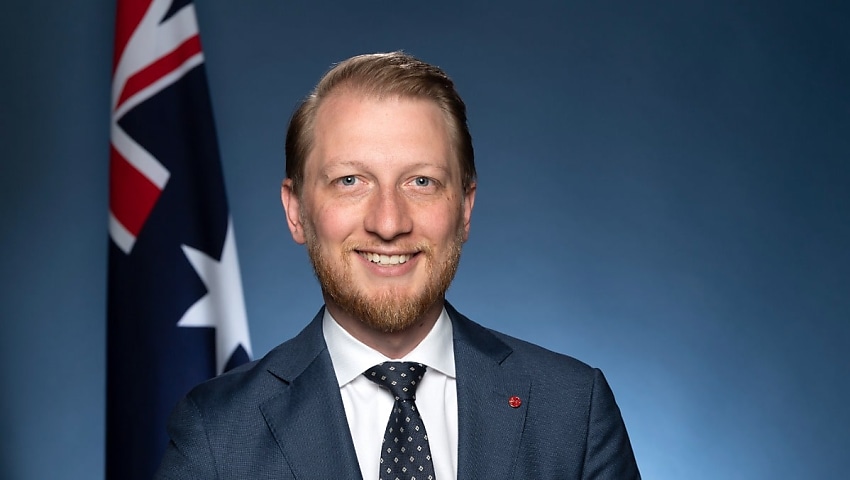
Shadow defence minister Senator James Paterson has launched a scathing attack on the government’s 2026 National Defence Strategy and Integrated Investment Program in his “National Defence Strategy in-Reply” address to the National Press Club.
In the sanitised corridors of Canberra, where “impactful projection” is traded like currency and “challenges” are never “problems”, a dangerous disconnect has formed between the strategic reality of the Indo-Pacific and the public’s understanding of it.
Recent, searing critique from the shadow minister for Defence has pierced this technocratic veil, echoing a sentiment growing among the nation’s military elite: Australia is sleepwalking into a decade of maximum peril, lulled by “weasel words” and a government more concerned with the optics of “stabilisation” than the cold mathematics of deterrence.
Shadow defence minister, Victorian senator James Paterson, articulated that at the heart of this analysis is a fundamental tension. He argued that the Australian government claims to be spending record amounts on national security, yet the nation’s most respected strategic minds, from Sir Angus Houston to Professor Peter Dean, warn that the current trajectory is insufficient.
“And while it is true that people like Sir Angus Houston, Professor Peter Dean, Jennifer Parker, Michael Shoebridge, and Peter Jennings were never members of an ERC, personally, I think their expertise is worth listening to with respect," Senator Paterson provocatively told the audience gathered at the National Press Club in Canberra.
He argued that the gap between political narrative and strategic necessity isn’t just a matter of parliamentary debate; it is a failure of “social licence” that may leave the Australian Defence Force hollowed out at the very moment it is most needed.
Recognising this seemingly lack of urgency, Senator Paterson, borrowing the blunt assessment by Deputy Chief of Army Major General Chris Smith, in his argument, posited that “managerial and advertising logic” has polluted the military profession. When “dangerous” becomes “uncertain” and “warfare” is obscured by “integrated investment programs”, the public loses the ability to gauge the stakes.
However, this is more than a stylistic gripe.

In a democracy like Australia, the Expenditure Review Committee (ERC) is the ultimate arbiter of national priorities. If the public does not feel the “heat” of the strategic environment, if they are told that international relationships are “stabilised” while the PRC builds its largest peacetime military in history, the political will to fund Defence at 3 per cent of gross domestic product (GDP) will never materialise. Against the immediate, tangible needs of health and housing, a “vague” threat will lose the funding battle every time.
Senator Paterson stated: “If impenetrable and inaccessible language is a problem in the profession of arms, it’s an even bigger problem in the profession of politics. We are all guilty of it. We use clunky and vague language like ‘impactful projection’ which means absolutely nothing to normal Australians. We use weasel words like ‘uncertain’ when we really mean dangerous.
“We use technocratic phrases like this statement from the recent National Defence Strategy (NDS): ’The government will progress these priorities in line with other strategic and enterprise level reforms to ensure the Defence portfolio is agile, efficient, effective and has the requisite structures, processes, priorities and culture to deliver its mission’,” he added.
Adding further to this pointed critique, Senator Paterson said: “The main reason why it is so hard for Defence ministers to get a dollar out of the ERC is because we have collectively failed to earn and sustain the social licence for the defence spending we need to protect our country. Against other worthy causes – some of which are more politically popular – defence keeps losing out.
“If the Australian public knew how likely conflict is in our own region in the near future, and how ill-prepared we were for it, they would be marching in the streets demanding higher defence spending,” he added.
This leads into Senator Paterson’s concerns about a glaring comparison between the Australian and American systems. In Washington, military leaders regularly testify before Congress with a level of candour that would be considered heretical in Canberra. Australian voters, it is argued, often find more honest assessments of their own region’s threats from US open-source intelligence than from their own ministers.
The analysis points to a worrying trend of “cosy bipartisanship”, a conspiracy of silence where both major parties avoid “ruffling feathers” or scaring the electorate. The call for an annual, unclassified threat assessment from the chief of the Defence Force or the director-general of National Intelligence mirrors the successful model pioneered by the Australian Security Intelligence Organisation’s Mike Burgess.
By treating the Australian public as adults capable of handling the “honest truth”, the government could build the literacy required to sustain multigenerational, multibillion-dollar projects like AUKUS, argued Senator Paterson.
This is particularly the case when it comes to rhetoric around levels of spending and, in particular the high-level figures, for example the $425 billion earmarked in the 2026 National Defence Strategy and Integrated Investment Program are used to, as Senator Paterson articulated, “lull” the Australian people into a false sense of security about the state of our national defence spending.
Senator Paterson cited that AUKUS as the prime example of this, arguing that while AUKUS is the undisputed “crown jewel” of Australia’s future strike capability, it presents a mathematical nightmare.
The shadow minister’s analysis characterised AUKUS as effectively starting a “fourth service” in terms of cost and complexity. However, the Albanese government is accused of trying to deliver this “future capability on a pre-AUKUS Defence budget”.
The consequences of this “cannibalisation” are already visible. To pay for the stealth of the Virginia Class submarines, the government has been forced to “de-scope” or defer immediate capabilities:
- Land forces: Cuts to infantry fighting vehicles and self-propelled howitzers.
- Airpower: The cancellation of the fourth squadron of F-35s.
- Space and sea: Reductions or “rescoping” of military satellites and the Hunter Class frigate program.
This creates what Senator Paterson argued, a very real “capability gap” in the late 2020s; the very window that many analysts believe conflict is most likely. While the “strategy” of the 2024 and 2026 national defence strategies is broadly supported, the “funding” is seen as a shell game. Reclassifying military pensions to reach a 2.8 per cent or 3 per cent GDP target in line with NATO standards is dismissed as an “accounting trick” that does nothing to increase the number of missiles in the magazine or drones in the air.
“Pretending we are now spending 3 per cent of GDP isn’t going to fix it ...The Albanese government’s claim Australia now spends 2.8 per cent of GDP on NATO measures, rising to 3 per cent in the early to mid-2030s, was explained by a single sentence in the National Defence Strategy and Integrated Investment Program. The same sentence. No table. No detailed breakdown. No raw numbers. Just one sentence of narrative,” Senator Paterson said.
He detailed: “Australia’s task is to contribute to a credible, collective deterrent effort to prevent conflict in our region, and to be able to defend our interests if we fail to prevent it. Our current levels of defence expenditure are not sufficient to achieve that. We must invest much more, and more quickly, to be more self-reliant and less dependent on the US or anyone else.”
Going further, Senator Paterson argued: “Defenders can use cheaper and more numerous drones and missiles to hold at risk and even destroy billion-dollar platforms, as Ukraine has powerfully demonstrated by sinking Russia’s Black Sea fleet with maritime drones.”
Leading me to Senator Paterson’s most provocative call in response to the ongoing regional and global strategic reset, calling for the nation to look beyond the current plan to fill the strike gap. Drawing lessons from Ukraine and Iran, the analysis highlighted the power of asymmetry. If a middle power like Australia cannot match a great power hull for hull, it must use technology to create “doubt”.
Paterson added: “We are a middle power in a tough neighbourhood dominated by a major power with far greater conventional military capability than we can ever hope to field. But we can embrace the same philosophy of asymmetry to cause them doubt about putting our interests at risk.”
While the “Ghost Shark” and “Ghost Bat” autonomous platforms are welcomed, the critique suggests they are insufficient for the tyranny of distance Australia faces. This leads to the re-emergence of a controversial proposal: the B-21 Raider.
However, contrary to much of the criticism currently swirling, the suggestion is not a demand for an immediate purchase, but a plea for the government to stop “behaving as though we have more warning time than ever”. If the US is willing to share its nuclear submarine technology, the “crown jewels” of its Navy, then a conversation about its most advanced bomber should no longer be off the table.
Ultimately, Senator Paterson’s analysis serves largely as a rejection of the status quo.
It argued that the “national interest” is poorly served by a government that hides behind “anodyne talking points” while the regional order frays. The mention of Filipino fishermen facing water cannons in the South China Sea serves as a grim reminder: the rules-based order isn’t just on “life support”, in parts of our region, it has already flatlined.
To “hand over the sovereign liberal democracy to the next generation”, the Australian political class must find the courage to be honest. If conflict is as likely as the intelligence suggests, the public deserves more than a single sentence of narrative in a budget paper. They deserve a clear-eyed accounting of the costs of peace, and the even higher costs of being unprepared for its end.

Want to see more stories from trusted news sources?
Make Defence Connect a preferred news source on Google.
Click here to add Defence Connect as a preferred news source.