

 iscover
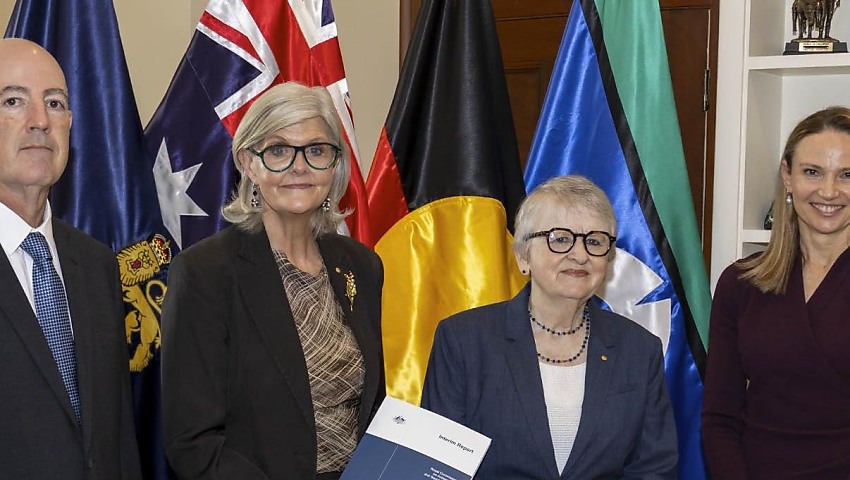
The interim report of the Royal Commission on Antisemitism and Social Cohesion has been released with some noticeable disappointment from the national security community.
The report was handed down earlier this week, examining the circumstances surrounding the Bondi Beach terror attack committed by two ISIS-inspired Australian citizens and resulting in the deaths of 15 people at Jewish Hanukkah festival in December 2025.
Former High Court judge, the honourable Virginia Bell, made 14 recommendations (five of which remain confidential) to the federal government in the interim report produced by the inquiry established following the Bondi Beach terrorist attack in December.
Among the recommendations are: that the procedures adopted by NSW Police in respect of Operation Jewish High Holy Days should apply to other high-risk Jewish festivals and events (particularly public-facing ones); that the counter-terrorism coordinator’s role be made full-time; that the National Security Committee members, including the prime minister, participate in counter-terrorism exercises within nine months of each federal election; and that the Commonwealth, states and territories roll out an updated and consistent National Firearms Agreement, and implement the proposed National Gun Buyback Scheme.
Prime Minister Anthony Albanese has confirmed that all recommendations relevant to the Commonwealth would be implemented.
“Terrorism remains a persistent threat to not just Australia, or the United Kingdom, but to international security more broadly. Nobody expected Thursday’s interim report to provide explosive revelations or to declare that any specific department or agency was solely responsible for an ‘intelligence failure’, and this is reflected in the report,” said Dr Levi West, an Australian National University Research Fellow and former director of terrorism studies at the Australian Graduate School of Policing and Security, speaking in an opinion piece with The Australian newspaper.
“As it states, ‘no issue requiring urgent or immediate action has been identified’. This reflects an unfortunate reality that Australia will have to come to terms with. Terrorism is never defeated.
“The violent ideologies that inspire and motivate terrorists endure. And the threat is always adapting to its operating environment … Counter-terrorism has, will, and must continue to play a key role in the Australian national security apparatuses. The questions that confronts political leaders and heads of services and departments are questions of resource allocation and threat prioritisation.

“What the interim report does note is that ‘the proportion of funding allocated to counter-terrorism significantly declined across the NIC (National Intelligence Community) over the period from 2020 to 2025’.
“Hopefully, the final report will provide a formal record of how the alleged terrorists came to be radicalised, how their operation was planned and what, if anything, they were accessing in terms of terrorist propaganda. What matters next is that the balance of the commission’s work, and in part the trial of the alleged terrorist, articulate the how and the why. Not to apportion blame, but to help the public, and history, understand.
“The interim report is an initial effort at addressing some of the more urgent and operational aspects of the commission. While there is legitimate and substantial public interest in the findings, the final report will hopefully provide much greater detail in relation to the attack itself, the lead-up, and clarity in relation to the alleged terrorists’ motivation.
“Terrorism remains, thankfully, a rare event. When it does happen, the single most important thing we can do is to identify and learn the right lessons from it.”
The interim report noted that no material or advice from any relevant intelligence and law enforcement agency that shared its views with the inquiry has identified any gap in the existing legal and regulatory frameworks that impeded the ability for law enforcement, border control, immigration and security agencies to prevent, or respond to, an attack of the kind that occurred at Bondi on 14 December 2025.
Moreover, it continued, no Commonwealth or state intelligence or law enforcement agency has suggested that it was prevented from taking prohibitive actions before or on 14 December 2025 by the then-current legislative and authorising framework.
Australian independent politician Andrew Gee was quick to point out that the document “feels like governments are basically exonerating themselves from any blame or wrongdoing”.
“What we really wanted was answers to the tough questions. How did known extremists get access to licensed firearms when one of them was effectively on a watch list (and) why were red flags missed after overseas trips?” he said.
“Sadly, the interim report doesn’t address these questions or the deeper issues around anti-Semitism. Instead, a lot of the report is dedicated to government gun reforms.
“I spoke and voted against the gun reforms as I believed they were just a knee-jerk political reaction which distracted from an examination of the real issues behind this atrocity. It is deeply troubling to see the government cracking down on law-abiding gun owners, while failing to explain how actual terrorists slipped through the cracks.
“The report says ‘no issue requiring urgent or immediate action has been identified’ yet the government still rushed through these gun laws. Criminals and terrorists aren’t going to be handing in their guns as part of a buyback. And how about tackling the issue of illegal and unregistered guns?
“I’m hoping final report actually provides the answers we all deserve.”

Want to see more stories from trusted news sources?
Make Defence Connect a preferred news source on Google.
Click here to add Defence Connect as a preferred news source.