

 iscover
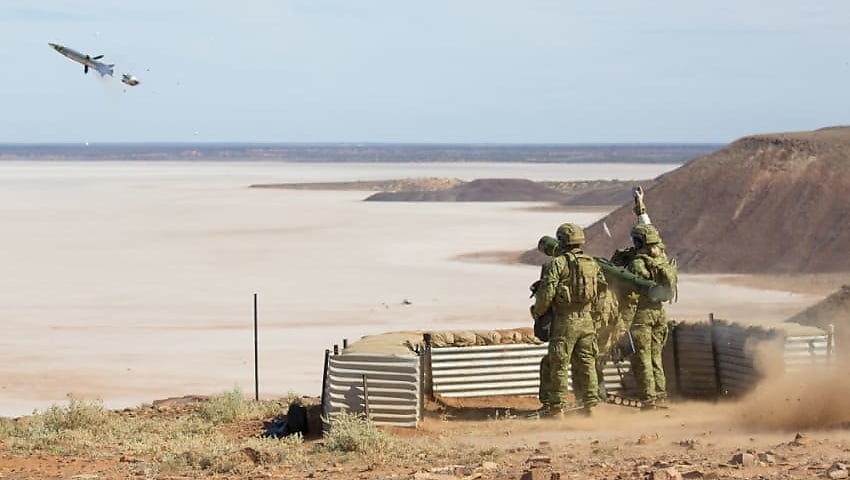
The Australian government has accepted all recommendations from the 2025 independent review of the Woomera Prohibited Area coexistence framework, paving the way for sweeping reforms aimed at modernising one of the nation’s most strategically significant defence testing regions.
The review, led by Rebecca Skinner, examined how Defence activities within the Woomera Prohibited Area can continue to coexist alongside pastoral, mining, tourism, research and cultural interests as Australia’s strategic environment becomes increasingly contested.
Of the review’s 19 recommendations, 17 were accepted in full by the government, while two requiring further implementation work were accepted in principle.
The review involved extensive consultation with stakeholders across multiple sectors, including pastoralists, the resources industry, tourism operators, researchers, First Nations groups, and the government of South Australia, which partners with the Commonwealth in managing coexistence arrangements across the vast defence testing region.
Deputy Prime Minister and Defence Minister Richard Marles said the review confirmed the existing framework had functioned effectively since its introduction in 2014, but argued it now required significant modernisation to meet evolving national security requirements.
“The review reaffirmed the continuing utility of the coexistence framework but found it requires modernisation to respond to our challenging strategic circumstances,” Marles said.
“Woomera will be increasingly important in enabling Defence to accelerate the development, testing and acquisition of advanced and emerging capabilities.”
The Woomera Prohibited Area is one of the largest overland weapons testing ranges in the world and plays a central role in Australia’s defence science, missile testing and advanced capability development programs. As Defence expands its focus on long-range strike systems, hypersonics, autonomous platforms and integrated weapons testing, the importance of the region is expected to grow substantially over the coming decades.

Under the planned reforms, the government said Defence would receive greater operational flexibility to support expanding capability requirements while also committing to minimise impacts on non-Defence users and improve certainty around access arrangements.
Marles said the government remained committed to working closely with coexistence stakeholders throughout the reform process.
“At the same time, the government is committed to working closely with all coexistence stakeholders – including pastoralists, the resource sector and First Nations groups – to improve access and certainty for other users, and to implement these reforms now and into the future,” he said.
The recommendations will also inform the redevelopment of the Woomera Prohibited Area Rule 2014, which underpins the legislative framework governing access and operational management across the region.
Defence is expected to work closely with First Nations communities and other affected groups as implementation progresses, with the government emphasising the need to balance operational defence requirements alongside economic activity and cultural considerations.
The government also thanked Skinner and participating stakeholders for their engagement throughout the review process, describing the consultation as constructive and important to ensuring the long-term success of the coexistence model.

Want to see more stories from trusted news sources?
Make Defence Connect a preferred news source on Google.
Click here to add Defence Connect as a preferred news source.