

 iscover
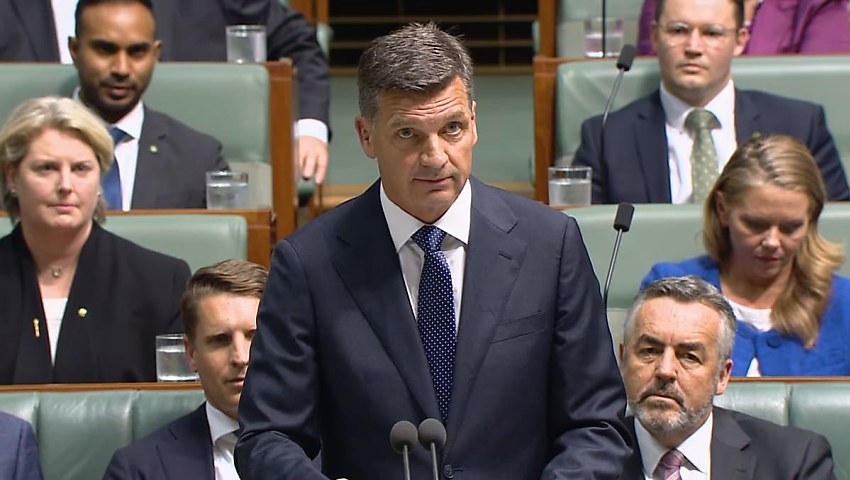
As part of the Opposition’s budget commitments announced late last week, Opposition Leader Angus Taylor has confirmed that a returned Coalition government would commit to developing the first national security strategy since 2013.
It appears as though from beyond the grave, the late great and former senator for NSW, Major General (Ret’d) Jim Molan AO DSC, has finally managed to convince one party of government of the merits of a cohesive, whole-of-nation national security strategy for the first time since the inaugural National Security Strategy released under the Rudd–Gillard government in 2013.
In his Budget Reply speech on Thursday, 14 May, Opposition Leader Angus Taylor committed a returned Coalition government to developing and implementing a national security strategy, and the formal appointment of a national security adviser, telling the Parliament: “Tonight, I announce that a Coalition government will develop a national security strategy and appoint a dedicated national security adviser.”
This announcement comes as part of a commitment by the Opposition Leader to hit “at least 3 per cent” of gross domestic product (GDP) to be spent on Defence, with Taylor saying, “Central to that strategy will be defence. Unlike Labor with its accounting trickery, the Coalition will commit to spending at least 3 per cent of GDP on defence.”
Providing further detail to the headline announcements as part of the budget reply speech, the Opposition’s defence, foreign affairs and national security teams – made up of Senator James Paterson, shadow minister for defence; Ted O’Brien MP, shadow minister for foreign affairs; Senator Jonno Duniam, shadow minister for home affairs; and firebrand senator Michaelia Cash, shadow attorney-general – stressed the importance of such a strategy.
Highlighting the growing unpredictability and instability in the global order, the Coalition’s national security team stated in a joint media release: “Australia’s national security and economic interests are intertwined. The economic and security challenges facing Australia arising from conflict in the Middle East have laid bare how dangerously exposed our country is to global shocks.
“Unlike the United States, United Kingdom, New Zealand and Japan, Australia has not had a unified conception of national security, nor a framework for prioritising national security priorities across all arms of government, since 2013,” they said.
To this the group detailed, at least in part, some of the detail around the mechanics and infrastructure to support the delivery of a national defence strategy and a national security adviser, to sit within the Department of Prime Minister and Cabinet.

The joint media release stated: “An elected Taylor Coalition government will deliver a comprehensive national security strategy to provide long-overdue direction for how all elements of Australian national power will be coordinated and mobilised to secure Australians at home and secure our interests abroad.
“The development and implementation of the national security strategy will be supported by the appointment of a new dedicated national security adviser within the prime minister’s portfolio.”
Serving as a central motivation behind this decision is the rapid acceleration of the multipolar world, particularly given the ongoing conflict in Ukraine, combined with the continuing deterioration of the strategic balance of power in the Middle East and, of course, closer to home, Beijing’s increasing ambitions and designs for the Indo-Pacific.
The group stated: “The whole-of-Australian-government strategy will provide clear, principled direction to all Commonwealth agencies which play a role in national security, economic resilience and the wider community as to how we will work together as a nation to protect Australia’s interests and mitigate risks in a dangerous world.
“The strategy will define objectives across defence, diplomacy, economic security, supply chain resilience, community safety and social cohesion, and will coordinate our collective responsibilities across all levels of government, industry, civil society as well as individual responsibilities.”
Recognising the pivotal role of the late Jim Molan, the media release added: “The late Senator Jim Molan AO DSC in 2018 called for the adoption of a comprehensive national security strategy to protect and advance Australia’s interests. The Coalition is proud to honour his legacy with this commitment to ensure we are better prepared to deter threats, respond to crises and safeguard our national interest for future generations."
Whether this decision will force the hand of the government or they’re content to leverage the extensive body of work invested in the National Defence Strategy and Integrated Investment Program infrastructure remains to be seen, nevertheless, the Coalition’s decision to develop and implement a national security strategy is indeed a welcome one.

Want to see more stories from trusted news sources?
Make Defence Connect a preferred news source on Google.
Click here to add Defence Connect as a preferred news source.