

 iscover
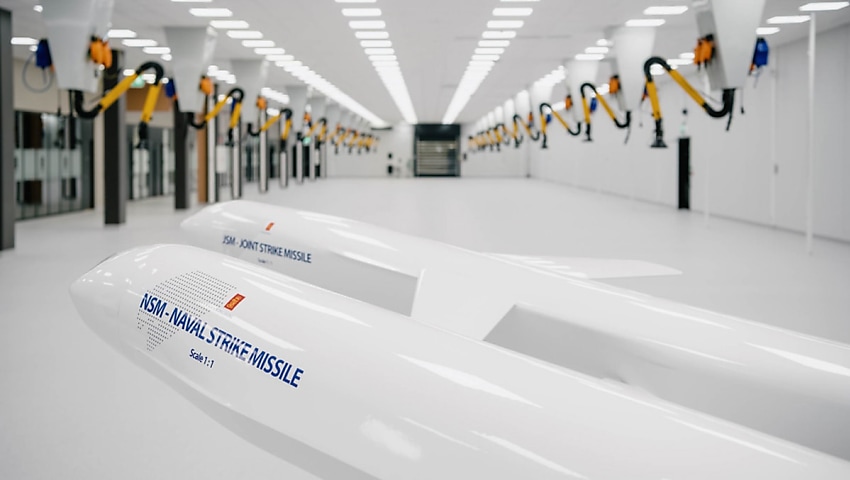
Opinion: Norway’s cancellation of Malaysia’s Naval Strike Missile deal underscores Europe’s accelerating wartime industrial mobilisation and highlights the growing strategic divide between trusted alliance partners and nations outside the Western defence perimeter, explains Alan Callow.
The cancellation of a missile contract with Malaysia is a small transaction in the grand ledger of global arms trade. But small transactions sometimes illuminate large truths.
Norway’s decision to revoke export licenses for the Naval Strike Missile (NSM) system it had contracted to sell Malaysia reveals something that European governments have carefully avoided stating in public: the continent is preparing, seriously and urgently, for the possibility of major war – and it is now reorganising its entire defence industrial base around that preparation, regardless of the collateral damage to allies, partners or signed contracts.
Malaysia was set to procure the Naval Strike Missiles for six Maharaja Lela Class Littoral Combat Ships under a $145 million contract signed in 2018. In 2025, a further $11.19 million contract was agreed for NSM launchers for two in-service Lekiu Class frigates. More than 95 per cent of the 2018 contract’s value had already been paid before Norway pulled the plug. Norwegian officials invoked force majeure and offered regrets.
Norway’s Foreign Ministry stated that “exports of some of the most sensitive Norwegian-developed defence technologies will be limited to our allies and closest partners”. Malaysia was given no warning, no negotiation and no recourse. Malaysian Prime Minister Anwar Ibrahim, who had honoured every contractual obligation his country undertook, called it a “unilateral and unacceptable” decision with “grave consequences” for Malaysia’s defence readiness, adding that signed contracts are “not confetti to be scattered in so capricious a manner”.
The logic of a continent rearming
To understand Norway’s decision, one must understand what is happening across European defence establishments at speed and scale. The war in Ukraine has consumed NATO-supplied munitions at a rate that has left alliance stockpiles at levels military planners describe, in private, as deeply uncomfortable.
Artillery shells, air defence interceptors, anti-armour weapons and precision-guided munitions have flowed eastward in quantities that have materially degraded the immediate warfighting capacity of several NATO members.

The industrial base that was downsized after the Cold War’s end has not yet been rebuilt to meet that consumption rate. European governments are acutely aware of this gap – and they are filling it urgently with every production line they can operate and every unit of capacity they can direct inward rather than outward.
The simultaneity of another development makes the strategic intent explicit. At the same moment Malaysia’s contract was cancelled, Australia and Norway signed a Strike Missile Family memorandum of understanding to expand information sharing, industrial cooperation, and domestic missile manufacturing among selected partner states.
Canberra has committed up to $850 million towards a Kongsberg manufacturing facility in Newcastle – the first Naval Strike Missile production site outside Norway, expected to begin production in 2027. One country lost access to the weapon. Another was simultaneously integrated into its production infrastructure. The variable was not money – Malaysia had nearly paid in full.
The variable was alliance membership. Australia sits inside Five Eyes, holds major non-NATO ally status and is a core AUKUS partner. In the emerging Western defence architecture, strategic alignment is the price of entry. Everyone else is outside the perimeter.
The price of the perimeter
On the one hand, Norway’s decision can be understood. As a small NATO nation dependent on the opinions of others, it cannot go against the will of NATO’s leading member, namely the United States. But choices that goes against national interests carry consequences that extend far beyond the immediate calculation, and those consequences deserve clear-eyed examination.
The first consequence is the direct damage to Malaysia. Defense Minister Mohamed Khaled Nordin acknowledged there is no immediate substitute: “This is not like buying a car where the item is already available. These systems have to be ordered according to specifications and must be able to connect and communicate with other systems on the ship.”
The Maharaja Lela Class vessels were designed specifically around the NSM. Delivering those hulls without their primary anti-ship strike weapon does not produce a naval capability – it produces an expensive hull with a gap where its teeth should be. Malaysia’s naval modernisation program, already battered by years of delays, political turbulence and management failures, now faces an additional procurement crisis with no clean solution in sight.
The second and larger consequence is reputational – and it belongs not just to Norway but to the entire Western defence export enterprise. Anwar warned that if European defence suppliers reserve the right to renege with impunity, “their value as strategic partners flies out the window”.
Every defence ministry from Kuala Lumpur to Riyadh to Jakarta to Pretoria is watching this episode and drawing the same conclusion: Western weapons come with invisible, politically contingent conditions that can be activated unilaterally, without notice, after full payment has been made. The export licence granted in peacetime may be revoked when Europe’s strategic priorities shift – and the buyer bears the entire operational and financial cost of that shift.
This perception does not merely damage Kongsberg’s order book. It structurally advantages alternative suppliers – most notably China – whose export terms, whatever their other liabilities, do not evaporate when alliance politics change.
Beijing has spent years cultivating defence relationships across Southeast Asia, Africa and the Middle East precisely on the promise that it does not weaponise arms contracts for geopolitical ends. Norway’s cancellation is a gift to that narrative.
Europe is preparing for war. That preparation is understandable, perhaps even necessary. But a continent that breaks contracts, abandons partners and pulls up the drawbridge around its best technologies should not be surprised when the world outside that drawbridge begins looking elsewhere for its weapons – and its security partnerships.
The reputational damage accrued in Kuala Lumpur this month will outlast whatever war Europe is quietly preparing to fight.
Alan Callow is a graduate of Western Mindanao State University in the Philippines and is a freelance journalist with experience in writing about the Asia-Pacific region.
Want to see more stories from trusted news sources?
Make Defence Connect a preferred news source on Google.
Click here to add Defence Connect as a preferred news source.