

 iscover
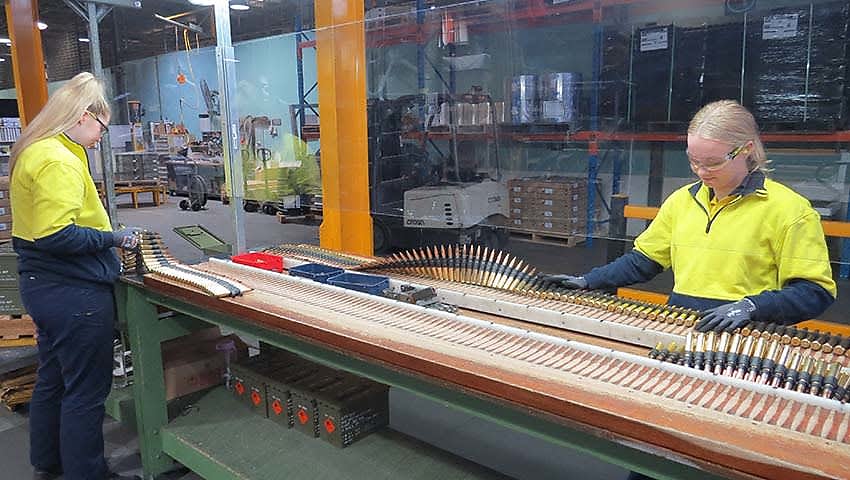
Opinion: Defence logistics specialist Dave Grosvenor argues that a government-led national audit must be the starting point for a national action plan that must rebuild sovereign capability, institutionalise delivery through a ministry of sovereign industry, and re-engage a disengaged electorate through transparency and shared purpose.
Australia’s strategic environment has changed faster than its preparedness. Global supply chains are fragile, coercive economic pressure is rising, and the nation’s industrial base remains heavily dependent on overseas suppliers for critical goods.
A comprehensive national audit of resilience and sovereign industrial capability is the essential first step towards rebuilding strength and self-reliance.
“Resilience cannot be assumed. It must be measured, mapped and built.”
The case for a national audit
Empirical evidence from the Department of the Prime Minister and Cabinet’s 2022 Critical Supply Chain Review and multiple wargaming exercises by RAND Corporation, CSIS, and Australian universities paint a sobering picture. Australia would face shortages of water treatment chemicals, pharmaceuticals, fuel and munitions within weeks of a major regional disruption.
These findings underscore a simple truth: resilience cannot be assumed. It must be measured, mapped and built. The audit is the foundation not the finish line. Its purpose is to generate the evidence base and governance framework for a national sovereign capability action plan, translating analysis into action through targeted co-investment, tax incentives and the creation of strategic sovereign industry zones.
Only by starting with a disciplined audit can government design a plan that systematically strengthens Australia’s industrial depth and national resilience.

The economic imperative: The theory of second best
In a perfectly competitive world, markets allocate resources efficiently.
But Australia does not operate in that world. When one or more conditions for perfect competition fail, as they do in strategic industries subject to global coercion, monopoly supply, or national-security constraints, the economic theory of the second best applies.
This principle, first articulated by Lipsey and Lancaster in 1956, holds that when optimal market conditions cannot be achieved, government intervention may be necessary to restore overall welfare. In other words, if free markets cannot deliver resilience, government must use every lever at its disposal to correct systemic distortions and safeguard national capability.
“If free markets cannot deliver resilience, government must act.”
Government's role: Using all levers available
A credible sovereign-capability strategy demands coordinated policy action across fiscal, regulatory and industrial domains. The audit should inform a national sovereign capability action plan that mobilises public and private investment through five key levers, including:
- Co-investment: a dedicated sovereign industry fund can de-risk private capital and accelerate domestic production of critical goods, from pharmaceutical precursors and water-treatment chemicals to fuel refining, munitions and advanced manufacturing. Public co-investment signals long-term commitment and attracts private investment.
- Tax incentives: Targeted tax treatment, including accelerated depreciation, investment allowances and research and development credits can make sovereign-capability projects commercially viable while maintaining fiscal discipline through transparent cost-benefit criteria.
- Strategic opportunity zones: Establishing strategic sovereign industry zones in regional centres such as Newcastle, Townsville, Whyalla, Geelong, Gladstone, Rockingham and Launceston would create hubs for industrial resilience. These zones could feature enabling infrastructure, tax holidays, greenfields workplace relations settings and fast-tracked approvals, turning regional cities into engines of national strength.
- Long-term procurement contracts: Defence and other agencies can use long-term contracts to provide certainty for investors and manufacturers, ensuring sustained production of critical goods and technologies.
- Skills and workforce development: Partnerships with TAFE and universities will be vital to build the engineering, logistics and manufacturing workforce required for industrial mobilisation.
Institutionalising sovereign capability
To ensure continuity beyond electoral cycles, Australia should consider establishing a ministry of sovereign industry – a dedicated portfolio charged with implementing the audit’s findings and coordinating the national sovereign capability action plan.
This ministry would work in partnership with Defence, aligning industrial policy across energy, manufacturing and technology sectors to support national resilience.
By embedding sovereign capability within the broader machinery of government while preserving Defence’s leadership in military preparedness, the audit’s recommendations can translate into sustained action rather than short-term initiatives.
Learning from success: The Republic of Korea model
The Republic of Korea offers a powerful precedent. In the decades following the Korean War, Seoul pursued a deliberate strategy of state-guided industrialisation, combining targeted investment, export incentives and technology partnerships to build globally competitive industries in shipbuilding, electronics and automotive manufacturing.
Government coordination, not laissez-faire markets, created the conditions for innovation and resilience. Today, Korea’s defence and industrial sectors exemplify how strategic intervention can yield enduring national strength.
Australia can adapt these lessons to its own context, focusing on critical supply chains, advanced manufacturing and dual-use technologies.
Bringing Australians on the journey
A national audit is not only a technical exercise – it is a democratic one. By openly mapping vulnerabilities and opportunities, government can invite the public into the conversation about resilience and renewal.
Transparency builds trust; regional investment and national pride. The audit’s outcomes will give Australians a shared stake in the nation’s preparedness, turning disengagement into participation and scepticism into confidence. When citizens see tangible progress in the form of new jobs, revitalised regions and clear accountability, they become partners in the project of national resilience.
A whole-of-nation partnership
Restoring sovereign capability is not a task for government alone. Industry, states and the Commonwealth must act as partners, not competitors. The audit’s governance model, led by PM&C with Defence at the centre, ensures accountability while enabling collaboration across jurisdictions. State governments will play a key role in sharing infrastructure data and supporting regional development while industry associations and research institutions will contribute technical expertise.
Building resilience, not division
The initiative’s framing must remain focused on resilience, diversification and self-reliance. It is directed at strengthening Australia’s national capability, not at any community or nation. Maintaining social cohesion and public trust is integral to national security.
Final thoughts
A disciplined, evidence-based audit will give Australia the blueprint to rebuild its sovereign industrial base. By applying the theory of the second best, recognising that markets alone cannot deliver resilience, government can catalyse a new era of national strength.
Through co-investment, tax incentives, opportunity zones and strategic procurement, Australia can transform vulnerability into capability and dependence into self-reliance. The time for incrementalism has passed.
A comprehensive audit is the first step towards ensuring that Australia’s resilience matches its ambition and that its industrial depth can sustain the nation through whatever disruptions lie ahead.
Dave Grosvenor, MCIPS, is a Sydney-based commercial and procurement executive with more than 25 years’ experience across defence, energy, transport and telecommunications.
He began his career in the Department of Defence, managing Royal Australian Navy logistics and distribution during the 1991 Gulf War, earning a Naval Support Commander Commendation and a Chief of Naval Supply Commendation for his success in securing critical spares for the RAN while posted to Philadelphia PA.
Want to see more stories from trusted news sources?
Make Defence Connect a preferred news source on Google.
Click here to add Defence Connect as a preferred news source.