

 iscover
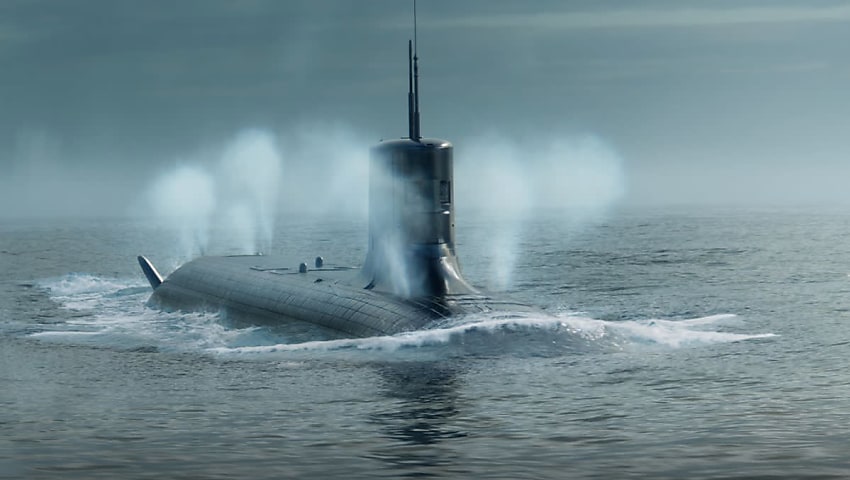
As debate continues about the future of the nation’s future fleet of nuclear-powered submarines, Greens defence spokesman, NSW senator David Shoebridge, has called for Australia to embrace a more realistic “regional defence” policy, but does he know what that means?
Australia and Australians have long grappled and struggled with its place in the Indo-Pacific. As an outpost of Anglo-European liberal democracy, with a comparatively small population, isolated from our “great and powerful friends”, the prosperity and stability of the region is entrenched in our economic, political and strategic calculus.
Accordingly, throughout its history as a nation, Australia has made a number of decisions to actively and occasionally assert its own interests and, indeed, our sovereignty, beginning with the removal of German Imperial forces from the Solomon Islands and New Guinea in the early days of the First World War.
This remarkable feat for a nation, then only 14 years old, would ultimately be discarded in essence during the inter-war years, with the rampaging Imperial Japanese forces routing Britain’s fortress and forces in the region, combined with the devastation of the United States forces in the Philippines and at Pearl Harbor, serving to establish the importance of Australian sovereignty and regional power at home.
Ultimately, this gave rise to the post-Second World War doctrine of “Forward Defence”, which saw the nation embrace a more robust, direct and engaged doctrine for engaging threats to Australia in the region. This approach can best be described as a policy of “fighting them over there, before they got here”.
While this doctrine was a product of the lessons learnt during the Second World War in the Pacific, particularly the vulnerability of the nation to foreign, regional great powers – especially if our primary security benefactor of the day had been subdued or was overstretched by competing interests – to this day, it retains a high degree of importance.
The nation’s disastrous involvement in the politically toxic Vietnam conflict was used by the then Whitlam government to not only discredit the doctrine of “Forward Defence” but to capitalise on growing Australian public sentiment that our region was relatively safe, and if hostilities were to develop, we would have more than enough time to prepare.
In turn, these dual factors combined to lay the foundation for the “Defence of Australia” doctrine, formalised in the now infamous 1987 Defence White Paper, which reoriented the nation’s defence doctrine and capability development towards that of an “Echidna Strategy” where Australia would largely depend on alliances, its geographic isolation and the vaunted “Sea-Air Gap” as a strategic moat via which to punish potential adversaries seeking to harm us.

The foundation established by the Whitlam government and then expanded upon by the Fraser, Hawke and Keating governments to become known as the “Defence of Australia” doctrine, would continue to reign supreme, with minor forays into returning to the era of “Forward Defence” periodically rearing its head.
Fast forward to today and Australia’s planned acquisition of a fleet of conventionally-armed, nuclear-powered submarines under the tripartite AUKUS framework is once again under contest and calling into question Australia’s dual-natured doctrine of “deterrence by denial” and “impactful projection” as it relates to regional defence.
Enter Greens senator for NSW, defence spokesman and firm opponent of the AUKUS program and Australia’s acquisition of nuclear powered submarines, Senator David Shoebridge, in an interview with ABC Insiders host and chief political correspondent David Speers, in which he made some particularly interesting comments about the future direction of the nation’s defence policy and posture.
Beginning his analysis, Senator Shoebridge told Speers: “I think the greatest strategic risk Australia faces is losing our sovereignty and not having critical decisions made about our defence, about what we should be doing to protect ourselves, not having them made here in Canberra, but being decided in Washington and then just imposed upon us.
Senator Shoebridge went further, adding: “And we saw that in the very recent past, where a critical decision about apparently one of our most important weapons systems, was foisted upon us after Washington decided we weren’t going to get a new Virginia Class submarine, we’re going to get three second-hand ones.”
The question of sovereignty in Australia’s defence posture, policy and future
Australia’s pursuit of AUKUS has not happened in isolation or in a vacuum, for that matter. Rather it has been driven by the astronomic build-up and modernisation of Beijing’s military and, since the early-2010s, its willingness to resort to active coercion, grey-zone operations and other methods below the threshold for armed conflict to achieve its designs and ambitions for the region.
Australia itself has frequently fallen prey to these efforts, with the Royal Australian Air Force and Royal Australian Navy both citing frequent incidents with their Chinese counterparts while operating in international waters and international airspace as Beijing accelerates its efforts to supplant the United States as the regional hegemon.
Indeed, only last year, the Australian landmass was circumnavigated by a powerful Chinese flotilla, led by a Type 055 Renhai Class guided missile cruiser which, albeit only briefly, set alarm bells ringing for the Australian public and policymakers, as it became abundantly clear that the era of great power competition and regional power games would be played FAR closer to home.
This coercive circumnavigation operation, also combined with the lingering hangover of the COVID-19 pandemic, and more recently the conflict in the Middle East has called into question Australia’s vulnerability to coercion and indeed, direct kinetic threat via it’s vulnerable and long, sea lines of communication.
For Senator Shoebridge, this is where his view of “regional defence” comes into play, explaining to Speers: “When we talk about our relationship with China, our relationship with China is a trade relationship and increasingly, a people-to-people relationship with China ... I think we should see China’s rise, as China doing what is in China’s national interests. We shouldn’t have rose-tinted glasses on it, but nor should we adopt Washington’s view about China.”
When pressed by Speers, Senator Shoebridge added: “I think we should have a realistic view about China. We should see that it is building its military force. We should see that it is obviously going to have a significant capacity to deliver military force in and around its region, in the South China Sea. We should have a frank and honest relationship with them about human rights and trade and we should be looking at what our region is doing, which is trying to come up with a balanced approach to China and not go down a warpath with Washington.”
And it is here that Senator Shoebridge, in part, bells the cat, calling for Australia to not only continue embracing the old Defence of Australia doctrine but to actively outsource our security, our economic prosperity and stability and indeed our very sovereignty to the whims, ambitions and designs of our regional partners.
In order to deliver this, he argued that Australia, seeking to have a “global policing role” that includes areas like the South China Sea or in the Strait of Hormuz as ridiculous, based on our economic size and population challenges, arguing that our national interests can be achieved by a more “modest” force.
“We’re not a global superpower, we’re not here in order to keep open the Strait of Hormuz, to keep open the Strait of Malacca. It’s thousands of kilometres from our shore and it’s beyond our capacity militarily to do that ... I see a role for us working with our neighbours to try and prevent global conflicts shutting down trade links in our regions,” Senator Shoebridge told Speers.
Senator Shoebridge went on to argue: “The only rationale for nuclear-powered submarines is to project force thousands and thousands of kilometres from our shore. In this case, the whole focus for AUKUS is for us to have, at some potential point, a handful of nuclear submarines that are part of a much bigger US deployment off the coast of China ... That’s what you need nuclear submarines for, not to defend Australia.”
This deference to the region’s larger powers, like Indonesia, India, Japan and South Korea, in essence, inescapably abrogates our responsibility to ourselves and our national interests for fear of being too muscular, too engaged and dare one say it, too much like a pseudo-European/American imperialists seeking to regain the glory days.
Wishful thinking and broken clocks
Even to the most disengaged and uninitiated observer of global and regional power dynamics, it becomes clear that the core of Senator Shoebridge’s analysis is rather wishful thinking at best and blissful ignorance at worst. If the good senator is truly concerned about maintaining our sovereignty, than he would be actively seeking to minimise our exposure to dependence on other powers.
However, as the old saying goes, “a broken clock is right twice a day”.
First things first, Senator Shoebridge is correct when it comes to his prescriptions about Australia’s sovereignty. Specifically, it cannot be something we outsource to our “great and powerful friends” and it is a lesson we seemingly learnt during the Second World War and then discarded following the political turmoil of the Vietnam conflict.
Second, Senator Shoebridge is correct in his assessment that Australia needs to prioritise regional defence; however, his prescription is wrong. Simply swapping the United States or British Empire as it had been during the Second World War for a “great and powerful friend” closer to Canberra leaves us ultimately in the same predicament.
Rather, Australia needs to be its own “great and powerful friend”, prioritising its own sovereignty and national interests at the core of our strategic policy, our primary area of responsibility and interest, and the methods of implementation, namely, the Australian Defence Force and its constituent parts and capabilities, but delivering on these factors may deliver something that will serve to shock Senator Shoebridge and those of his ideological persuasion.
So be careful what you wish for senator, because if we were to take “regional defence” and our role and responsibilities in it seriously, particularly as they relate to our national interests and sovereignty, our current level of defence spending (approximately 2–2.3 per cent) and for that matter, the 3.5 per cent NATO floor will look like a bargain.
Final thoughts
It is clear that Australia’s strategic moment of truth is arriving faster than Canberra is moving to meet it.
The post-Cold War order that underwrote decades of Australian prosperity, American primacy, economic integration, the comfortable fiction of the rules-based system, is fracturing. The Indo-Pacific is no longer a regional backwater; it is where the contest for economic dominance, military supremacy and technological leadership is being decided, right on Australia’s doorstep.
Canberra has noticed. The words coming out of government has sharpened considerably: national defence, denial, sovereignty, self-reliance. But rhetoric and reality remain stubbornly misaligned. Capability acquisition is slow. Industrial policy is fragmented. The institutional mindset still carries the assumptions of a far more forgiving era.
Australia cannot have it both ways. You cannot speak the language of strategic urgency while budgeting, planning and reforming at peacetime pace. A defence posture that tries to straddle the old world and the new will satisfy neither.
Complete strategic autonomy is equally a fantasy. Geography, economics and alliance obligations are not optional. But alliance dependence without genuine sovereign capability is its own form of vulnerability.
The hard truth is that strategy demands choices, real ones, with real trade-offs, sustained across decades rather than managed across election cycles. Australia has the assets: geography, resources, research capacity, proximity to the region that matters most. The question is whether the political will exists to use them coherently.
The coming decade won’t just test Australia’s policy settings. It will test whether the country can adapt fast enough for the stakes to remain theoretical.
Get involved with the discussion and let us know your thoughts on Australia’s future role and position in the Indo-Pacific region and what you would like to see from Australia’s political leaders in terms of partisan and bipartisan agenda setting in the comments section below or get in touch at

Want to see more stories from trusted news sources?
Make Defence Connect a preferred news source on Google.
Click here to add Defence Connect as a preferred news source.