

 iscover
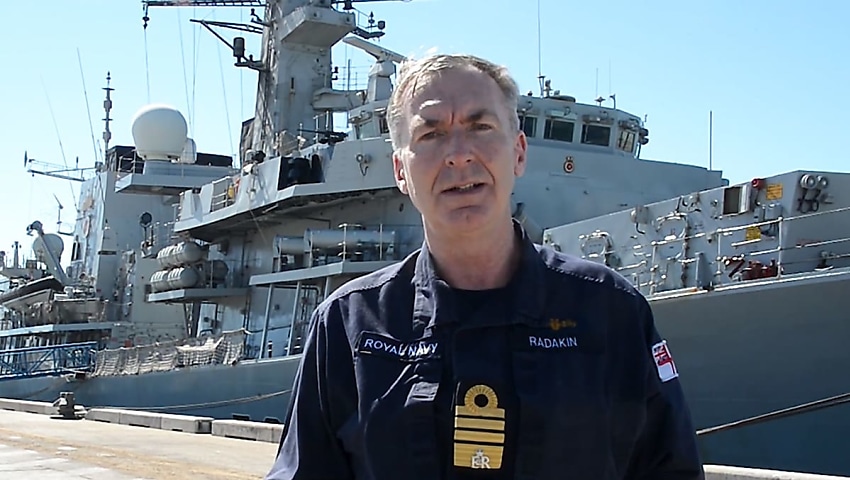
With dust beginning to settle in Westminster’s halls of power, former British Defence chief, Admiral (Ret’d) Sir Tony Radakin has provided some timely advice about the future of the British Armed Forces and the government at a time of increased geopolitical tensions.
When Rishi Sunak inherited the premiership in late 2022, British defence policy was already mid-pivot. Russia’s full-scale invasion of Ukraine had rendered the post-Cold War “peace dividend” model obsolete and the Conservative government moved to revise its 2021 Integrated Review accordingly.
In doing so, the Conservative government began to tacitly acknowledge that the threat environment had fundamentally shifted and that years of managed decline in budgets, force structure, capability development and acquisition and readiness could no longer be sustained.
Under Prime Minister Sunak, the broad policy direction was set but rarely matched by funding. The commitments were real – AUKUS partnership, Global Combat Air Programme (GCAP), F-35 procurement, Challenger 3 upgrades – but chronic underfunding, workforce shortfalls, ageing infrastructure, and a procurement system poorly structured for warfighting tempo meant the ambitions routinely outpaced delivery.
Regular force numbers fell by 8 per cent between 2022 and the mid-decade mark, with the shortfall hitting hardest in precisely the high-skill specialisations most critical to modern warfighting. The warnings from the Royal United Services Institute and others grew louder: Britain was hollowing itself out even as it spoke the language of deterrence.
Labour’s landslide under Prime Minister Sir Keir Starmer in July 2024 changed the political calculus. Prime Minister Starmer announced a full strategic Defence review (SDR) within a fortnight of taking office, led by former NATO secretary general Lord Robertson alongside Dr Fiona Hill and General (Ret’d) Sir Richard Barrons.
The review, published in June 2025, was blunt about the inheritance. It acknowledged that the UK was not prepared for large-scale conflict and set a 2035 horizon for transforming the armed forces into a genuinely integrated, warfighting-ready force.
The SDR prioritised AI, autonomy and a high-low equipment mix, including the Royal Navy’s Atlantic Bastion concept, hybrid carrier airwings, and the Army’s Recce-Strike model, targeting a tenfold increase in land lethality.

Prime Minister Starmer also committed the UK to purchasing 12 F-35A jets and joining NATO’s dual-capable aircraft nuclear mission, a significant step towards burden-sharing credibility within the alliance while seeking to stave off critics at home and critically, across the Atlantic.
The debate, however, much like that here in Australia, has remained fierce.
Critics noted the SDR was long on vision and short on hard procurement numbers, with the detailed investment plan deferred to autumn 2025. Prime Minister Starmer’s pledge to reach 2.5 per cent of gross domestic product (GDP) by 2027, with ambitions towards 3 per cent, thereafter, faced persistent questions about fiscal headroom and political will.
Sceptics argued the trajectory towards genuine warfighting readiness required a level of public investment and cross-party consensus that Britain has yet to demonstrate it could sustain.
Following the shock resignation of his Defence secretary and consummate Labour insider, John Healey, which heralded the executioner’s approach and end to Starmer’s long embattled premiership, Prime Minister Starmer had sought to solidify his legacy and, in many ways, hand a poisoned chalice off to his presumptive successor, former Blair and Brown government minister, Andy Burnham.
This brings us to the long-anticipated release of the United Kingdom’s Defence Investment Plan, expected to be released later this week, and a warning letter from former British chief of the defence staff from November 2021 until September 2025, Admiral (Ret’d) Sir Tony Radakin, published in The Times, titled My advice to Andy Burnham as a former head of the armed forces.
It has taken decades to get to this point
Much like many Western nations, the parlous state of the British Armed Forces is the result of decades of successive budget cuts, indecision, political point scoring and constant and costly project overruns across the warfighting services, stemming from the naive belief in the “End of History” narrative and its ensuing “peace dividend”.
Now nearly three decades since the end of the Cold War and the collapse of the “Evil Empire”, the world is once again beset by an ever-increasing level of nation-state-based competition, as once developing nations like Vladimir Putin’s Russia and Xi Jinping’s People’s Republic of China continue to challenge the established post-Second World War “rules-based order”.
However, none of this has happened in isolation, with the United Kingdom, like many of its Western contemporaries, also facing significant and mounting domestic economic, political, fiscal, security and social cohesion pressures, each serving to individually and collectively have a dramatic impact on national security.
Yet in many ways, this combination of factors, combined with the position of the United Kingdom in the post-war order, has served to disproportionally shape the British perception of itself in the global hierarchy of nations and often with potentially disastrous consequences, as both foreign and domestic challenges serve to reveal in many ways that the emperor has no clothes.
Radakin hinted at this, saying, “The first dilemma is the contrast between home and abroad: incessant domestic denigration of Britain versus respect and even admiration from around the world. It is too easy to forget we are that rarity of a G7 economy – permanent UN security council member, nuclear power and soft-power titan. Do not succumb to the ‘we need to know our place’ brigade and accelerate our strategic demise. That would be inept. Anticipate the requirement to lead and sustain our authority in the world...
“The complacency is pierced by either the sobering intelligence delivered daily in red folders or the emotion of visiting injured Ukrainian soldiers and seeing your own children in their young faces. You will learn the discomfort that our ‘magazines are half-empty’ and it would be prudent to have ‘full magazines’. Do not lead a ‘wartime’ cabinet that weakens our defences at a time of increasing danger.”
Against this backdrop, it is easy to see the challenges facing the British state as almost too big to overcome, particularly as competition and the potential for broader conflict in Europe becomes an ever-present and seemingly ever-increasing likelihood, at a time when the strategic balancing capabilities of the United States are distracted from both the European and Indo-Pacific theatres by the Middle East.
Yet it has taken decades for the British military and its funding situation to reach this point; rectifying it quickly is going to require some robust and provocative leadership.
The PM is now a ‘quasi-wartime leader’
With this in mind, Radakin argued that incoming/presumptive British prime minister Andy Burnham and any successor, regardless of political persuasion, must accept that the role of prime minister is now one of a “quasi-wartime role”, yet this necessity and the corresponding urgency prompted as a result of both domestic and foreign pressures seems to fall on deaf or often cynical ears.
Radakin detailed this saying, “War in Europe, hybrid attacks at home, crisis in the Middle East and the risk of conflict means the prime minister is in a quasi-wartime role. The dilemma is that it does not feel that way. You will not detect that in your conversations with the Treasury or the inability to get anything done quickly. Instead, expect complacency or obfuscations – ‘department of waste’ as the trope for the Ministry of Defence (MoD) rather than acknowledging we remain the reference armed forces for most of the world and achieve £15 billion (AU$28.8 billion) of defence exports most years.”
Yet rectifying the challenges facing the United Kingdom’s armed forces is an immense and incredibly time-sensitive challenge, particularly for a prime minister who will inherit not only a divided Britain, but also one that is increasingly looking like it is broke, sucked dry by a myriad of policy follies by both political parties since the 1990s.
Accordingly, the new British prime minister will have to take the bull by the horns and champion the British Armed Forces in a way that hasn’t been since the Falklands in the truest sense and, to a degree, only partially in the lead-up to the disastrous folly in Iraq as part of the US-led Global War on Terror in the aftermath of September 11.
First and foremost for Radakin is the British nuclear arsenal, which he admitted that “governments of every persuasion over the past three decades have failed to properly sustain the deterrent. But there is little point arguing who is to blame. It is the same with the inane mudslinging about ‘which past government hollowed out the most’”.
Radakin said: “The more accurate answer is that we were on the winning side for the Cold War, enabling a peace dividend which we should acknowledge was sensible to take. But now the peace dividend is over and that requires a sensible response to ensure spending matches the threat and our international commitments. Simple.”
The cost pressures associated with the nuclear deterrent also has real ramifications on the broader British defence budget, particularly at a time when NATO, as a whole, is facing increased pressure from Washington to lift its efforts and meet its obligations to collective defence by increasing spending to 3.5 per cent of GDP as quickly as possible.
Radakin detailed the mismatch between rhetoric and reality, saying, “Keir Starmer agreed an extraordinary commitment to Donald Trump and our other allies that we would increase defence spending to 3.5 per cent of GDP by 2035. Germany, Poland, Canada, the Netherlands and the Baltic states are all stepping up. Britain is looking like a laggard. We are bottom of the table to meet our military commitments to NATO, propped up only by Iceland. Hardly ‘leading in Europe’ and more ‘NATO 31st’ than ‘NATO First.’ Awkward.
“Even more awkward is the emerging risk that unwillingness to follow the rules of ‘gun club’ provokes America to withdraw its unequivocal support to those who have not paid their dues. Whitehall has still not grasped the extent to which America is tired of ‘European freeloading’.”
However, Radakin warned of “easy fixes” or simply throwing more money at the problem, saying, “The world today demands realpolitik. Without America, our defence spending will need to rise to at least 5 per cent for a decade and we will still be less safe than we are today. So be careful if you are drawn to dreaming of a Love Actually moment and you wake up to The Hangover.
“These are all tough choices. Be wary of easy fixes ... But it (2025 SDR) also claimed this could all be done with a modest increase in funding to 2.5 per cent of GDP in 2027 and 3 per cent some time in the next Parliament. The review team and previous defence secretary gave assurances to the prime minister and chancellor it was ‘balanced and affordable’. They were wrong. Most assessments put the figure required as closer to at least 4 per cent.”
Righting the ship or continued managed decline?
The incoming prime minister certainly has his work cut out for him, particularly as Radakin argued: “The depressing truth is you inherit a defence program that is overcommitted. It is transformational, but not enough. This government affirmed the plans of its Conservative predecessor to renew the nuclear deterrent, recapitalise the army, build a sixth-generation fighter, deliver AUKUS and support Ukraine.
“Add in the inflation that followed Liz Truss’ premiership and pay awards for our armed forces above the level of inflation and it better explains the £20 billion or £30 billion deficit even before we start implementing the new ideas from last year’s review. Do the maths. Assess ambition against resource. Make sure they balance no matter what. And be sceptical if you are not being asked to take tough decisions for anything that feels big.”
Ultimately, this all comes back to two central points, money and political will. A future British Prime Minister Andy Burnham will need to master both of these and rapidly assert his will and priorities through a realistic lens, anchored in the realities of both Europe and the broader global environment upon which the United Kingdom depends upon.
Final thoughts
The parallels between Australia and the United Kingdom’s defence predicament are uncomfortable reading for anyone who has followed Canberra’s strategic policy arc with clear eyes.
Radakin’s open letter to Britain’s presumptive Prime Minister Andy Burnham reads less like advice to a foreign politician and more like a warning that could have been written about Australia and, in many respects, should have been.
Both nations are “advanced” and “developed” economies, backed by robust democracies with outsized strategic obligations relative to their defence spending. Both have spent the post-Cold War decades drawing down the very military muscle their strategic postures nominally required and both are now scrambling to reverse decades of managed decline at precisely the moment the strategic environment offers the least forgiveness for doing so slowly.
Britain’s trajectory is the cautionary tale. Successive governments allowed regular force numbers to fall by 8 per cent between 2022 and the mid-decade mark, with the shortfall concentrated in the high-skill specialisations most critical to modern warfighting, all while committing rhetorically to AUKUS, GCAP and expanded NATO burden-sharing.
The gap between the language of deterrence and the reality of hollow capability became, as Radakin bluntly put it, a program that was overcommitted and transformational but not enough.
Australia is walking a recognisably similar path.
The 2026 National Defence Strategy (NDS) and 2026 Integrated Investment Program (IIP) describe a force built for the strategy of denial, anchored to AUKUS Pillar 1 and funded across the decade at $887 billion, one of the largest peacetime defence investment commitments in Australian history.
Yet the ambition again threatens to outpace the delivery architecture. Typically, 75 to 80 per cent of the next decade’s IIP spending remains unapproved, backloaded into the period the NDS itself identifies as the most dangerous, with the most acute case being integrated air and missile defence, where $850 million is approved against up to $30 billion planned.
Radakin’s central warning to Burnham, that the SDR’s assumption of affordability at 2.5 to 3 per cent of GDP was simply wrong, with most credible assessments putting the real figure at least closer to 4 per cent, should echo loudly in Canberra.
Australia continues to fall behind the pace of Indo-Pacific regional defence spending growth, with its rank in the regional league table having slipped out of the top five since the start of the decade, with current growth rates insufficient to recover that position by 2035.
The deeper structural lesson is perhaps the most confronting. Britain’s predicament did not emerge from a single bad budget or a rogue policy decision, it accumulated across decades of bipartisan complacency, Treasury resistance, procurement dysfunction, and a political culture that consistently treated defence as a cost to be minimised rather than a capability to be sustained.
History has shown that short-changing defence investment produces only higher costs later; Europe has been living that reality since 2022, following years of neglect that contributed to a failure of deterrence.
If Australia’s 2026 NDS and IIP promises are delivered, the principal gap will no longer be money, it will be growing the Defence workforce, strengthening the industrial base, integrating capabilities and achieving the institutional follow-through that the decade ahead demands.
That is, in almost every meaningful sense, exactly where Britain finds itself today: possessed of a credible strategic vision, burdened by decades of structural underinvestment, and running out of the one resource no budget can buy back, time.
Australia has the advantage of reading Britain’s story before it becomes its own. The question is whether Canberra has the political will to act on that reading.
Get involved with the discussion and let us know your thoughts on Australia’s future role and position in the Indo-Pacific region and what you would like to see from Australia’s political leaders in terms of partisan and bipartisan agenda setting in the comments section below or get in touch at

Want to see more stories from trusted news sources?
Make Defence Connect a preferred news source on Google.
Click here to add Defence Connect as a preferred news source.