

 iscover
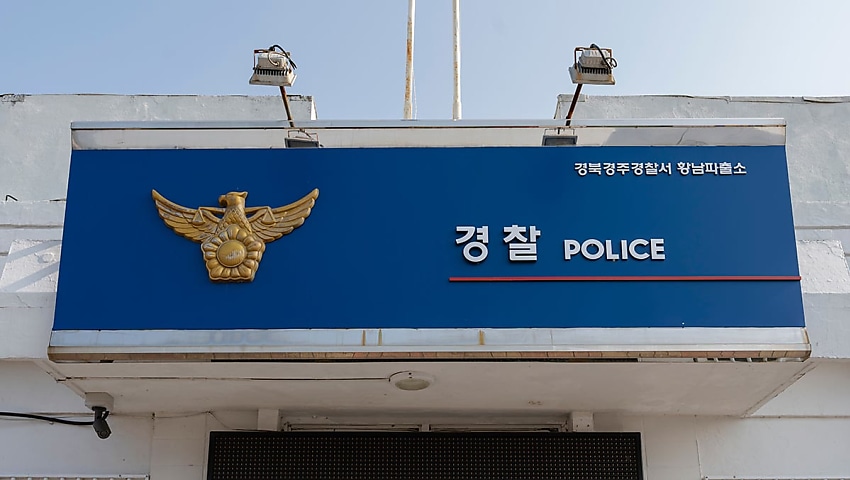
Opinion: South Korean police are investigating six activists who travelled to Ukraine without government approval to advocate for two North Korean soldiers captured fighting for Russia, amid a growing diplomatic and legal dispute over the prisoners’ fate, explains Alan Callow.
South Korean police have launched an investigation into six citizens who travelled to Ukraine without government authorisation as part of an advocacy mission on behalf of two North Korean prisoners of war captured while fighting alongside Russian forces.
The group, consisting of North Korean defectors and human rights activists, spent five days in Ukraine in early May, meeting with government officials, civic organisations and representatives of Ukraine’s Coordination Headquarters for the Treatment of Prisoners of War, an official Ukrainian government body operating under the country’s defence authorities.
Their mission focused on advocating for the two North Korean soldiers captured in January 2025, who have reportedly expressed a desire to settle in South Korea rather than return to North Korea.
Among the delegation members were Jang Se-yul, head of Gyeoreol Unification Solidarity, defector-turned-activist Lee Byung-rim, and Kang Dong-wan, head of the North Korea-focused human rights organisation Tongil Korea.
Jang confirmed to Yonhap News Agency that the Foreign Ministry had referred the group to police over an alleged violation of South Korea’s Passport Act. He said the activists expected to undergo questioning as part of the investigation.
The investigation centres on the group’s unauthorised entry into Ukraine, which has been designated a restricted travel area by South Korea since February 2022 following Russia’s full-scale invasion. Under South Korean law, citizens who enter restricted travel areas without official permission can face up to one year in prison or a fine of up to 10 million won (approximately $7,000).
The activists said they had applied for permission to travel to Ukraine but were denied authorisation. Despite the refusal, they proceeded with the trip, citing previously scheduled meetings with Ukrainian officials and civil society groups.

During their visit, the delegation urged Ukrainian authorities to consider the potential consequences of repatriating the two soldiers to North Korea, warning that they could face severe punishment by Pyongyang. They also requested that letters and humanitarian supplies from North Korean defector organisations be delivered to the prisoners.
The case comes amid growing international attention over the fate of North Korean soldiers deployed to support Russia’s war effort in Ukraine. Ukrainian forces captured two North Korean soldiers in January 2025, providing evidence of Pyongyang’s direct military involvement in Russia’s war. Kyiv has said it will not forcibly return captured soldiers to North Korea against their will.
The future of the two North Korean prisoners remains uncertain. Ukraine’s Coordination Headquarters for the Treatment of Prisoners of War has stated that the soldiers’ status must be handled in accordance with international humanitarian law and existing POW regulations.
Ukrainian officials have said that any possible arrangement regarding their future would need to comply with international legal obligations.
The issue has become a diplomatic challenge for Seoul and Kyiv. South Korean officials have said they would accept North Korean prisoners who wish to come to South Korea, while Ukrainian authorities have emphasised that the matter must be resolved within the framework governing prisoners of war.
The South Korean Foreign Ministry said that individuals who enter areas under a travel restriction without authorisation may be subject to investigation and advised them to leave such areas. The ministry declined to provide further comment while the police inquiry remains ongoing.
Alan Callow is a graduate of Western Mindanao State University in the Philippines and is a freelance journalist with experience in writing about the Asia-Pacific region.
Want to see more stories from trusted news sources?
Make Defence Connect a preferred news source on Google.
Click here to add Defence Connect as a preferred news source.