

 iscover
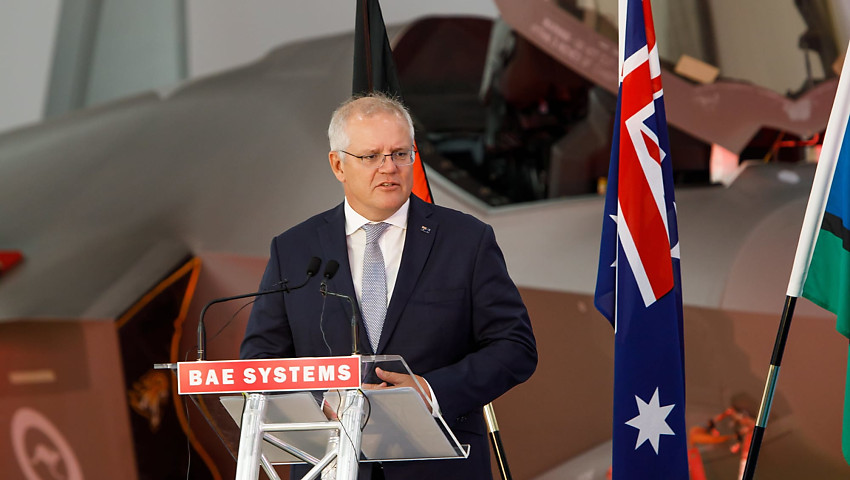
Opinion: China has overplayed its hand on critical minerals. It exploited a chokepoint. Now the US, Australia and other allies are finding ways to build around it, according to former prime minister Scott Morrison.
Xi Jinping is scheduled to visit President Donald Trump at the White House 24 September. Seven weeks later, on 10 November, the US–China trade agreement that eased China’s export restrictions on critical minerals is set to expire. But as the US and allies like Australia and Japan collaborate to create alternative supply chains, China’s leverage is becoming increasingly perishable by the day.
When a government exploits a chokepoint, whether Iran holding the Strait of Hormuz or China bringing down the boom on rare earths, it takes a risk. In the short term, Iran or China will achieve asymmetric gains, but over time these returns will diminish. Inventories rise, customers diversify, producers change investment plans, and infrastructure that had been too expensive becomes economical. That’s happening now with China’s hold on critical minerals, and it’s why Beijing’s trading partners are working together more effectively to break that hold.
Looking back, China probably did its trading partners a favour by exploiting the chokepoint it spent decades establishing. Dependence on China for critical minerals has been a national-security vulnerability for those trading partners for decades. We knew that well before China imposed export controls in 2023.
After its rare-earth shock in 2010, Japan helped finance an alternative supply through Australia’s Lynas, now the world’s largest producer of separated rare earths outside China. President Trump saw the problem coming, too. In 2017 his first administration formally identified America’s dependence on critical minerals as a national-security vulnerability.
We also knew about it in Australia. My government released Australia’s first critical-minerals strategy in 2019. Six months later President Trump and I agreed at the White House to integrate Australian and US supply chains and bring like-minded countries into the effort.
These initiatives ultimately laid the groundwork for current actions to create alternative supply chains. But at the time we were missing the binding agent that industry and government needed to overcome China’s grip on the market. President Xi hadn’t begun to squeeze.
China’s advantage wasn’t geology or even technology. It was economics. As I told Congress last year, China routinely kept other suppliers out of the market by increasing the supply, depressing the price, tanking the market and absorbing the loss, making any new venture uneconomical.

It wasn’t that hard for China, as these weren’t bulk commodity markets, and profits weren’t its primary goal. Global demand for the principal magnet rare earths is less than 100,000 tonnes, against close to a billion tonnes of iron ore exported each year from Australia alone. Rare earths don’t need dedicated railways, ports and bulk carriers. Small volumes make a market easier to manipulate, but they also mean market dominance can be less formidable than it looks.
The West wasn’t helping itself at the time. Western end users happily took the cheaper deal from China, reinforcing the concentration that became their own vulnerability.
China’s decision to activate its leverage changed all this. Over 18 months starting in July 2023, Beijing imposed export controls on gallium, germanium, graphite, antimony and some rare-earth-related manufacturing.
After Trump returned to office, China imposed further export controls on tungsten, tellurium, bismuth, molybdenum, indium and seven medium and heavy rare earths, including dysprosium and terbium. Shortly before the late October 2025 Xi–Trump meeting in Busan, South Korea, China jumped the shark, asserting licensing control over any product made anywhere in the world containing Chinese rare earths.
In Busan, Messrs Trump and Xi agreed to a 12-month truce. The US eased tariffs and China suspended restrictions and provided general licences for US end users. This would buy time for the Trump administration to establish alternative supply chains.
President Trump had already directed agencies through an executive order on 20 March 2025, to fast-track permits, encourage mineral production on federal lands, and use the Defense Production Act to deploy government loan guarantees and investments. A Section 232 investigation was then initiated, and the July 2025 budget substantially boosted the National Defense Stockpile and gave $500 million to the Office of Strategic Capital for credit subsidies capable of supporting up to $100 billion of loans for projects.
The more important innovation was moving beyond individual projects to change the market conditions for alternative supply chains. The July 2025 MP Materials agreement committed $400 million in preferred equity and $150 million to a loan for heavy rare-earths separation. Most significantly, by agreeing to a 10-year minimum floor price for neodymium-praseodymium at $110 a kilogram and an agreement to buy the resulting magnets for 10 years, the US inoculated producers against China’s price manipulation, ensuring their ventures remained commercially viable for investors.
In October 2025 Australia stepped up again. The US and Australia agreed to mobilise at least $1 billion for priority projects. By April that had grown to $3.5 billion across 11 named projects spanning gallium, neodymium-praseodymium, graphite, tungsten, nickel, tantalum and magnesium.
A parallel framework between the US and Japan added pricing measures and financing for projects, offtake, stockpiling and a rapid-response mechanism.
All this is similar to the architecture President Trump and I discussed back in 2019. Our understanding of the threat didn’t change. China changed the price of ignoring it, for government and industry alike. That is the binding agent China has given us.
Finally, in February this year President Trump launched Project Vault, America’s first strategic critical-minerals reserve for civilian industry, backed by $10 billion of financing from the Export-Import Bank of the US plus nearly $2 billion of private-sector capital.
These measures haven’t yet broken Chinese dominance, and China isn’t letting up, adding 10 US companies to its export-control list, including MP Materials, in June.
The virtue of the Trump administration’s measures is that they can’t be easily reversed by China’s market manipulation. Floor price and durable offtake agreements boost resilience and provide guardrails for Western participants and tie in end users. These measures change the economics, enabling Western competitors to challenge China’s dominance. Counterintuitively, we have China to thank for it.
The Busan truce bought valuable time. The Trump–Xi meeting this month may extend that timeline. Regardless, China has provoked an increasingly integrated and scaled response that must now be sustained. Now it is essential to put permitting and the bureaucracy on a conflict footing.
The more Beijing abuses its leverage, the stronger the case becomes to build around it. We can thank China for that.
This article was originally published on www.scottmorrison.com.au and in the Wall Street Journal on 8 September this year.
Want to see more stories from trusted news sources?
Make Defence Connect a preferred news source on Google.
Click here to add Defence Connect as a preferred news source.