

 iscover

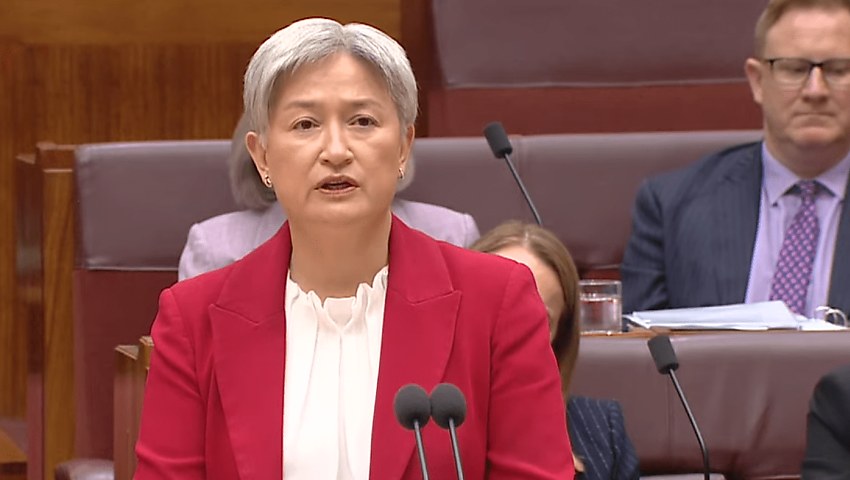
Australian Minister for Foreign Affairs, senator Penny Wong has identified six major shifts to the global power order in a public speech and rallied for 'amplified middle power diplomacy' to avoid coercion.
Senator Wong made the comments during a ‘Securing Australia's future in a changing world’ ministerial statement to the Senate on Tuesday, 24 November.
The primary concerns identified included growing coercion by military force and weaponisation of trade, technology or investment ‘levers’, changing US and People’s Republic of China strategic priorities, rising influence of middle powers, technological disruption from artificial intelligence and, finally, declining international trust and collective cooperation.
“First, we are seeing a growing and more frequent threat or use of force and coercion. The clearest example is Russia’s illegal and unjustified invasion of Ukraine,” Senator Wong said.
“Second, the great powers have both fundamentally changed how they define and pursue their interests. China will continue to assert itself in reshaping the region and the world in ways more closely aligned with its own interests. At the same time, the United States has been clear that it is changing its priorities, how and where it applies its resources and what it expects of partners.
“Third, the distribution of power is changing. Like Australia, other middle powers are bringing growing economic, diplomatic and military weight to bear. A more fragmented and complex world is emerging.
“Fourth, trade, investment and technology that have lifted living standards and created powerful incentives for peace are increasingly also being used as levers of power. The economic interdependence that once acted to constrain conflict has now become a means of coercion.
“Fifth, technology is transforming the foundations and dimensions of economic and strategic power. Artificial intelligence and emerging technologies are spreading and disrupting faster than any previous revolutionary technologies.

“And sixth, it is becoming more challenging for countries to exercise power together. Trust is being eroded across our societies as well as the international system.
“These developments are confronting. But they do not warrant fatalism and they cannot be answered by nostalgia for a world that no longer exists.
“Australia's task is to use our strengths to shape what comes next, rather than simply respond to a world shaped by others.”
Wong also highlighted that amplified middle power diplomacy is a key pillar of the Albanese government, a mid the government's request for a seat on the UN security council next year.
“(Resilience) requires investing in diplomacy and dialog, reducing the risks of misunderstanding and miscalculation, and addressing the drivers of conflict before tensions become crises. Middle powers will not help themselves by walking away from multilateralism just because it is imperfect. That would leave a vacuum, and vacuums are rarely filled by peace.”
Senator Wong argues that Australia must move beyond it’s traditional security rulebook and adopt a more active and adaptable foreign policy. Otherwise it will be unable to protect national security and the nation’s ability to make independent decisions.
“We are a nation of talented people, living on a continent of resources. We have a sophisticated economy, a capable defence force and diplomatic service, deep international partnerships and a society connected to every part of our region and the globe,” Senator Wong said.
“The aim of statecraft is to bring these strengths together, to make the whole bigger than the parts.
“Bringing them together gives Australia greater capacity to shape events, withstand pressure and retain our ability to make our own choices in a world where others would make them for us.
“That means working with partners to make domination harder, coercion costlier and cooperation more valuable.”
Senator Wong also argues that Australia should not shrink back into isolationism without a deliberate strategy, and instead should strengthen the US alliance with expanding relationships with Japan, India, South Korea, the European Union and Southeast Asia. In particular, Senator Wong refocused Australia’s partnership with the US highlighting that the alliance is a major source of strategic weight, specifically when both partners need it most.
“This shows the direction of our economic statecraft: more partners, more pathways, more markets, and greater resilience,” Senator Wong said.
“We must remain open whilst reducing the vulnerabilities that others might exploit.
Senator Wong concludes that Australia must invest in global partnerships, domestic defence capabilities and resilience to make coercion difficult and conflict less likely. In addition, the nation must resist coercion through secure infrastructure, trusted institutions and national capability.
“Our strategic objective; a peaceful Indo-Pacific where no country dominates and no country is dominated,” according to Senator Wong.
Want to see more stories from trusted news sources?
Make Defence Connect a preferred news source on Google.
Click here to add Defence Connect as a preferred news source.