

 iscover
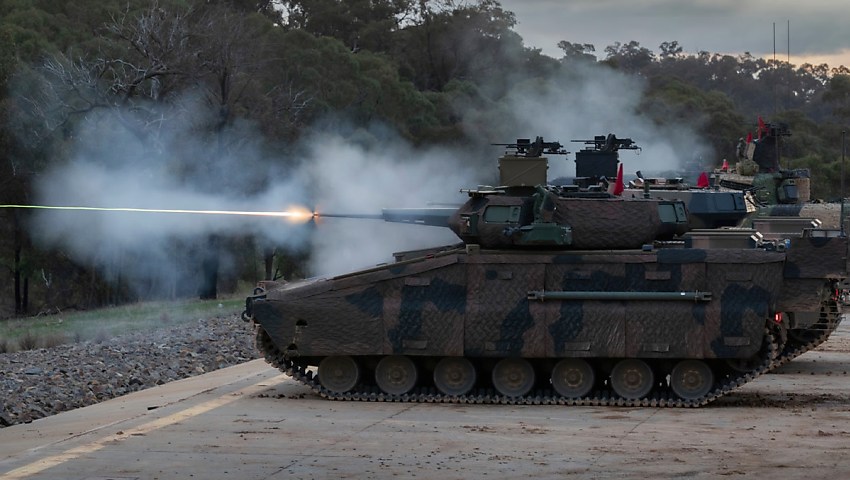
Hanwha Defence Australia further cemented its role in Australia’s sovereign defence sector by signing two major agreements with leading domestic partners.
The first, a teaming agreement with GME and Hanwha Systems builds on a memorandum of understanding signed at the 2024 MilCIS conference. The trio will work together to respond to the Australian government’s upcoming LAND 4140 program, which aims to modernise the Land command, control, communications and computers (C4I) environment for the Australian Defence Force.
Hanwha Defence Australia (HDA) acting managing director Dean Michie explained, “GME is a rapidly expanding Australian business with strong links into both civil and military C4 programs at home and overseas, so working with them towards a solution for LAND 4140 is the best path forward.”
GME, an industry leader with over 60 years’ experience in RF communication technology – and the sole Australian manufacturer of UHF CB radios and emergency beacon products – will bring its advanced manufacturing capabilities to the hardware side of the project. Meanwhile, HDA and its sister company Hanwha Systems are set to contribute extensive expertise in land platform integration, electronic optics, C4I hardware and software, radars and avionic electronics.
GME managing director Stephen Millar added, “Hanwha continues to impress with their investments in Australia and in building an Australian supply chain. With our significant capabilities working together to equip the Australian Defence Force with Hanwha’s world‑class C4 solutions, made and supported in Australia, this agreement makes sense.”
The partnership is poised to leverage cutting-edge South Korean innovations – drawing on the Army TIGER program – to integrate tactical 5G and low-Earth orbit satellite communications, enhancing battlefield connectivity and interoperability. Hanwha Systems head of C4I and Land business, Sungkyun “Danny” Park, said, “This cooperation will be an important stepping stone in enhancing Australia’s self‑defence capabilities and promoting long‑term collaboration between the Republic of Korea and Australia. Together, we will drive advancements in tactical communications to support future military operations.”
In a second collaborative move at the event, HDA, Hanwha Systems Corporation and Australian SME Visionary Machines signed a memorandum of understanding to explore the integration of Visionary Machines’ high‑fidelity passive 3D spatial sensing technology into Hanwha’s platforms.
The initiative aims to support or enable autonomy, counter unmanned aerial systems (C-UAS) and enhanced situational awareness – technologies that are increasingly critical in today’s contested battlespaces.

Michie said, “By blending the best of Australian and South Korean technologies and approaches, we want to build strategic resilience for our supply chains and drive innovative solutions. Between our own experience, what our sister company Hanwha Systems brings to the table, and the capability offered by Visionary Machines, I am confident this R&D opportunity will be a marvellous prospect for all involved.”
Visionary Machines chief executive officer Sonny Foster highlighted the growing need for passive sensing solutions. “Recent events have shown that passive systems that don’t emit targetable energy are essential. Integrating our cutting-edge 3D spatial sensing with Hanwha’s world‑leading platforms will greatly enhance situational awareness and deliver real solution‑led innovation,” he said.
The combined initiatives bring together a broad range of capabilities – from military vehicle design and C4I systems development to advanced C-UAS and passive optical sensing technologies.
They not only strengthen Australia’s sovereign defence capabilities but also lay the groundwork for long-term collaboration between South Korean and Australian industry, opening new opportunities in global defence markets.
HDA research and development manager Glenn Halupka summed up the sentiment: “This MoU and teaming agreement represent a commitment from all parties to develop advanced technologies for both the Australian and South Korean defence forces, ensuring we have a capability edge on the battlespace of the future.”
Want to see more stories from trusted news sources?
Make Defence Connect a preferred news source on Google.
Click here to add Defence Connect as a preferred news source.