

 iscover
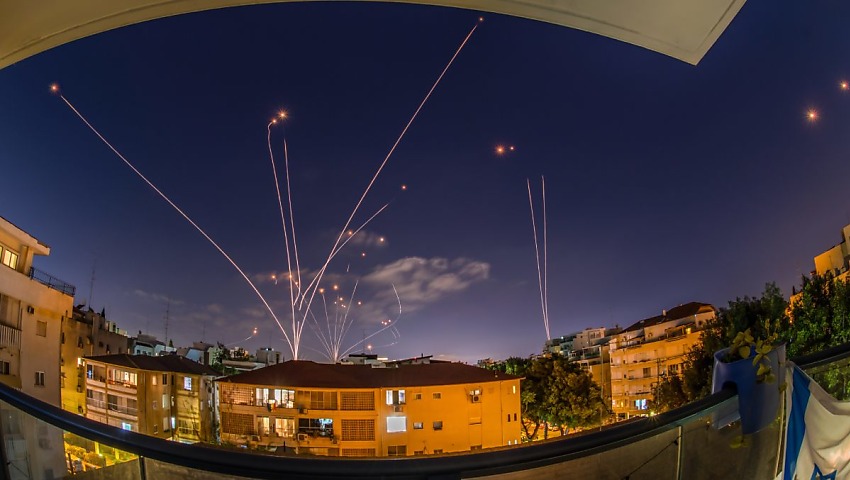
As the world edges ever closer to a potential nuclear element to the conflict between Israel and Iran, a few have raised very real concerns about the potential depletion of the Iron Dome and what that means for the broader global supply chain.
In recent weeks, the world witnessed a stark demonstration of modern missile warfare’s evolving nature as Iran orchestrated an unprecedented aerial assault on Israel.
Employing a combination of drones, cruise missiles and ballistic projectiles, the campaign was less about precision strikes and more about overwhelming Israel’s layered air defence network, most notably the long celebrated Iron Dome.
While many of the incoming threats were successfully intercepted, the sheer volume served its true purpose: to test the system’s capacity limits and deplete its finite stockpile of interceptors.
This tactic, of quantity over quality, is a potent lesson in how even the most advanced defensive systems can be worn down through saturation and persistence.
For Australia, and indeed any nation contemplating its resilience in a high-intensity conflict, this episode underscores an uncomfortable truth: technological superiority alone cannot guarantee security.
No matter how sophisticated a missile defence system may be, its effectiveness is ultimately constrained by the industrial capacity underpinning it. Interceptors like those used by Iron Dome are expensive, complex and require time to replenish.
When that supply chain is concentrated in a single country, as is the case with the United States’ dominance over many key missile components and finished products, any disruption, whether logistical, strategic or political, becomes a national vulnerability.

Australia must therefore take this as a timely warning. Our defence industrial base remains overly reliant on overseas supply chains, particularly those of the United States.
While alliance ties are deep and enduring, in a contested Indo-Pacific future, we cannot assume uninterrupted access to critical munitions. Iran’s strategy shows how quickly a stockpile can be exhausted; the next conflict may not allow the luxury of resupply, only serving to reinforce the shattering of the myth around “just in time” supply chains.
Diversifying our missile production and supply lines regionally and domestically is not just prudent, but urgent.
This includes co-investing with allies like Japan and South Korea in joint manufacturing ventures, fast-tracking sovereign missile programs under the Guided Weapons and Explosive Ordnance (GWEO) enterprise and establishing stockpiles of key components within our borders.
Another option is by being far more proactive and ambitious while leveraging the auspice of AUKUS, to directly buy the intellectual property for key missiles (e.g. SM-2, SM-3, SM-6, ESSM, Tomahawk, JASM, LRASM and others) to support the mounting demand from Australia, the United States, Japan, South Korea and others.
This can be further supported by the expansion of public-private partnerships with domestic firms while reforming export controls to stimulate regional supply chain integration can also de-risk bottlenecks.
Australia’s leaders and public need to grapple that the lesson from the Iron Dome is not merely technical – it is strategic. In a world where massed, low-cost attacks can rapidly attrit even the best defences, Australia must ensure its industrial base can absorb the shocks of modern war and continue to fight.
The lessons from the current conflict even before entering a potentially higher-tempo next stage reinforce that Australia, in particular, must invest in sovereign capabilities, encourage allied collaboration beyond the US, and remove single points of failure from our procurement strategy, while adding much needed depth to the allied industrial base.

Want to see more stories from trusted news sources?
Make Defence Connect a preferred news source on Google.
Click here to add Defence Connect as a preferred news source.