

 iscover
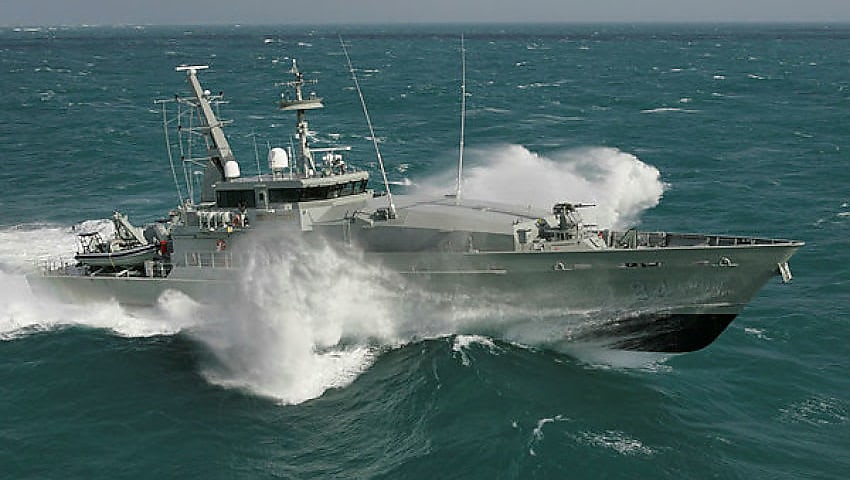
The Albanese government has welcomed a significant step forward in Australia’s defence industry presence abroad, with Export Finance Australia credit-approving a loan facility of up to US$150 million (AU$229.3 million) to support Australian shipbuilder Austal’s expansion in the United States.
The funding forms part of a broader US$1.2 billion (AU$1.83 billion) capital expansion program by Austal at its shipyard in Mobile, Alabama. The program is aimed at boosting the company’s capacity to deliver on major contracts recently awarded by the US Navy and US Coast Guard, as well as its growing role in the US submarine industrial base.
The Export Finance Australia (EFA)-backed loan will directly support the Final Assembly 2 (FA2) project one of two major initiatives underway by helping fund the construction of a new assembly facility, waterfront upgrades and a new ship lift system. This investment is expected to deepen defence industrial ties between Australia and the United States while reinforcing sovereign capability within the broader AUKUS framework.
Austal’s expansion will also contribute to the construction of components for Virginia Class submarines and support the AUKUS submarine supply chain, highlighting the company’s increasing strategic value in both nations’ naval shipbuilding efforts.
Minister for Trade and Tourism Senator Don Farrell said the financial backing reflects the government’s commitment to supporting Australian companies with global ambitions, saying, “The Albanese government is backing Australian defence companies to grow and export their world-class capabilities by securing lucrative international contracts.”
“This financial support from Export Finance Australia is another example of how the Albanese government is helping Aussie businesses expand and grow overseas.”
Minister for Defence Industry Pat Conroy MP echoed this sentiment, noting the broader strategic importance of the investment, adding, “Austal’s investment into its United States shipyard demonstrates its commitment to support the United States’ domestic shipbuilding ambition and will deliver greater security and economic resilience for both Australia and the United States.”
“Closer defence industrial collaboration with our AUKUS partners will deliver major security and economic benefits at a time of growing geopolitical uncertainty,” Minister Conroy added.

The EFA loan forms part of Austal’s newly secured AU$488 million (US$318.6 million) in credit facilities from a consortium of Tier 1 Australian and international banks, including the Australian government’s export credit agency.
The refinancing, which replaces a AU$280 million (US$182.8 million) syndicated facility established in 2015, delivers improved financial terms, longer tenors of five to 10 years and fewer covenants, providing Austal with enhanced flexibility to deliver its $14.5 billion order book.
This follows a US$220 million (AU$337 million) capital raise in April 2025 and a further US$450 million (AU$689.3 million) injection from General Dynamics Electric Boat to support the construction of Austal’s new submarine Module Manufacturing Facility 3 (MMF3).
Austal CEO Paddy Gregg said the refinancing positions the company for sustained growth in the global defence market, saying, “Austal possesses an exceptional pipeline of long-term defence work in the US, which will be complemented by the strategic shipbuilding agreement in Australia,” Gregg said.
“We now have a stronger balance sheet with enhanced liquidity, lower cost and greater flexibility to support this growth. With this capital expansion funded through a combination of debt, equity and cash flow, we can focus on the efficient construction of both FA2 and MMF3 and the vessels we have been contracted to build,” Gregg added.
The loan facility from Export Finance Australia remains subject to finalisation of finance documentation and standard conditions precedent. This milestone underscores Austal’s role as a global leader in defence shipbuilding and highlights the strength of Australian defence industry capabilities on the international stage.
Want to see more stories from trusted news sources?
Make Defence Connect a preferred news source on Google.
Click here to add Defence Connect as a preferred news source.