

 iscover
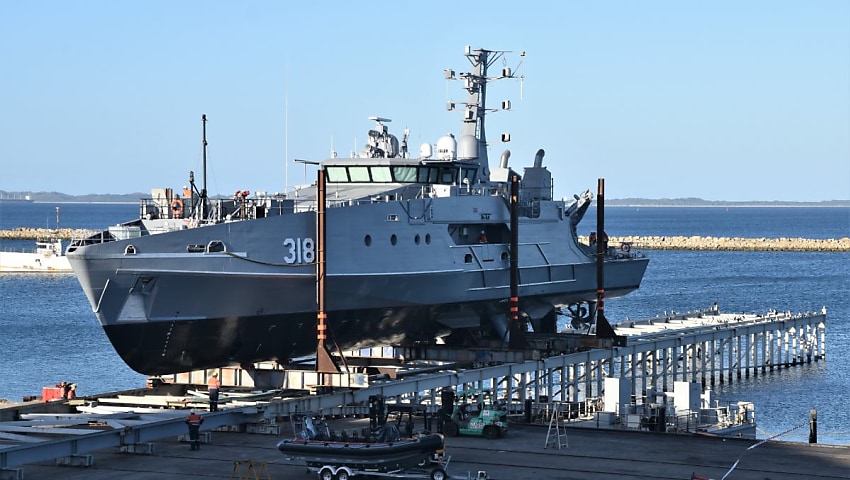
Austal has joined forces with Curtin University and the Additive Manufacturing Cooperative Research Centre to develop a new framework aimed at accelerating the adoption of additive manufacturing across Australia’s maritime and defence supply chains.
The $600,000 collaborative research project will focus on overcoming one of the key challenges limiting broader use of additive manufacturing: identifying where the technology can provide genuine operational, commercial and supply chain benefits.
While additive manufacturing, commonly known as 3D printing, is increasingly being adopted globally, industry has continued to face difficulties determining which components are best suited to the technology, particularly in highly regulated sectors such as naval shipbuilding and defence.
Over the next 18 months, the project will develop an industry-ready assessment framework capable of evaluating thousands of potential components against technical, regulatory, operational and commercial requirements.
For Austal, the initiative represents a move away from individual additive manufacturing trials towards a more systematic approach designed to support long-term capability development, improve supply chain resilience and strengthen Australia’s sovereign manufacturing base.
Austal head of research and development, Sam Abbott, said the focus was shifting from proving whether additive manufacturing was viable to identifying where it could deliver the greatest value.
“The challenge is no longer whether additive manufacturing works. The challenge is knowing where it delivers the greatest value,” Abbott said.
“This framework will help us quantify the demand for additive manufacturing across maritime and defence programs, allowing industry to make better investment decisions, build more resilient supply chains and accelerate the uplift of Australia’s advanced manufacturing capabilities.”

The project will draw on Austal’s experience as prime contractor for the United States Navy’s Additive Manufacturing Centre of Excellence, incorporating international lessons and real-world manufacturing data into the research.
Curtin University will lead the development and validation of the framework, working with industry partners and using vessel and supply chain data to ensure the final product is practical and commercially relevant.
Research lead Dr Karl Davidson said the project would provide industry with a clearer pathway from identifying opportunities through to implementation.
“By combining engineering, operational and commercial considerations into a single framework, we can help manufacturers make faster, more informed decisions about where additive manufacturing can deliver measurable benefits,” Davidson said.
The initiative forms part of a broader effort to expand Australia’s advanced manufacturing capability and encourage greater adoption of additive manufacturing across defence and civilian industries.
Simon Marriott, Additive Manufacturing Cooperative Research Centre managing director, said many organisations understood the potential benefits of additive manufacturing but lacked the tools needed to determine where investment would deliver the greatest return.
“Many organisations understand the potential of additive manufacturing but struggle to determine where it makes commercial and operational sense,” Marriott said.
“This project will deliver a practical solution that helps industry identify high-value opportunities, prioritise investment and build confidence to scale adoption.”
Beyond maritime and defence applications, the framework is expected to provide a model that can be adapted across other manufacturing sectors, helping Australian businesses improve productivity, supply chain resilience and global competitiveness.

Want to see more stories from trusted news sources?
Make Defence Connect a preferred news source on Google.
Click here to add Defence Connect as a preferred news source.