

 iscover
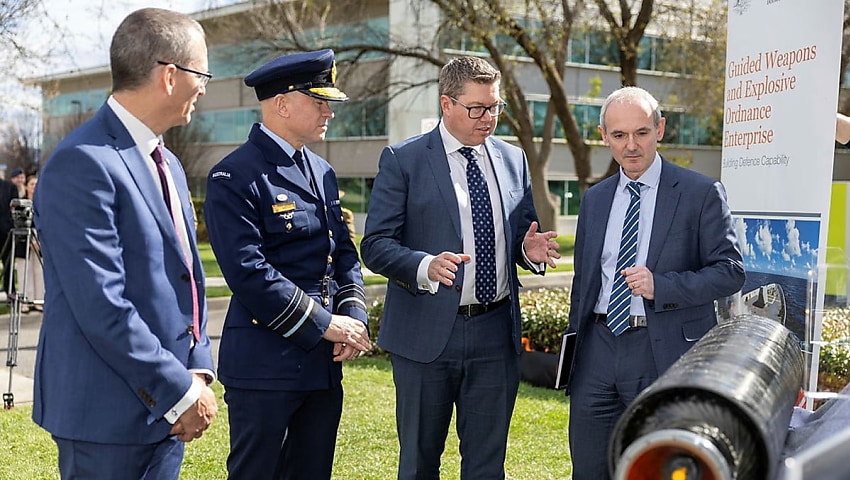
The Albanese government has unveiled the US$3 billion (4.2 billion) Defence Industry Growth Facility to provide loans, guarantees, bonds and equity to Australian defence companies, with the expanded scheme targeting sovereign capability, exports and private investment.
The Albanese government has unveiled a new US$3 billion financing facility designed to give Australian defence companies greater access to the capital required to expand, modernise and compete in global markets.
The Defence Industry Growth Facility will provide Australian businesses with access to a broader suite of financial instruments, including loans, bonds, guarantees and equity, as the government seeks to accelerate the development of sovereign defence capability while attracting greater private-sector investment.
Administered by Export Finance Australia through the National Interest Account, the new facility expands and replaces the previous Defence Export Facility, significantly broadening its remit beyond supporting Australian defence exports.
Under the new model, funding will also be available for projects that strengthen sovereign capability and Australian self-reliance, including the expansion or upgrading of industrial facilities and the development of new technologies and capabilities aligned with Defence priorities.
The government argues the expanded financing mechanism will be particularly important for small and medium-sized businesses, which can face significant challenges securing timely access to capital despite possessing technologies or capabilities considered strategically important to Australia.
For an industry increasingly being asked to deliver everything from guided weapons and autonomous systems to munitions, sustainment and advanced manufacturing, access to capital is emerging as an increasingly important component of Australia’s broader defence strategy.
Trade and Tourism Minister Don Farrell said the facility was intended to help Australian defence companies expand internationally while simultaneously strengthening sovereign capability at home.

“We are supporting our world-class defence businesses to thrive in international markets while delivering sovereign defence capabilities at home,” Minister Farrell said.
The government is also hoping the initiative will encourage private investors to put more capital into the defence sector, with the facility designed to “crowd in” private finance rather than simply substitute for commercial investment.
That approach reflects a growing recognition in Canberra that building a resilient defence industrial base will require considerably more than government procurement alone.
Defence Industry Minister Pat Conroy said sovereign capability was fundamental to Australia’s national security and argued the new facility would help unlock investment in Australian innovation and production.
“Sovereign defence capability is essential for our nation’s security,” Minister Conroy said.
The facility comes as Australia embarks on one of the most significant expansions of defence investment and industrial capacity in generations.
The government’s broader defence agenda increasingly places emphasis on sovereign production, resilient supply chains and the ability to sustain the Australian Defence Force during periods of heightened strategic competition.
That shift has created significant opportunities for Australian businesses but also exposed longstanding constraints around access to capital, industrial scale, workforce availability and the ability of smaller companies to transition promising technologies into production.
The new financing facility is intended to address at least one of those barriers.
By offering government-backed finance across multiple stages of the industrial life cycle, Canberra is seeking to give Australian defence companies greater confidence to invest in additional manufacturing capacity, pursue export opportunities and develop capabilities that may not yet have a sufficiently large domestic market.
For Defence, the potential pay-off is equally significant. A larger and more financially resilient domestic industrial base could reduce Australia’s exposure to overseas supply-chain disruption while providing the ADF with greater access to locally produced equipment, components and sustainment capabilities.
The challenge will now be translating the US$3 billion headline commitment into accessible finance and tangible industrial capacity.
If successful, the Defence Industry Growth Facility could become an important bridge between Australia’s rapidly expanding defence requirements and the private capital needed to build the industrial base capable of meeting them.
In an increasingly contested strategic environment, the ability to finance, manufacture and sustain military capability at home is becoming almost as important as the ability to procure it.

Want to see more stories from trusted news sources?
Make Defence Connect a preferred news source on Google.
Click here to add Defence Connect as a preferred news source.