

 iscover

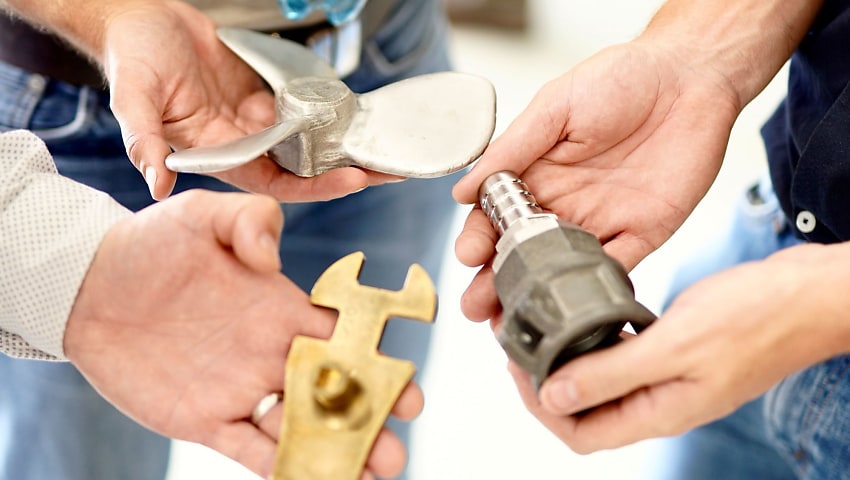
Australian company SPEE3D has launched phase one of NodeZERO in Darwin, the first of 50 rapidly deployable advanced manufacturing factories planned across the Asia-Pacific region, known as “CriticalSPEE3D”.
It pioneers making critical metal parts at the point of consumption, through the distributed CriticalSPEE3D network.
The demand comes from industrial facilities such as gas plants, mines, ports or Defence bases, where one missing or failed part can paralyse the whole operation.
When the critical part comes from overseas, the wait can run to months. Unplanned downtime costs the typical Australian industrial business an average of $350,000 an hour, according to ABB’s 2023 Value of Reliability survey.
“Our plan is simple: factories everywhere,” said Steven Camilleri, SPEE3D co-founder and chief technology officer.
“Small, easily reached factories, the size of a basketball court, close to every base, mine and port. Fifty factories to start, and the first one is right here in northern Australia. This is where it begins.”
NodeZERO is planned as the hub of CriticalSPEE3D, where people will come for training and qualification.
The plan brings new kinds of technical roles to northern Australia and the region, from advanced manufacturing operators and trainees to CNC machining, quality assurance and application engineering.

They are planned to be filled by Territory-based people trained on site, with training pathways through local partners like Charles Darwin University and TAFE NT, including Indigenous recruitment and training.
“There’s a dire need to increase Australia’s advanced manufacturing capabilities, particularly in remote places like the Northern Territory. A facility like NodeZERO will become critical for our workforce and strategic future, and at Charles Darwin University, we look forward to the local research and training opportunities,” said Professor Steve Rogers, Charles Darwin University deputy vice-chancellor research and community connection.
“We have had a long-term, fruitful research and training partnership with SPEE3D through the joint initiative ‘the Advanced Manufacturing Alliance’, and these future collaborations are the natural progression of this relationship.”
At the SPEE3D launch, guests from industry, defence and government watched a metal part being made with cold spray manufacturing, a world-leading process developed by SPEE3D.
SPEE3D technology has been used in 70 deployments worldwide and proven in combat, maritime, desert and arctic conditions. It makes military grade metal parts ready in hours rather than days or weeks. It is done by firing metal powder at up to three times the speed of sound, with no melting, moulds or lasers.
“Every commander and every operations manager knows what it’s like to wait on one part,” said Bryan O’Connor, SPEE3D’s global CEO.
“Our technology has already shown it can end that wait in the field, with soldiers, in hours. CriticalSPEE3D puts that capability where the Asia-Pacific region needs it, close to the bases, ports and industry that keep it running. Your critical parts, now made here.”
Want to see more stories from trusted news sources?
Make Defence Connect a preferred news source on Google.
Click here to add Defence Connect as a preferred news source.