

 iscover

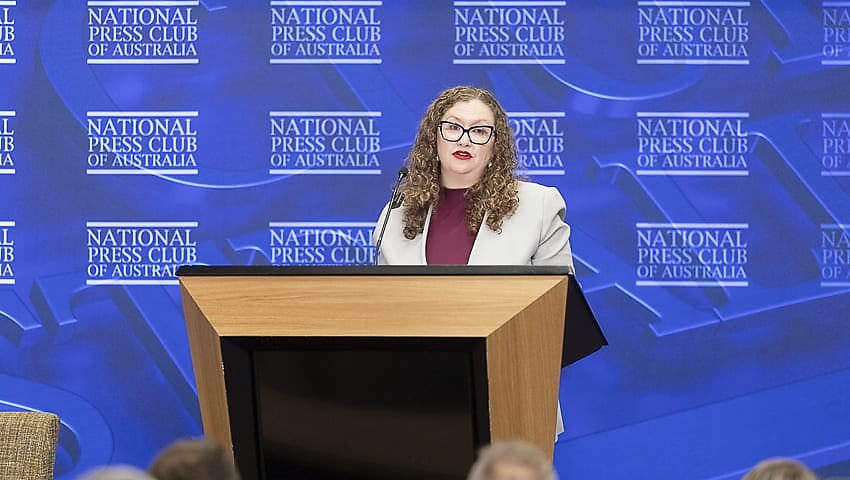
New research has been presented at the National Press Club, identifying potential antimony dependencies across nearly half of Australia's sovereign defence industrial capability elements, exposing significant blind spots in the supply chains underpinning the nation's military capability.
The research maps antimony dependencies across 59 of the 128 capability elements within Defence's seven Sovereign Defence Industrial Priorities, including 10 of the 19 capabilities prioritised for targeted industrial growth.
The findings come at a time of major investment in sovereign defence capability and growing concern over China's dominance of critical mineral supply chains.
From Mine to Prime, authored by former Royal Australian Navy weapons engineer and ADROITA CEO Sarah Pavillard and commissioned by Southern Cross Gold Consolidated Ltd (Southern Cross Gold), examines the industrial and policy failures that leave Australia dependent on vulnerable international supply chains despite its significant mineral wealth.
"These dependencies often sit several tiers below the prime contractor. If we don't understand them, we cannot properly assess the consequences of losing access to them, much less establish the industrial capacity to assure supply," Pavillard said.
China dominates global antimony processing and has demonstrated its willingness to restrict exports.
Antimony's defence applications extend well beyond munitions into electronics, sensors, batteries, specialised alloys and other technologies.
Diversifying suppliers offers limited protection where those suppliers depend on the same upstream processing facilities. In a crisis, Australia could also face competition from its allies for limited supplies of the same critical materials.

The research identifies the ability to manufacture, replenish and sustain military equipment as fundamental to Australia's defence sovereignty and the credibility of its deterrence strategy.
"Sovereign manufacturing capability is only credible if we can assure the supply of critical materials needed to sustain production when it matters most," Pavillard said.
More than a century after Australian antimony was sought for British munitions production during the First World War, Australia continues to confront the strategic consequences of failing to connect its mineral wealth with the industrial capability required for national defence.
The research makes 22 findings and 18 recommendations, identifying six interconnected industrial, commercial and institutional gaps preventing Australia from translating its mineral wealth into defence-ready capability.
It finds that demand and price risk are the principal barriers to establishing strategically necessary domestic antimony processing capacity and that many of the government policy, procurement and financing instruments needed to address these barriers already exist.
The paper proposes a Strategic Demand Partnership to connect Defence's material requirements with government policy, private investment, qualified production and allied demand. Priority recommendations include mapping Defence's critical material requirements, establishing antimony as a pilot strategic supply chain and assigning clear accountability for its development across government.
Southern Cross Gold's Sunday Creek gold-antimony project near Kilmore, Victoria, provides a practical case study. The research identifies Victoria as a credible candidate for an antimony processing cluster, drawing on its mineral resources, established industrial capability, skilled workforce and proximity to Australia's munitions manufacturing base.
"Australia has the resources to make a meaningful contribution to the critical mineral supply chains that our defence industry and our allies depend on," Southern Cross Gold CEO Michael Hudson said.
"But mining the resource is only the beginning. If we want those resources to contribute to sovereign capability, we need to establish the conditions that allow Australian industry to process them and supply the products manufacturers actually need."
The research presents antimony as an opportunity to establish an industrial and policy framework that can be applied across Australia's wider critical mineral dependencies.
"Processing facilities take years to design, finance, construct and qualify. We cannot expect to build them once a crisis has begun," Pavillard said.
"Ore is not capability. The national task is to connect mine to prime."
The research was commissioned by Southern Cross Gold.
Want to see more stories from trusted news sources?
Make Defence Connect a preferred news source on Google.
Click here to add Defence Connect as a preferred news source.