

 iscover





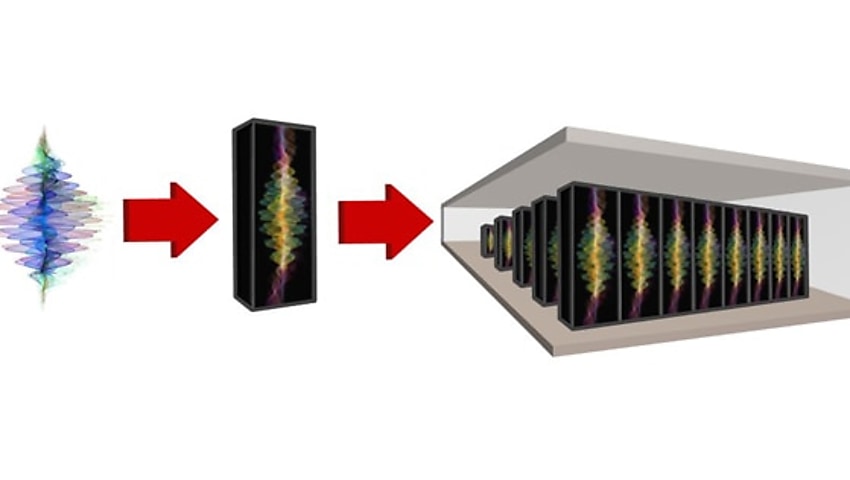
The United States’ Defense Advanced Research Projects Agency is currently trying to keep quantum computing surprises to a minimum, and that’s the mission statement behind its Underexplored Systems for Utility-Scale Quantum Computing program, which DARPA has just tapped three partners to take part in.
DARPA announced last year it was looking for companies with a “ truly revolutionary approach” to quantum computing, and who believe that they could build a utility-scale machine — that is, one that better scales its computing power to its cost to run — within a decade.
“Experts disagree on whether a utility-scale quantum computer based on conventional designs is still decades away or could be achieved much sooner,” said Joe Altepeter, US2QC program manager in DARPA’s Defense Sciences Office. “The goal of US2QC is to reduce the danger of strategic surprise from underexplored quantum computing systems.”
DARPA announced this week that it had chosen three partners whose approach to solving the quantum computing problem looks promising — Atom Computing, Microsoft, and PsiQuantum.
These three companies will now benefit from additional funding to bring on more experts in the field, while DARPA assists them in gaining government verification and validation of their solutions.
Quantum computing is one of those always-just-around-the-corner technologies. The concept promises massive computing power that can tackle problems traditional computing simply cannot manage, particularly when it comes to complex subjects such as protein folding or cryptography.
Quantum computers already exist, but they take an immense amount of power to operate — so much so that the cost to operate them outstrips their computational power.
The first of the US2QC program’s four phases will see these companies develop and present their concepts for a utility-scale quantum computer. These concepts will then be evaluated by a DARPA-led team of experts.
“The ultimate outcome of the program is a win-win — for US commercial leadership in this strategically important technology area and for national security to avoid being surprised,” Altepeter said.
The US2QC is expected to run for five years.
Want to see more stories from trusted news sources?
Make Defence Connect a preferred news source on Google.
Click here to add Defence Connect as a preferred news source.