

 iscover




Army's 1 Brigade and the US Marine Corps Marine Rotational Force Darwin (MRF-D) are preparing for Exercise Koolendong, a live-fire exercise that is the concluding activity for the current MRF-D deployment, designed to achieve proficiency in core mission essential tasks and to enhance integration between the two nations.
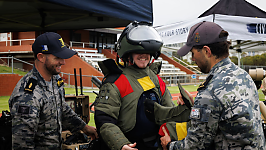
Personnel from 1 Combat Signal Regiment (1CSR) and the MRF-D established a Coalition Communications Formation Node on the Robertson Barracks parade ground for a mission readiness activity to confirm information exchange between coalition networks, to ensure successful interoperability from the outset.
1CSR’s Captain Michael Wiggins explained the importance of these types of pre-exercise activities in order to help identify and address potential issues.
“Here we have Australian soldiers and United States Marines working side-by-side, working to confirm that everything is mission ready before we deploy to the field,” CAPT Wiggins said.
“Some of the initial challenges that we’ve come across is from a communications security perspective, getting the integration between their national authorities to be able talk on the same networks within the coalition.”
Communications enable the two forces to not only walk the talk on exercises, but be ready to respond if needed during humanitarian aid tasks or in conflict.
According to CAPT Wiggins said Exercise Koolendong is designed to confirm ADF and MRF-D posture for contingency and crisis response in the Indo-Pacific region.
“From a communications perspective, Exercise Koolendong confirms that everything we say about interoperability and the effect we’re able to achieve in the stable barracks environment, is also replicated and achievable in the field or if required, in an operationally contested environment,” CAPT Wiggins.
Teams from 1CSR and MRF-D will spend three weeks in the field, communicating across about 6,600 square kilometres to keep 4,000 troops connected during Exercise Koolendong.
The exercise will be held during August and September at the Bradshaw Field Training Area, NT.
[Related: Reserves integrate into regular Army units at Talisman Sabre]

Want to see more stories from trusted news sources?
Make Defence Connect a preferred news source on Google.
Click here to add Defence Connect as a preferred news source.