iscover
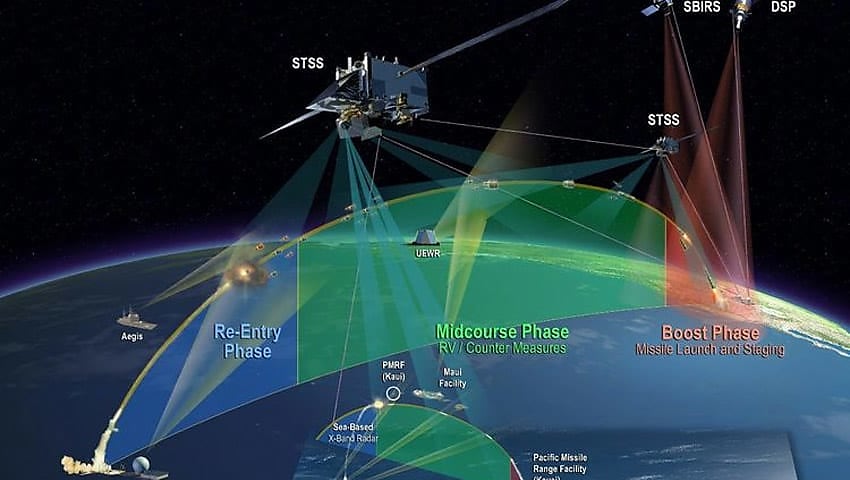
Northrop Grumman announced it has recently completed a preliminary design review (PDR) for the US Space Force Space Systems Command’s Next-Generation Overhead Persistent Infrared Polar (NGP) program.
This design review establishes the company’s technical approach for the full integration of the Eagle-3 spacecraft with the infrared sensor, auxiliary and high-bandwidth communication payloads being developed at the Northrop Grumman site in Azusa, California, with the company on track to begin production of the early-warning missile system in defence of the United States.
Alex Fax, vice-president, NGP, Northrop Grumman, welcomed this achievement, saying, “Northrop Grumman is on an accelerated path to delivering an early-warning missile system capable of surviving attacks from space, ground or cyber elements. NGP satellites will maintain a direct line of communication back to the continental United States, limiting dependency on overseas ground station sites.”
The two NGP satellites operate in highly elliptical orbits and are designed to detect and track ballistic and hypersonic missiles over the Northern Hemisphere, while providing broad coverage over the polar region offers the highest probability of spotting potential missile launches.
NGP can identify the infrared heat signatures of incoming threats and transmit this mission data to the ground. Based on the threat, decision-makers can then make responsive and informed decisions.
This enhanced communication system also has resiliency features that reduce vulnerabilities to counter space and cyber attacks.
Want to see more stories from trusted news sources?
Make Defence Connect a preferred news source on Google.
Click here to add Defence Connect as a preferred news source.