
New digs: QinetiQ Australia launches new Melbourne office
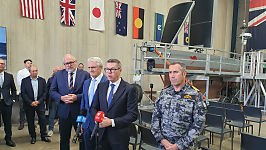
QinetiQ Australia has officially opened a new state-of-the-art Melbourne office, marking a major expansion of the company’s Aust...
Hanwha Aerospace signs new rocket launcher deal with Estonia
Hanwha Aerospace has announced that it will supply three additional Chunmoo multiple rocket launcher systems to the Estonian Defen...
Black Hawks lead ADF counter-terrorism training in Melbourne
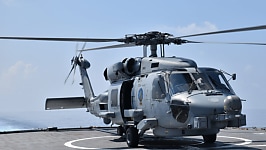
The Australian Defence Force (ADF) has conducted a range of aviation-based counter-terrorism training activities in Victoria. ...
Digital transformation at the centre of Five Eyes summit
Defence and technology leaders from Five Eyes nations have deepened cooperation on digital transformation at the Combined Digital ...

General Atomics tests AI pilots on MQ-20 Avenger UAV

Joint-capabilities
|
GA-ASI Flies MQ-20 Avenger Autonomously Using LEO SATCOM Datalink.

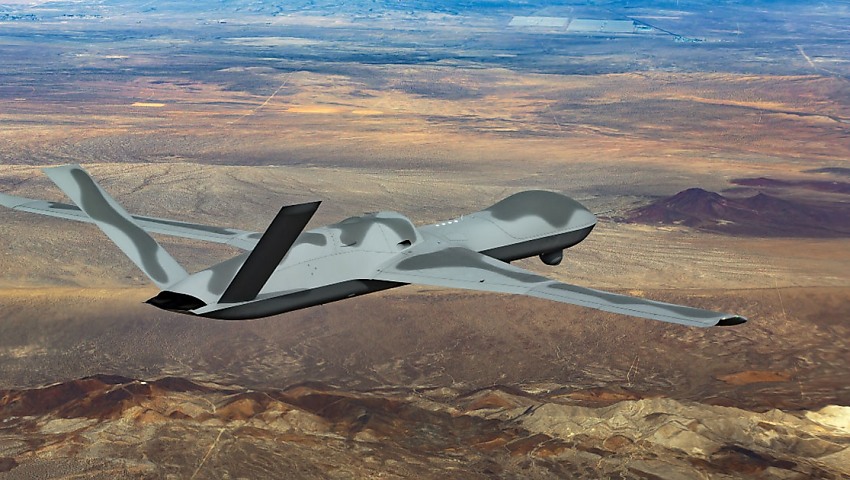
General Atomics Aeronautical Systems has begun testing artificial intelligence pilots in live, tactical, and air combat manoeuvres on MQ-20 Avenger unmanned aircraft.

General Atomics Aeronautical Systems has begun testing artificial intelligence pilots in live, tactical, and air combat manoeuvres on MQ-20 Avenger unmanned aircraft.

General Atomics conducted collaborative manoeuvres between human and AI pilots using low-Earth orbit (LEO) satellite communication on a collaborative combat aircraft, during testing on 6 April.

The mission beyond line of sight (BLOS) datalink is used to rapidly retrain and redeploy AI pilots within minutes while the aircraft is airborne.


Two RASOR multi-functional processors from L3Harris Technologies were used to house a transceiver card and control BLOS active electronically scanned array.

“The flight demonstrated GA-ASI’s unmatched ability to fly autonomy on real, tactically relevant, unmanned combat aerial vehicles,” said GA-ASI advanced programs senior director Michael Atwood.

“It displayed effective BLOS command and control through the collaboration between three defence primes.

“This showcases our rapidly maturing CCA mission system suite and moves us one step closer to providing this revolutionary capability to the warfighter.”

Operator commands were captured with hands on throttle-and-stick (HOTAS) controls and sent via LEO SATCOM to AI pilots running reinforcement learning algorithms.

AI pilots autonomously tracked and manoeuvred dynamically via HOTAS commands, while operators were provided updates from AI pilots on a cockpit heads-up display and could dynamically re-task via HOTAS as the mission evolved.

Robert Dougherty

Robert is a senior journalist who has previously worked for Seven West Media in Western Australia, as well as Fairfax Media and Australian Community Media in New South Wales. He has produced national headlines, photography and videography of emergency services, business, community, defence and government news across Australia. Robert graduated with a Bachelor of Arts, Majoring in Public Relations and Journalism at Curtin University, attended student exchange program with Fudan University and holds Tier 1 General Advice certification for Kaplan Professional. Reach out via email at This email address is being protected from spambots. You need JavaScript enabled to view it. or via LinkedIn.

Want to see more stories from trusted news sources?
Make Defence Connect a preferred news source on Google.
Click here to add Defence Connect as a preferred news source.

Tags: