

 iscover
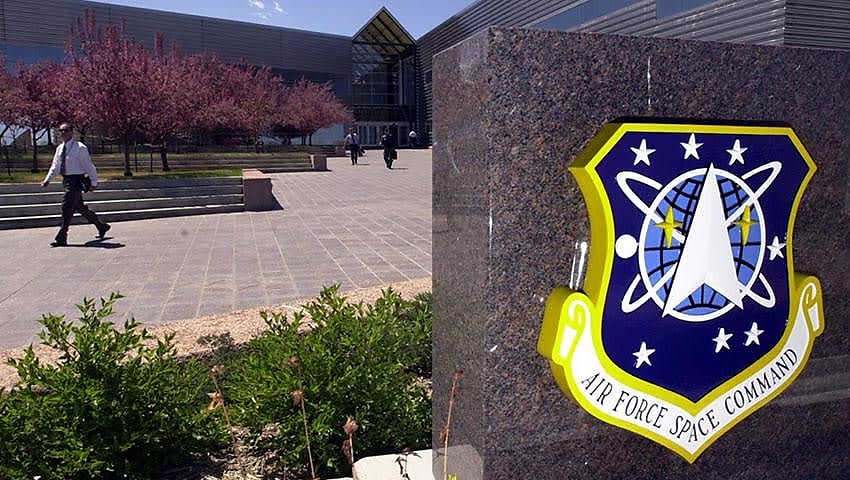
The US Space Force Space Systems Command has selected BAE Systems to provide a new satellite command and control system for the Future Operationally Resilient Ground Evolution (FORGE) program.
Under the contract, FORGE C2 will underpin operations for the forthcoming Next-Generation Overhead Persistent Infrared (Next-Gen OPIR) constellation – a fleet of advanced satellites designed to detect missile launches worldwide by sensing heat in the mid-wave and long-wave infrared bands. These spacecraft will gradually replace the on-orbit Space Based Infrared System (SBIRS) which has provided vital early warning capability since its first launch in 2011.
Don Speranzini, vice-president and general manager of ground systems and services for BAE Systems Space & Mission Systems, explained the importance of the program, saying, “FORGE C2 represents an innovative new approach to advancing command and control capabilities for the Space Force.”
By migrating both SBIRS and Next-Gen OPIR onto a single, modular architecture, FORGE C2 promises to streamline satellite operations. Operators will employ the same suite of applications – encompassing telemetry, tracking and command, flight dynamics, mission management and ground-resource allocation – whether they are tasking legacy SBIRS assets or the more sophisticated Next-Gen OPIR platforms.
This unified approach is expected to:
- Simplify training by standardising procedures and interfaces.
- Reduce sustainment costs through a common software baseline.
- Enhance adaptability for future missile-warning systems and allied integration.
“Our team has worked as a mission partner with the Space Force to develop a system that effectively monitors threats and helps strengthen the defence of the US and our allied nations. We’re proud to contribute to this critical mission,” Speranzini said.
SBIRS emerged from the US Department of Defense’s need to improve on the Cold-War-era Defence Support Program. Since its introduction, SBIRS has detected thousands of missile tests and real-world launches, furnishing commanders with warning of potential ballistic threats. However, the ageing constellation faces limitations in coverage, resolution and revisit times.
Next-Gen OPIR seeks to overcome these constraints, with enhanced sensor sensitivity and on-board processing, the new satellites will deliver higher-fidelity data faster, enabling more precise launch point detection and reduced false alarms. The first Next-Gen OPIR payloads are slated for launch in the late 2020s, in line with broader US Space Force modernisation efforts.

BAE Systems brings to FORGE C2 a deep heritage in defence-grade ground systems. The company has previously developed infrared sensor payloads for Next-Gen OPIR and provided critical software for SBIRS ground stations. Its long-standing collaboration with the Space Force has spanned mission planning, satellite command-and-control integration and cyber security hardening.
Looking ahead, FORGE C2 will form part of the Pentagon’s Joint All-Domain Command and Control vision, aiming to link data across land, sea, air, space and cyber domains. As threats evolve, the ability to swiftly task space assets and disseminate missile-warning information to combatant commanders and allied partners will be paramount.
Want to see more stories from trusted news sources?
Make Defence Connect a preferred news source on Google.
Click here to add Defence Connect as a preferred news source.