

 iscover
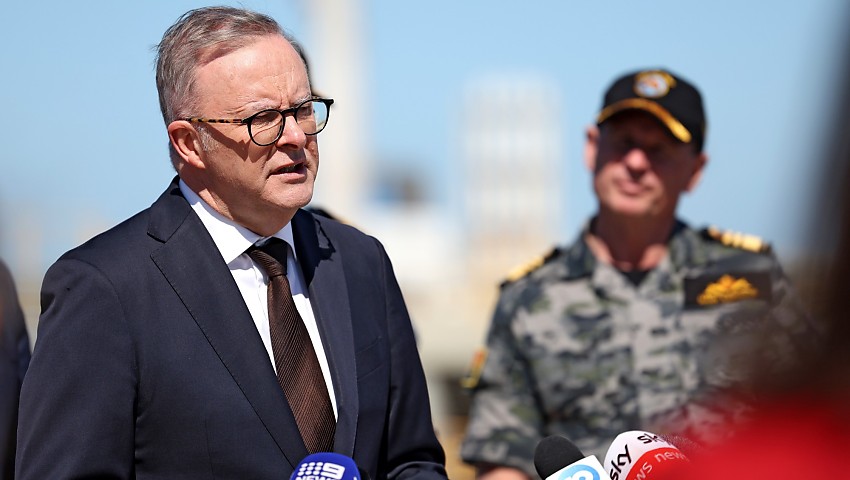
Australian Prime Minister Anthony Albanese is under increasing pressure to lift Australia’s percentage of GDP defence spending, with major media networks now questioning the government’s stonewalling.
The US government has called for all Western allies to lift their defence spending percentages in line with mutually beneficial defence strategy and to end a long-standing reliance on the singular defence capability of the US military.
Earlier this month, the North Atlantic Treaty Organization (NATO) committed to invest 5 per cent of gross domestic product (GDP) annually on core defence requirements as well as defence and security-related spending by 2035. The change occurring to react to the long-term threat posed by Russia to Euro-Atlantic security, at a meeting of the North Atlantic Council in The Hague.
Prime Minister Albanese has been repeatedly queried over the past weeks regarding lack of political will for a defence spending increase.
“What’s important is outcomes, and we’ve delivered $57 billion of increased defence expenditure over the medium term. Ten billion dollars over the short term, over the forward estimates, including $1 billion we brought forward in our budget in March,” he said during a Sky News First Edition television interview on 1 July.
“Australia doesn’t just be passive here; Australia always pulls our weight. And as I, as the Australian prime minister, I’ll talk up our contribution, because we are significant allies, we’re significant players in delivering peace and security in our region.
“We’re also a significant economy, providing goods and services to the world and making a difference. Which is why when I was in the United States a couple of weeks ago, we announced an additional $20 billion of investment into Australia, which will lead to thousands of jobs being created.
“(Regarding the new NATO ruling) we’ll invest in our capabilities … What we’ve done is have a Defence Strategic Review that’s resulted in increased expenditure on specific assets that make a difference to supporting our capability as well as we’re investing in our relationships. Our relationships in this region are very important.

“Measures such as the increased defence relationship and partnership that I announced right here in the Prime Minister’s courtyard with Indonesia, the increased relationship that we have with Papua New Guinea as well.
“The announcements that we’ve made with Tuvalu and Nauru, important relationships for the Indo-Pacific region. We are doing all of that and making an enormous difference. And we’ll continue to invest in whatever capability Australia needs to contribute to our national security. And that is what we will do and that’s what my government has done.”
In speculated major cost-cutting moves, the government has recently announced it will reassess 155mm artillery shell production, the acquisition of geostationary Earth orbit satellite communications systems under the former JP 9102 contract. In addition, there appears to be inadequate funding available for replacement of crucial Royal Australian Navy assets such as minehunter and supply vessels.
Deflecting criticism on the country’s current percentage GDP defence spending of 2 per cent, Prime Minister Albanese has relied heavily on calling out not-outdated election promises from the Australian Liberal Party to raise defence spending.
“It’s not a game where you do what the Coalition did during the election campaign which was say, ‘they’ll have this additional spending’; but they couldn’t say where the money was coming from, they couldn’t say what it was for,” he said, repeating across multiple media conferences.

Want to see more stories from trusted news sources?
Make Defence Connect a preferred news source on Google.
Click here to add Defence Connect as a preferred news source.