

 iscover
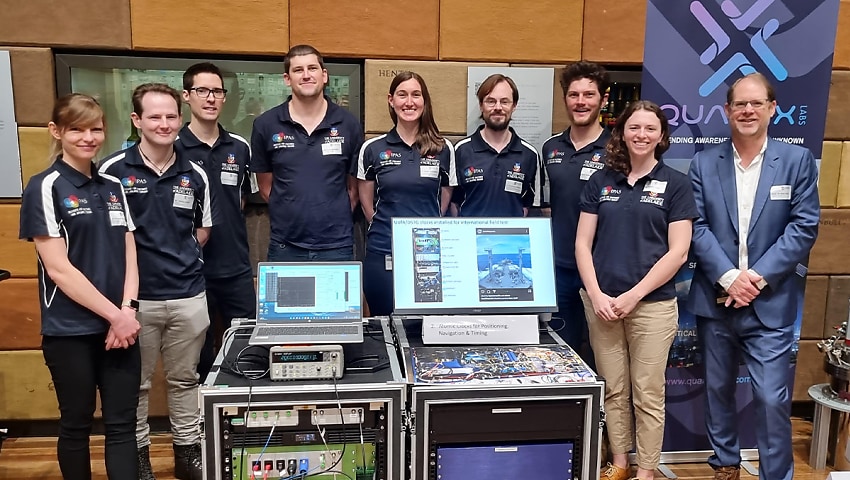
Optical quantum clocks developed by researchers at the University of Adelaide have dramatically outperformed traditional GPS-based navigation systems during naval exercises, marking a significant leap forward in sovereign timing and navigation technology.
Developed by a team led by Professor Andre Luiten, chair of experimental physics and chief innovator at the university’s Institute for Photonics and Advanced Sensing (IPAS), in collaboration with the Defence Science and Technology Group (DSTG), the portable atomic clocks offer unprecedented precision and resilience key attributes for modern defence applications.
“Assured timing is absolutely critical for communications and navigation, especially in contested environments where GPS may be jammed or spoofed,” Luiten said. “In such scenarios, synchronisation between systems degrades quickly. Our solution is a sovereign-developed, rugged and portable clock that can be deployed in the field.”
The quantum clocks were put to the test during the Rim of the Pacific (RIMPAC) naval exercises off Hawaii in July 2022. Designed to endure the physical rigours of maritime conditions, including movement caused by waves, the devices were tested against alternative navigation technologies developed by international teams.
According to Dr Ashby Hilton, research physicist at IPAS, the clocks exceeded expectations. “Our optical atomic clocks are between 20 and 200 times more precise than the current international standard over a one-second measurement. That level of performance simply isn’t achievable with existing GPS-based systems,” he said.
The two separate portable clock systems, developed using rubidium and ytterbium atoms, were engineered to provide ultra-stable timing signals using compact, sealed gas cells and laser interrogation. Traditional clocks offering such precision have historically required laboratory conditions such as large space, stable temperatures and vibration isolation. These new designs overcome those limitations, offering compact, resilient devices suitable for field deployment.
The results of the RIMPAC challenge, which saw the best quantum timing technologies from around the world installed inside a shipping container and put through over three weeks of manoeuvres at sea, have now been published in Nature Communications. Hilton confirmed, “This was the first time an ensemble of optical atomic clocks has been successfully demonstrated at sea. Adelaide’s clocks ranked at the top of the field.”
Beyond defence, the technology may have wide-reaching future applications from next-generation GPS satellite constellations to ultra-precise financial systems where nanosecond-level accuracy matters.

Commercialisation efforts are already underway, with the university partnering with local quantum tech company QuantX Labs to bring the research out of the lab and into industry.
The breakthrough comes as the University of Adelaide and the University of South Australia prepare to merge into the new Adelaide University, aiming to become the nation’s leading innovation and research-driven institution.
Want to see more stories from trusted news sources?
Make Defence Connect a preferred news source on Google.
Click here to add Defence Connect as a preferred news source.