

 iscover
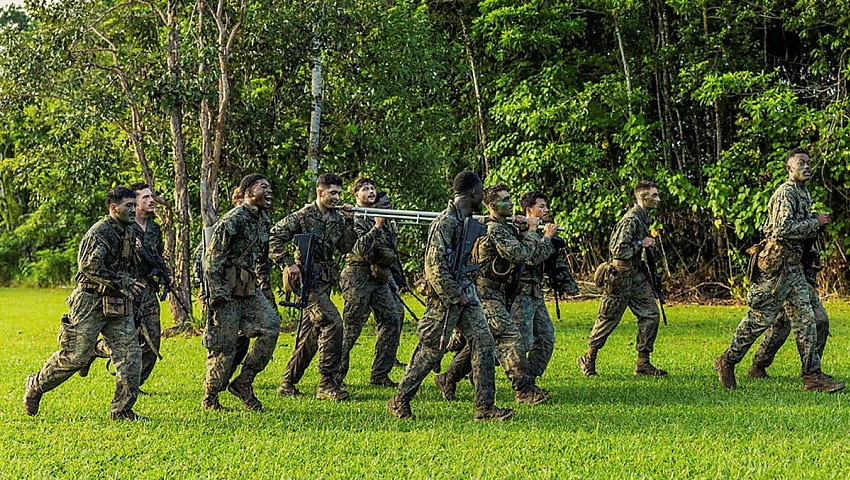
Over 2,000 United States Marines have returned home following a six-month deployment in Australia as a part of the Marine Rotational Force-Darwin program.
US Marines are on the way home following a six-month rotation as part of the Marine Rotational Force-Darwin (MRF-D). Since March, over 2, 500 sailors and Marines have trained in a myriad of exercises and missions across Australia.
Commanding US Officer of the MRF-D, Colonel Jason Armas, said the rotation demonstrates the “strength of Marines and the ADF operating side by side”.
“What began 14 years ago as training in Australia has grown into integrated operations across the region and a force capable of responding to crisis and contingency.”
This year’s rotation saw Marines participate in a myriad of exercises, such as Talisman Sabre, which aims to increase allied readiness in the face of mutual threats, and Southern Jackaroo, which sees Japanese and US defence personnel trained by the Australian army to improve cooperation.
Other exercise participants were a part of included Balikatan, Alon, Super Garuda Shield and Operation Render Safe, which all have a central aim of increasing interoperability.
Australia’s head of Headquarters Northern Command, Group Captain Melissa Neilson, said the deployment was an example of the camaraderie and success of the Australia–US relationship, with the MRF-D continuing to grow in its success following its first iteration in 2012.
“The Marine Rotational Force-Darwin is an example of how Australia and the US are committed to ensuring a peaceful, stable and prosperous Indo-Pacific.”

“This iteration of MRF-D was another success considering the shared goals both the ADF and USMC were able to achieve this rotation.”
CAPT Neilson added that apart from just training, the visiting US military personnel “have shown their appreciation to the NT community through meaningful community engagement activities”.
Training was not restricted to Australian land only, with many exercises taking place across various regions in the south-west Pacific and south-east Asia, including Papua New Guinea and the Philippines.
“MRF-D continues to grow in scale and complexity, this year we’ve trained not only in Australia but alongside our partners in the Philippines, Indonesia, and Papua New Guinea,” Col Armas said.
“We’re moving beyond interoperability to interchangeability, this rotation demonstrates our combined ability to rapidly project forces forward and uphold a free and prosperous Indo-Pacific.”
Want to see more stories from trusted news sources?
Make Defence Connect a preferred news source on Google.
Click here to add Defence Connect as a preferred news source.