

 iscover
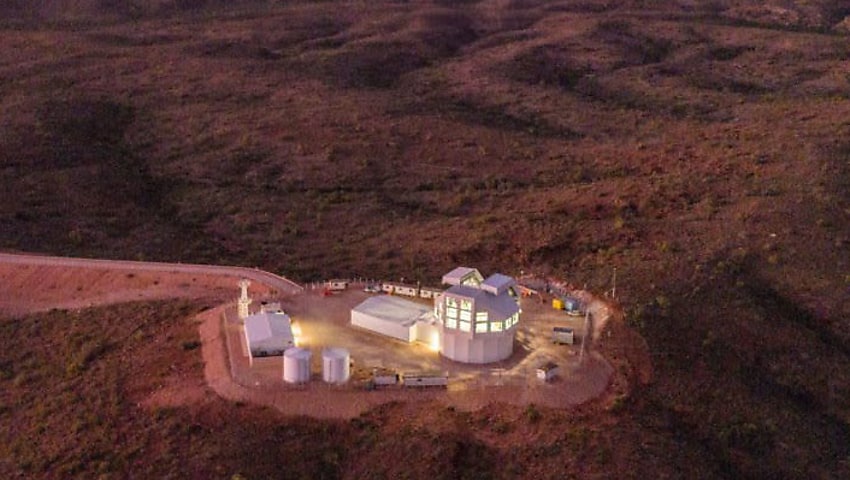
A key piece of space surveillance infrastructure in Western Australia has received a major upgrade, strengthening the ability of the United States and Australia to monitor increasingly crowded and contested orbits.
Defence contractor L3Harris Technologies has completed a significant refurbishment of the primary mirror on the US Space Force’s Space Surveillance Telescope (SST), ensuring the high-tech system remains mission-ready for years to come.
The milestone was highlighted by Barry Croker, commander of Mission Delta 2, during the 2025 Advanced Maui Optical and Space Surveillance Technologies Conference. He said the work, carried out in partnership with Australian personnel in Western Australia, had “significantly improved” the telescope’s ability to detect smaller objects in geostationary orbit.
Situated in the southern hemisphere, the SST plays a critical role in tracking objects roughly 35,000 kilometres above Earth. These include operational satellites, space debris and potential threats, making it a cornerstone of allied efforts to maintain awareness in orbit as congestion and strategic competition intensify.
According to L3Harris Space Systems president Jeff Hanke, the upgrade ensures operators can continue to rely on accurate and consistent data to avoid collisions and safeguard vital space-based infrastructure.
“This is a crucial capability for protecting space assets that underpin military operations, economic activity and everyday life,” he said.
The work involved removing and restoring the telescope’s primary and tertiary mirrors, central components responsible for long-range detection and tracking accuracy.
Engineers repaired and reinforced key structural elements to improve stability in the harsh operating environment. The primary mirror underwent a full refurbishment, including stripping, cleaning and recoating using a specialised vacuum deposition system designed specifically for the telescope.

Meanwhile, the tertiary mirror received detailed cleaning to meet updated coating standards, along with targeted repairs to its support structure.
Together, the improvements are expected to enhance the telescope’s optical performance and extend its operational lifespan.
Originally located at White Sands Missile Range, the SST was relocated to Australia in 2017 and became operational in 2022. It now forms part of a broader US–Australia partnership focused on space domain awareness, supporting not only the two nations but also a network of international partners.
Unlike satellites, which cannot be serviced once deployed, ground-based systems such as the SST can be upgraded over time, offering a long-term strategic advantage as space becomes an increasingly competitive and contested environment.
With decades of experience in advanced optical systems, L3Harris has played a significant role in supporting complex space missions, with its technology used across hundreds of launches where reliability is critical.

Want to see more stories from trusted news sources?
Make Defence Connect a preferred news source on Google.
Click here to add Defence Connect as a preferred news source.