

 iscover
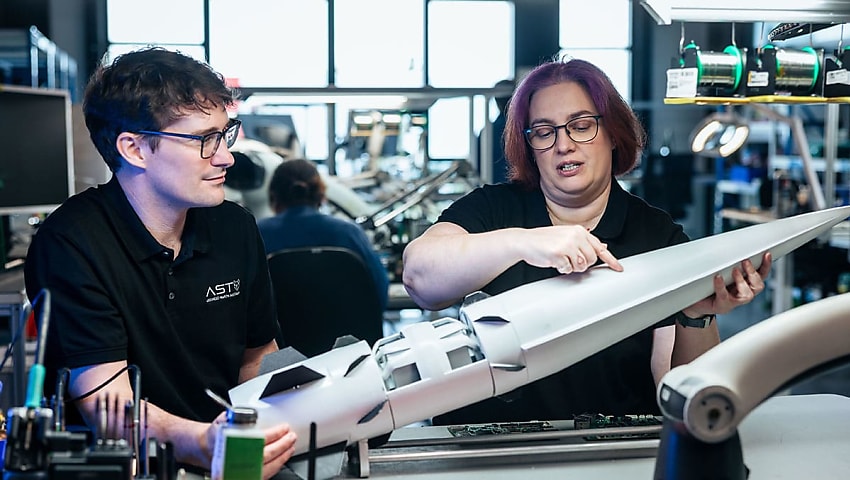
Lockheed Martin Australia is teaming up with the University of New South Wales and Adelaide University to increase hypersonic, space and artificial intelligence capabilities.
As part of the company’s Southern Shield research and development strategy, the collaboration, supported by Defence Trailblazer, will be delivered by Lockheed’s Advanced Systems and Technologies team (AST).
Through six research and development (R&D) projects, Southern Shield seeks to establish a core “mission-driven framework” for future partnerships that promote effective integration into existing systems.
“The Southern Shield R&D strategy is designed to provide a core innovation system that can be applied to multiple programs required to achieve the vision of Australia’s Future Integrated Force,” said Dr Tony Lindsay, director of AST at Lockheed Martin Australia.
Three of the six projects involved in the strategy will focus on hypersonics and counter-advanced threats in a push to align with Defence’s renewed priorities.
“By developing these methods for predicting the performance of hypersonic systems, the projects are providing tools and insights to improve early performance analysis and later detailed design of future hypersonic vehicles,” said Dr Scott Beinke, investigator at Lockheed Martin Australia.
These include the “sovereign rapid aerodynamic tools” project that seeks to improve the performance of vehicle geometrics and the “aerothermal shape distortion of hypersonic vehicles” project, which aims to assess how aerothermal heating can change the shape, controllability and impact of hypersonics.
“This increased access is needed to accelerate the pace of hypersonic and countermeasures technology development for the benefit of both established and emerging defence industry players and therefore for Defence,” said Professor Andrew Neely, chief investigator and Defence Trailblazer’s UNSW theme lead for defensive hypersonics and countermeasures.

“UNSW Canberra has a strong relationship with Lockheed Martin Australia, and we welcome the opportunity to continue to work collaboratively to develop and test these systems, leveraging our world-class hypersonic capabilities and facilities.”
The “Space Layer Optimisation” project is another aspect of Southern Shield that aims to strengthen sovereign opportunities in space and satellite domains.
This project will assess the performance of satellite constellations to determine how they will integrate with other domains to increase overall end-to-end capabilities.
“Ultimately, this will inform studies in the design and improvement of a future integrated force A2/AD [anti-access/anti-denial] capability,” Lindsay said.
Dr Sanjay Mazumdar, executive director at Defence Trailblazer, said these efforts will act as an investment into Australia’s technological growth and “ongoing dedication” to a defence-ready workforce.
“This suite of collaborative projects will bring momentum for advanced hypersonics and space sensing technologies to Defence through an integrated systems approach,” Mazumdar said.
Want to see more stories from trusted news sources?
Make Defence Connect a preferred news source on Google.
Click here to add Defence Connect as a preferred news source.