

 iscover
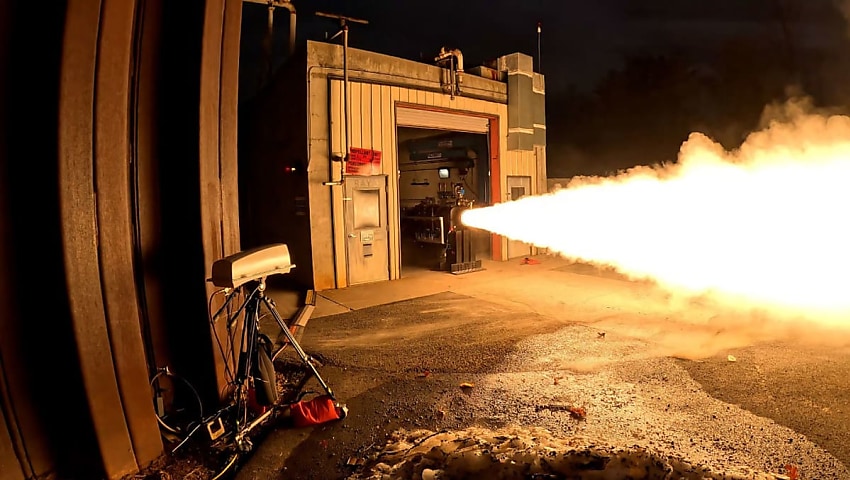
Lockheed Martin and L3Harris Technologies have achieved a significant milestone in the development of the next-generation Precision Strike Missile (PrSM) Increment 4, successfully demonstrating advanced propulsion technology that will underpin the missile’s extended-range capability.
The achievement marks one of the most important technical steps in the US Army’s effort to dramatically expand the range and effectiveness of its long-range precision fires portfolio, with flight testing of Lockheed Martin’s PrSM Increment 4 design now scheduled to begin later this year.
At the centre of the milestone was the successful completion of a propulsion demonstration validating the transition from a solid rocket booster to a ramjet-powered cruise phase, a critical requirement for achieving the substantially greater ranges sought under the Increment 4 program.
According to the companies, the test removed a major technical risk ahead of flight testing and confirmed the maturity of the propulsion architecture intended for the missile. The demonstration verified that the system could successfully transition from the initial rocket-powered launch phase to sustained ramjet propulsion, enabling the missile to travel significantly further than current variants.
The Precision Strike Missile is the US Army’s replacement for the long-serving Army Tactical Missile System and forms a central component of the service’s long-range fires modernisation strategy. Increment 4 represents one of the most ambitious evolutions of the weapon, designed to deliver greater range and operational flexibility than earlier versions.
The successful propulsion test was conducted through collaboration between Lockheed Martin, L3Harris and the US Army. Lockheed Martin is leading development of the missile system, while L3Harris has been responsible for developing the advanced propulsion solution required to achieve the program’s extended-range objectives.
The milestone also highlights growing industry investment in advanced air-breathing propulsion technologies, which are increasingly viewed as a pathway to delivering longer-range, more survivable strike weapons without the size and weight penalties associated with larger conventional rocket motors.
For Australia, the development carries particular relevance given Canberra’s involvement in the Precision Strike Missile program and the Australian Army’s plans to field the weapon as part of its long-range strike capability. The missile is expected to become a key component of Australia’s land-based deterrence posture alongside HIMARS and other precision fires systems.

With the propulsion demonstration now complete, attention will shift to upcoming flight trials that will validate the missile’s performance in operational conditions and pave the way for future fielding by the US Army and partner nations.

Want to see more stories from trusted news sources?
Make Defence Connect a preferred news source on Google.
Click here to add Defence Connect as a preferred news source.