

 iscover
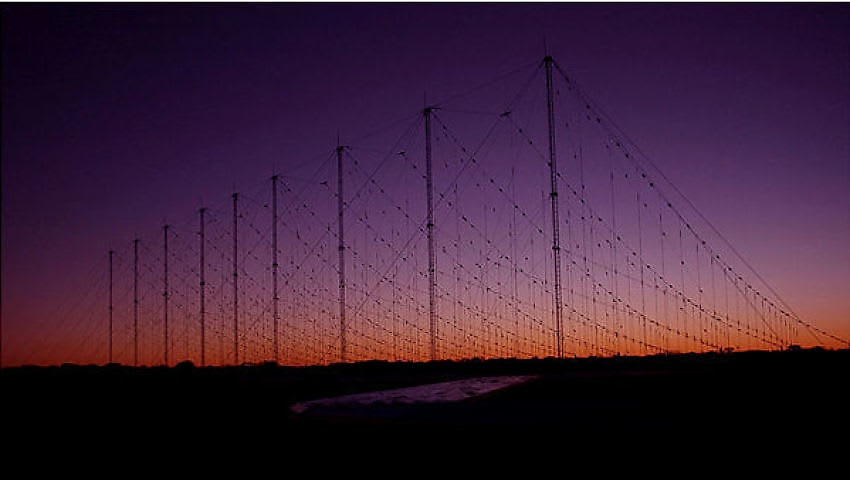
In the largest defence export deal in the nation’s history, Australia is set to provide Canada with its world-leading “over-the-horizon” radar technology to bolster Arctic surveillance.
The $2.5 billion agreement marks the first time Australia has sold its highly sophisticated radar technology to an international partner. The deal will see Canadian forces adopt systems based on Australia’s own Jindalee Operational Radar Network (JORN), which has been a cornerstone of the country’s maritime and air defence for decades.
Australian Prime Minister Anthony Albanese celebrated this achievement, saying, “As close friends and valued partners, Australia and Canada’s relationship is grounded in decades of operational cooperation, shared strategic interests and deep collaboration through the Five Eyes partnership.
“Today’s agreement marks a significant milestone in Australian defence trade and lays the foundation for deeper and mutually beneficial defence industry collaboration with Canada,” Prime Minister Albanese said.
For Canada, the technology provides a vital new tool for monitoring its vast northern approaches. Much like Australia uses the JORN system to surveil the country’s expansive coastlines, Canada will deploy the radar to detect aircraft and vessels at long ranges across the Arctic, a region increasingly recognised as a focal point for global strategic competition.
Defence Minister Richard Marles hailed the partnership as a major step forward for both nations. “Just like Australia, Canada has large areas to surveil,” Minister Marles said. “What this really means is that Australia and Canada are now partners in terms of the future development of the over-the-horizon radar.”
The signing in Canberra was attended by Canada’s Secretary of State for Defence Procurement, Stephen Fuhr, who emphasised the deepening ties between the two countries.
“We’ve stood shoulder to shoulder for generations as the world adjusts to its new strategic and economic realities,” Secretary Fuhr said. “I can’t think of a stronger partner to work with than Australia.”

The agreement is being hailed as a triumph for Australian innovation and industry. BAE Systems Australia, which has been central to the evolution of the JORN technology, will play a key role in the project. Work is scheduled to begin on 1 July 2026, with the Canadian system expected to reach initial operational capability by December 2029.
Australian Minister for Defence Industry Pat Conroy said: “The arrangement represents a powerful example of how defence exports support economic growth, build high-technology capability and strengthen national resilience.”
Beyond the immediate defence benefits, the project is expected to support hundreds of Australian jobs and reinforce the nation’s standing as a global leader in high-technology defence exports.
Minister Conroy added: “The Jindalee Operational Radar Network is a great Aussie success story – world-leading technology that has led to the biggest defence export agreement in Australia’s history. BAE Systems Australia, as the key industry partner, plays a central role in reinforcing Australia’s position as a global leader in OTHR technology. Today’s agreement directly supports the ongoing evolution and resilience of the Jindalee Operational Radar Network.”
The deal is the culmination of years of collaboration and reflects the shared strategic interests of both nations as they navigate an increasingly complex global environment. It also marks a significant milestone in how Australia leverages its homegrown scientific expertise to support allies, ensuring that Australian-developed technology continues to play a pivotal role in continental and global security.

Stephen Kuper
Steve has an extensive career across government, defence industry and advocacy, having previously worked for cabinet ministers at both Federal and State levels.
Want to see more stories from trusted news sources?
Make Defence Connect a preferred news source on Google.
Click here to add Defence Connect as a preferred news source.