

 iscover
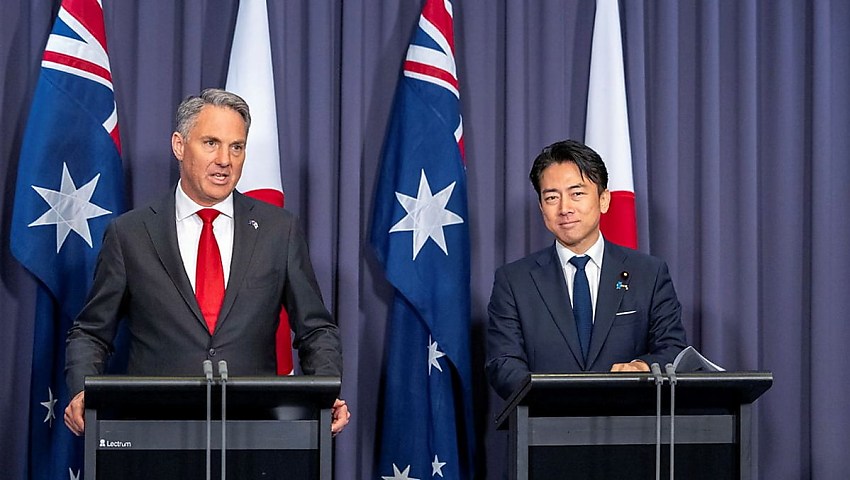
Australia and Japan have completed field trials of a jointly developed high-energy laser in South Australia, marking a major milestone in bilateral defence technology cooperation and opening a pathway towards the collaborative development of advanced directed-energy capabilities.
Australia and Japan have completed successful field trials of a co-developed high-energy laser system in South Australia, marking a significant milestone in the two countries’ rapidly expanding defence industrial relationship.
The Boobook project is the first co-development program between Australian and Japanese defence industries and has demonstrated a prototype laser system developed through collaboration between Australia’s Defence Science and Technology Group (DSTG), Mitsubishi Electric Australia (MEA) and Mitsubishi Electric Corporation.
The field trials were conducted at the Cultana Training Area and DSTG Edinburgh, providing the Australian and Japanese teams with data on the prototype’s performance, design and technical requirements.
The trials also demonstrated the ability of the two countries to jointly develop advanced defence technologies and conduct testing on Australian ranges – capabilities that could become increasingly important as Australia seeks to expand its sovereign capacity to develop, test and manufacture advanced weapons systems.
The Boobook laser draws on more than 20 years of research and development by DSTG and has potential applications in surveillance and other advanced defence missions. The latest testing will inform the next stages of development and potential commercialisation.
Japan’s Minister of Defence, Shinjiro Koizumi, described the trials as a significant development in bilateral defence technology cooperation, noting that Boobook represents not only the first Australia–Japan co-development program but also a landmark for Japanese defence technology being developed internationally.
The project comes amid a broader acceleration in Australia–Japan defence cooperation, including expanded military exercises, technology collaboration and discussions over the use of Australian test ranges for Japanese stand-off weapons testing.

The industrial implications of Boobook extend beyond the laser itself. MEA is establishing new facilities at Rydalmere in NSW as part of a $70 million investment that will create a new Mitsubishi Electric Australia Defence Division.
The facilities are intended to support large-scale manufacturing in Australia, technology transfer and future defence industry opportunities, strengthening Australia’s access to advanced Mitsubishi Electric technologies.
Minister for Defence Industry Pat Conroy said the project demonstrated the practical benefits of closer defence industrial cooperation with Japan.
“This project demonstrates close collaboration with Japan to develop cutting-edge technologies that address real capability needs for the Australian Defence Force.”
“Boobook is more than a technology project. It is a practical example of the growing defence industrial partnership between Australia and Japan, as well as the opportunities that partnership creates for both nations.”
Minister Conroy said the associated investment by Mitsubishi Electric represented confidence in Australia’s future defence industrial base.
“The establishment of Mitsubishi Electric Australia’s new defence facilities in Rydalmere is a strong vote of confidence in Australia’s defence industrial future and will support new opportunities for advanced manufacturing, technology transfer and workforce growth.”
The development is significant as Australia seeks to transition from being primarily a customer of sophisticated defence technology towards becoming a co-developer, manufacturer and sustainment partner.
High-energy lasers are particularly attractive for future defence applications because they have the potential to provide highly responsive effects against suitable targets without relying on conventional ammunition stocks.
For Australia, however, the broader value of Boobook may lie in the industrial ecosystem being created around the technology.
The combination of DSTG research, Japanese defence technology, Australian manufacturing and testing infrastructure provides a model for developing sovereign advanced capabilities while connecting Australian companies and workers to international defence supply chains.
The successful trials therefore represent more than a technology demonstration. They provide a practical foundation for a deeper Australia–Japan defence industrial partnership, one capable of producing advanced technologies, developing highly skilled Australian workers and strengthening the Australian Defence Force’s access to next-generation capabilities.

Want to see more stories from trusted news sources?
Make Defence Connect a preferred news source on Google.
Click here to add Defence Connect as a preferred news source.