

 iscover
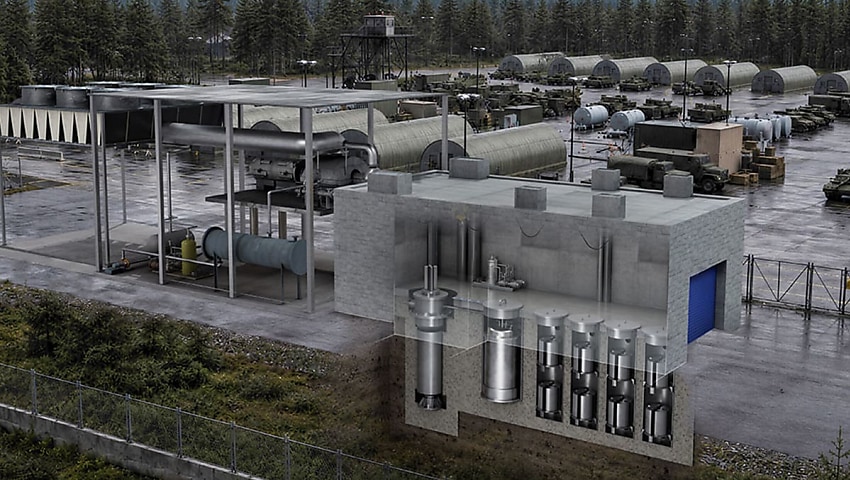
The US Army has selected five nuclear technology companies to develop and operate microreactors at military installations, launching a potential US$2.2 billion ($3.06 billion) program aimed at providing secure, reliable power and reducing reliance on vulnerable civilian electricity grids.
The US Army has selected five nuclear energy companies and five initial military installations under its new Janus Program, marking a major step towards deploying advanced nuclear microreactors across the US defence network.
In partnership with the Department of War’s Defense Innovation Unit, the Army expects to invest up to US$2.2 billion between F72026–27 and FY29–31 to support the construction and operation of the reactors, alongside significant private-sector investment. The Army expects more than 20 microreactors could ultimately be deployed across Department of War installations.
The initial vendors and locations are Antares Nuclear at Fort Bragg, BWXT Advanced Technologies at Fort Campbell, General Atomics Electromagnetic Systems at Fort Hood, Radiant Industries at Fort Benning and Westinghouse Government Services at Fort Drum.
The program is intended to provide reliable baseload electricity for military bases, improving resilience during grid disruptions while supporting the Army’s ability to sustain training and operations.
Army Secretary Dan Driscoll said the initiative would help provide secure power without relying on potentially vulnerable external electricity networks. “We are building the energy resilience necessary to project combat power globally, without relying on potentially vulnerable external grids,” he said.
Unlike earlier demonstration-focused efforts, the Janus Program is intended to deploy reactors capable of operating continuously for years rather than simply demonstrating that the technology can generate power.
The Army has adopted a milestone-based funding model, with government payments tied to the successful achievement of technical objectives. The prototype reactors will be owned and operated by the contractors.

Site selection followed a year-long assessment of energy requirements, infrastructure and environmental factors, including seismic and hydrological conditions, with safety identified as a central consideration.
The program is also designed to strengthen the US domestic nuclear industry by helping multiple companies mature commercially viable microreactor technologies that could ultimately be sold beyond the military.
Washington is targeting operation of the first Army-regulated reactor on a military installation by September 2028, in line with a presidential executive order on advanced nuclear technologies for national security.
The initiative reflects a growing recognition that energy infrastructure is itself a critical military capability. For the US Army, distributed nuclear generation could provide a resilient source of electricity for bases supporting command-and-control, communications, data processing, air defence and other energy-intensive systems.
The Janus Program could ultimately establish a network of reliable, independently powered military installations while simultaneously accelerating the development of a new generation of commercially viable US nuclear technologies.

Want to see more stories from trusted news sources?
Make Defence Connect a preferred news source on Google.
Click here to add Defence Connect as a preferred news source.