

 iscover
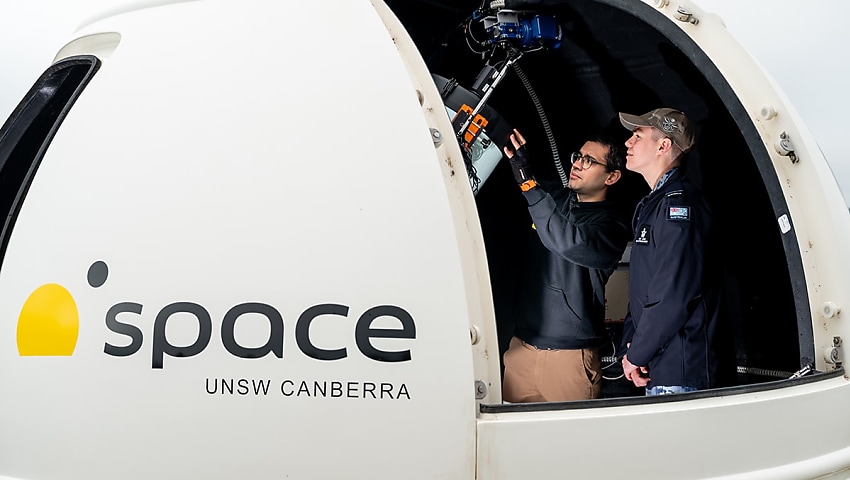
The Australian Defence Force is trialling a University of New South Wales telescope to assess how ground-based optical sensors, automated tasking and data analysis could strengthen Australia’s sovereign space domain awareness capability.
The Australian Defence Force has partnered with the University of New South Wales (UNSW) to trial new approaches to monitoring activity in Earth orbit, using the Viper telescope at UNSW Canberra Space.
The trial is examining how ground-based optical sensors can contribute to Australia’s space domain awareness (SDA) network, including the ability to detect, track and identify objects and activities in orbit.
With tens of thousands of satellites, debris and other objects now orbiting Earth, maintaining an accurate picture of the space environment is becoming increasingly important to military and civilian operations.
Defence is particularly interested in determining how it could directly task and control space surveillance sensors rather than relying solely on commercially supplied tracking data.
The ability to request observations of priority objects could provide Defence with greater control over what is monitored and when, supporting operational requirements and improving awareness of potentially hazardous or strategically important objects.
Automation is another key focus of the trial. Defence is assessing whether automated sensor tasking and data analysis could allow surveillance systems to be rapidly retasked as priorities change, improving responsiveness and operational availability.
Deputy director Space Domain Awareness Wing Commander Alexander Cave, speaking with Flight Lieutenant Shri Devagiri, said the trial would help Defence better understand the contribution ground-based optical sensors could make to future SDA operations.

“This trial with UNSW Canberra is helping us better understand how ground-based optical sensors can contribute to Australia’s space domain awareness capability and support future operational requirements.”
The initiative is also intended to strengthen cooperation between Defence, Australian researchers and industry as Canberra works towards a more resilient and sovereign space surveillance capability.
The trial will provide insights into the operational and support requirements for networks of space surveillance sensors, as well as the role automation could play in managing increasingly large volumes of orbital data.
For Australia, the work reflects the growing strategic importance of space to national security, communications, navigation and other essential services.
The findings from the Viper trial are expected to help shape future approaches to sensor tasking, automation and the development of Australia’s broader space surveillance network, potentially giving the ADF greater control and responsiveness in an increasingly contested and congested orbital environment.

Want to see more stories from trusted news sources?
Make Defence Connect a preferred news source on Google.
Click here to add Defence Connect as a preferred news source.