

 iscover





The financial performance of global defence provider BAE Systems for 2016 has been considered a success, with a revenue increase of £1 billion ($1.6 billion) and a sales increase of £1.1 billion.
According to BAE System's 2016 financial results, the revenue and sales increase was largely due to exchange translation, with the sales increasing to £19.0 billion and revenue increasing to £7.8 billion.
Underlying earnings before interest, taxes and amortisation (EBITA) also increased by 7 per cent on a constant currency basis.
Operating profit increased to £1,742 million, or by 10 per cent on a constant currency basis, and the order intake and order backlog also increased.
Under their operational and strategic review, BAE Systems have highlighted the financial success to upcoming projects, securing development contracts, and completion of programs such as:
- the £118 million engineering and manufacturing development contract for the US Air Force's Eagle Passive Active Warning Survivability System as a follow-on to the technology maturation and risk reduction phase;
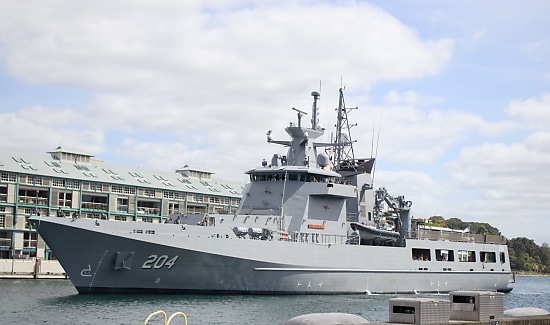
- in maritime in the UK, a £472 million extension to the Type 26 frigate demonstration phase contract, £287 million contract for two additional Offshore Patrol Vessels, including support services for the five-ship program, and £1.3 billion of funding for the Dreadnought Class submarine program, including design, initial manufacture, materials and facilities investment;
- roll-out of the first prototype Armored Multi-Purpose Vehicle for the US Army and delivery of the first prototype Amphibious Combat Vehicles for the US Marine Corps;
- secured a £439 million contract to provide 145 M777 lightweight howitzers to India in January 2017; and
- on the F-35 combat aircraft program, delivered the 250th electronic warfare suite in the US, received orders for additional Low-Rate Initial Production in the US and UK, and selected to provide maintenance, repair, overhaul and upgrade services to support a range of aircraft system components in the UK and Australia for the Europe and Pacific regions, respectively.
BAE are also expecting more success for the upcoming financial year, with the group's underlying earnings per share expected to be 5-10 per cent higher than full-year underlying earnings per share in 2016 of 40.3p.
BAE Systems subsidiary, BAE Systems Australia last year announced that the company's contribution to the Australian economy is of $1.3 billion value.
BAE Systems Australia is one of the two companies in line to secure the $1 billion acquisition contract for the Jindalee Operational Radar Network (JORN).
Want to see more stories from trusted news sources?
Make Defence Connect a preferred news source on Google.
Click here to add Defence Connect as a preferred news source.