

 iscover





The federal Opposition Leader has backed increased investment in defence capability, contingent on capability enhancements and improvements to delivery timelines.
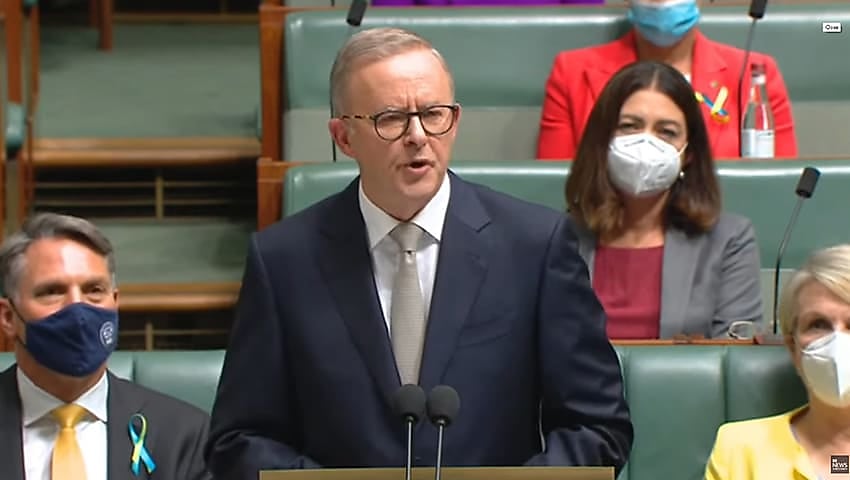
Labor Opposition Leader Anthony Albanese has delivered his 2022-23 budget reply speech, outlining his policy agenda ahead of the upcoming federal election.
This included acknowledging the need for an increase to defence spending amid growing uncertainty and instability in the geostrategic environment.
However, the Opposition Leader stressed that a ramp up in investment would need to “actually improve” Australia’s defence posture, and deliver new capability “when they are needed”. Albanese criticised the government’s management of defence procurement, pointing to its decision to axe Naval Group’s $90 billion Attack Class contract.
“Spending billions to rip up contracts and blindside our allies is no way to enhance our security,” he said.
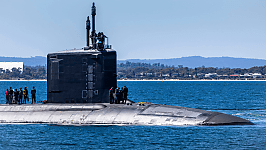
Despite this criticism, Albanese has expressed support for its subsequent plan to procure nuclear-powered submarines under the AUKUS agreement.
However, in his recent address to the Lowy Institute, he noted concern over delivery timelines and program delays associated with a range of major Defence projects, including the Hunter Class frigate program.
He conceded that while he cannot make commitments in the absence of expert advice, a potential Albanese government would review Defence’s procurement portfolio.
Albanese’s budget reply speech followed Treasurer Josh Frydenberg’s formal budget address on Tuesday (29 March).
The government announced Project REDSPICE (Resilience, Effects, Defence, Space, Intelligence, Cyber, and Enablers) — a $9.9 billion investment over the next decade in the Australian Signals Directorate (ASD).
The project aims to bolster the ASD’s offensive cyber capabilities and strengthen its detection and response network.
This is tipped to almost double the size of the agency, generating over 1,900 jobs.
Further, over 2022-23, an additional $74.7 million has been invested in Operation RESOLUTE, which aims to protect Australia’s maritime interests in the region, while $104.2 million has been invested for Operation ACCORDION, supporting operations in the Middle East.
The budget also outlines a raft of recently announced investments in defence capability, including:
- investing $38 billion in the expansion of the permanent ADF and Defence civilian workforce, up 18,500 by 2039-40;
- a $10 billion investment in a new submarine base to be built on the east-coast;
- a $4.3 billion commitment to develop Western Australia's first large-vessel dry berth precinct at Henderson Shipyard;
- a plan to more than triple the size of Osborne Shipyard for the future SSN program;
- investment in new uncrewed aerial surveillance systems, Ch-47F Chinook helicopters, Abrams tanks, and combat vehicles for the Australian Army; and
- extending in-service support for the Hawk 127 Lead-In Fighter Training System;
The budget also includes funding for the provision of veterans services, with an initial $22.8 million to fund 90 extra Department of Veterans’ Affairs staff managing unprocessed enquiries.
[Related: Opposition pledges review of major Defence projects]

Want to see more stories from trusted news sources?
Make Defence Connect a preferred news source on Google.
Click here to add Defence Connect as a preferred news source.