

 iscover



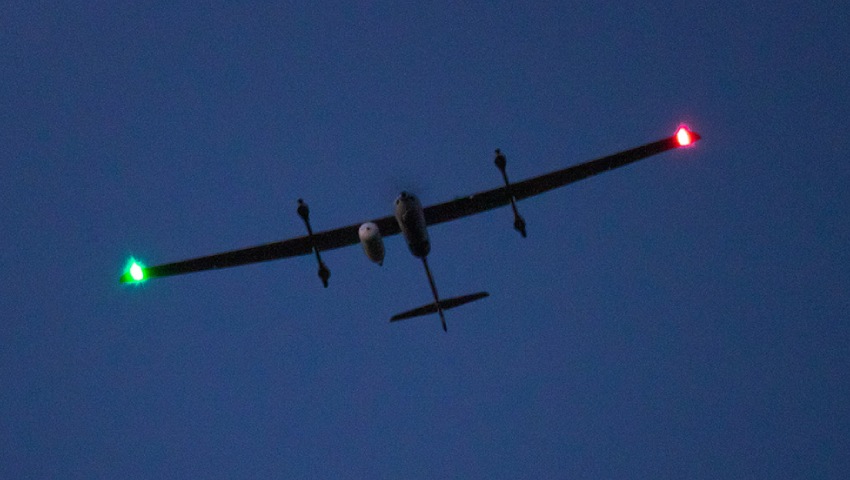
The global defence contractor has completed a flight test of its Stalker platform in collaboration with a number of US firms.
Lockheed Martin Skunk Works has tested the expanded endurance capabilities of its configured Stalker VXE unmanned aerial system (UAS) through a flight test on 18 February at the Santa Margarita Ranch in California.
According to the prime, the flight test established a new record in the Group 2 (5 to <25-kilogram) category, with a flight time of 39 hours, 17 minutes and seven seconds.
The flight report has been submitted to the global sanctioning body for aviation records, Fédération Aéronautique Internationale (FAI) via US affiliate, the National Aeronautic Association.
Ahead of the flight test, a production Stalker VXE was modified with an external, wing-mounted fuel tank.
The test was aimed at informing improvements to Stalker VXE for scalability.
The flight test was completed with the support of a number of US firms, including:
- Edge Autonomy as a developer and original equipment manufacturer of high-performance unmanned systems, including the Stalker VXE aircraft.
- Adaptive Energy to develop fuel cell technology, investing in advanced power sources and testing innovative implementation techniques for field operations.
- Composite Technology Development Inc to build a lightweight external wing tank.
- Precision Integrated Programs to provide flight operations support.
- Clovis Area Modelers to provide FAI official contest directors to continuously monitor and adjudicate the flight for ratification.
Stalker VXE is built with broad operating envelope, modular payload compliance, vertical take-off and landing capability, and open system architecture.
This is expected to support diverse and demanding missions while maintaining a small operational footprint and crew.
This latest demonstration follows the successful flight test of the Hypersonic Air-breathing Weapon Concept (HAWC) as part of a collaboration with the Defense Advanced Research Projects Agency (DARPA), Air Force Research Laboratory (AFRL), and Aerojet Rocketdyne (AJRD).
The missile reportedly hit speeds in excess of Mach 5 at a peak altitude above 65,000 feet (just under 20 kilometres).
This came less than a year after a hypersonic missile demonstration alongside Northrop Grumman.
[Related: Lockheed Martin tests hypersonic missile ]

Want to see more stories from trusted news sources?
Make Defence Connect a preferred news source on Google.
Click here to add Defence Connect as a preferred news source.