

 iscover





The prime has been tasked with supporting the US military’s future missile-launch and missile-warning detection capabilities in the region.
The US Naval Information Warfare Center (NIWC) Pacific has awarded a $99.6 million (AU$134.6 million) contract to Northrop Grumman Corporation for the provision of mission-critical capabilities for Relay Ground Station-Asia (RGS-A).
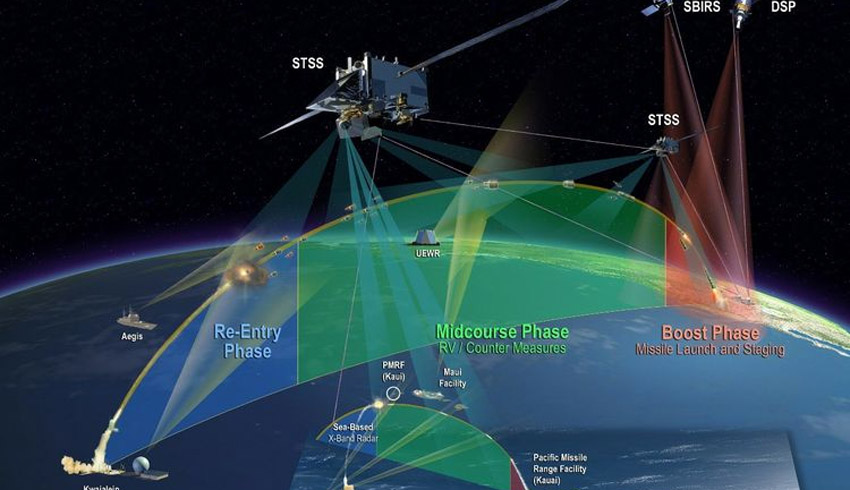
Specifically, the prime has been tasked with designing, developing, integrating, testing and delivering the first of the next-generation relay ground stations to support legacy and future missile-launch and missile-warning detection satellites.
This aims to help address the US Space Force’s broader push to modernise existing missile warning and missile defence systems with the Future Operationally Resilient Ground Evolution (FORGE) system.
FORGE leverages relay ground stations designed to support existing and new satellite constellations, helping to manage changes in bandwidth and resiliency.
NIWC Pacific plans to develop six antennas for RGS-A to enable the Space Systems Command (SSC) Next Generation Space Based Infrared System (SBIRS) Ground System to operate the legacy satellites in geosynchronous orbit.
The antennas are set to be deployed to the island of Guam, remotely monitored and operated from the United States.
Northrop Grumman is expected to undertake most of the work under the five-year contract at its facility in Boulder, Colorado.
“The advanced technologies we bring to this mission build on our proven capabilities to provide existing and future missile warning systems that help keep our nation and its allies safe,” Aaron Dann, vice-president, strategic force programs, Northrop Grumman, said.
“The model-based open-systems architecture provides the ability to rapidly deploy follow-on RGS systems in future locations around the world.”
This latest contract comes just weeks after the company entered into a collaboration agreement with US-based telecommunications company AT&T to research and develop a digital battle network for the US Department of Defense.
The capability is expected to leverage AT&T 5G and Northrop Grumman’s advanced mission systems.
Specifically, the companies have committed to delivering a cost-effective, scalable, open architecture solution designed to enable DoD to connect distributed sensors, shooters and data from all domains, terrains and forces.
The network is tipped to integrate high speeds, low latency and cyber security protections of private 5G networks, while also supporting Joint All-Domain Command and Control (JADC2).
[Related: Northrop Grumman, AT&T partner to develop 5G battle network]

Want to see more stories from trusted news sources?
Make Defence Connect a preferred news source on Google.
Click here to add Defence Connect as a preferred news source.