

 iscover



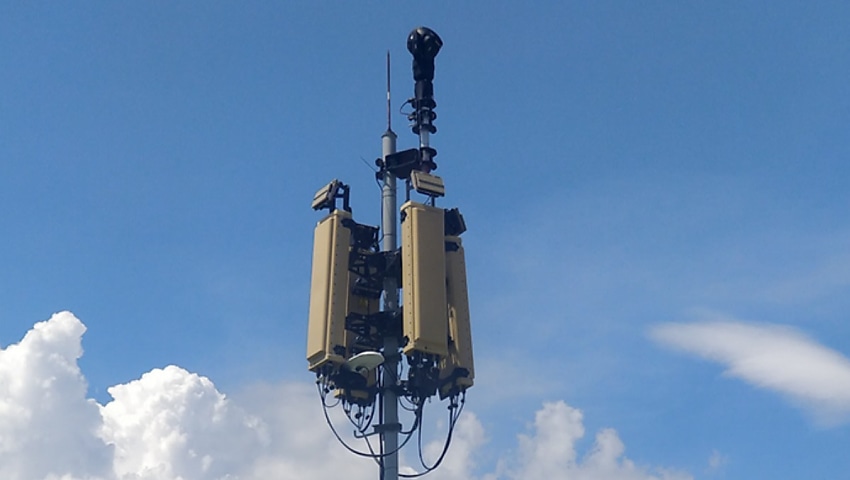
ASX-listed DroneShield confirmed that it has sold and deployed the company’s DroneSentry counter drone capability at an undisclosed US international airport.
The announcement marks the first time the company’s deployed the system at a US airport.
It is hoped that the DroneSentry will deliver enhanced detection capabilities, which are compliant with existing US civilian airport legislation.
The system is expected to contain the company’s RfOne passive long-range drone detection sensors which are integrated with the DroneSentry-C2 command-and-control enterprise software.
The systems are designed to ensure drone detection capabilities, as well as tracking and reporting to ensure airports can assess the airspace.
“As more drones take to the sky every year, it increases the risk profiles for airports,” Jayde Wilks, sales executive at DroneShield, said.
“Drones can damage, or even bring down, an airliner with contact. Reports of airport disruptions due to drones continue to rise, and the safety risk and cost involved from plane diversions and flight disruptions can be significant. With this and future airport deployments, we look forward to helping address the risk.”
The company hopes that the deployment of the system will prove a gateway into the US civilian aviation market.
Earlier in August, DroneShield announced its receipt of a $2 million cash payment, awarded via a grant from the Australian government as an R&D Tax Incentive.
The grant, awarded for DroneShield’s work throughout 2021, represents the largest recorded government incentive since the company’s inception.
Oleg Vornik, DroneShield’s CEO, said the award is a reflection of the company’s continual growth in the counter-UAS space, both domestically and abroad.
“DroneShield appreciates the substantial support it receives from the Australian government, through grants and export support for overseas sales, alongside of our current and under proposal contracts with the Australian Defence Force,” Vornik said.
“At over 40 engineers, DroneShield has grown to be an Australian-based global leader in the artificial intelligence, electronic warfare and adjacent technologies, which are becoming increasingly in demand in current uncertain times around the world.
“This record grant receipt reflects the unique R&D work that we do, here in Australia.”
The announcement of the government incentive comes less than a week after an undisclosed US government agency placed a repeat order valued at approximately $500,000 for DroneShield’s counter-UAS products.
[Related: DroneShield secures new counter-UAS order]

Want to see more stories from trusted news sources?
Make Defence Connect a preferred news source on Google.
Click here to add Defence Connect as a preferred news source.