

 iscover
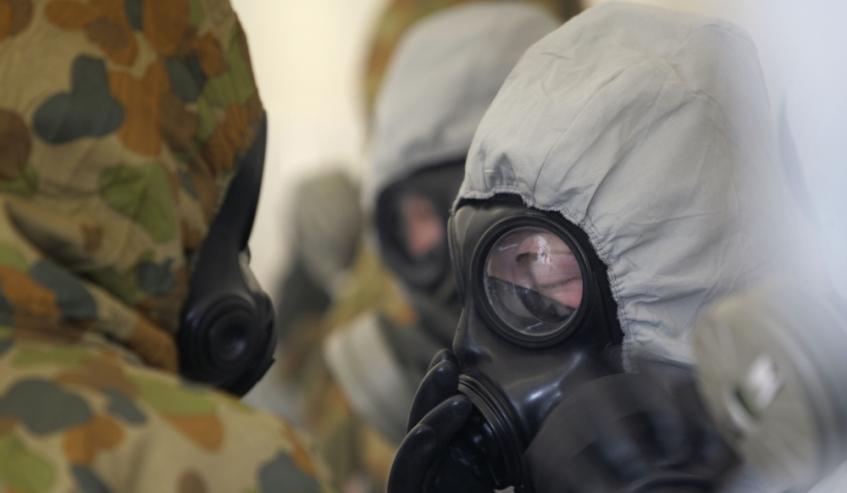
Research into the development of force protection and biological security for the Australian Defence Force has been given a boost, with a defence technology prime and leading university agreeing to collaborate.
Leidos Australia and the University of New South Wales (UNSW) have signed a memorandum of understanding (MOU) to work together in this field of research. The partnership will support improvements in detection and response to mitigate the threat of biological, chemical and radiological (CBR) weapons for the Australian people and its allies.
Leidos said the research into this field comes on the back of increasing political instability and rising global tensions, increasing the threat of unconventional attacks.
The company also said the broader application of this research will help first responders handle hazmat situations like industrial chemical releases and drug labs more effectively, as well as help Australian health officials respond more effectively to emergent diseases like avian flu, tuberculosis, MERS and antibiotic resistance.
The MOU was signed by UNSW head of the School of Public Health and Community Medicine Professor Raina MacIntyre and Leidos Australia technical director Dan Brewer.
Professor MacIntyre said, "We welcome this MOU and investment from Leidos Australia. This sort of collaboration between industry and academia is very important because it enables us to find new ways to solve problems together."
Brewer added, "Leidos Australia’s investment in dual-use technologies such as these represents our continued commitment to both the safety and security of the ADF and the Australian people as a whole."

Want to see more stories from trusted news sources?
Make Defence Connect a preferred news source on Google.
Click here to add Defence Connect as a preferred news source.