

 iscover






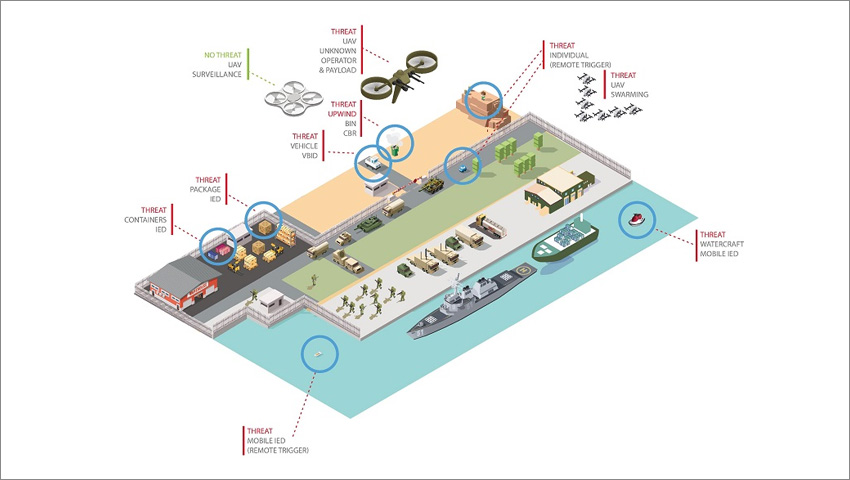
The Next-Generation Technologies Fund (NGTF) has sought proposals from industry and academia on Phase 2 of the Counter Improvised Threat Grand Challenge (CIT-GC).
The CIT-GC of the NGTF is entering a Phase 2 challenge aimed at realising leap-ahead technologies for countering improvised threats.
The improvised threats facing Australia and its coalition partners range in complexity and exist in all environments – land, sea and air. The threat is dynamic and evolving rapidly.
The aim of the CIT-GC is to demonstrate an integrated and agile system capable of fast evolution that can detect and neutralise threats on a complex joint battlespace with low risk to Defence personnel and civilians.
The focus of Phase 2 is on a counter unmanned aerial system (CUAS) capability.
The NGTF, managed by DST, is a government initiative introduced with the Defence Industry Policy Statement in 2016.
Together with the Defence Innovation Hub and the Centre for Defence Industry Capability, these three form the integrated Defence innovation system.
With an investment of $730 million over the decade to June 2026, the NGTF is a forward-looking program focusing on research and development in emerging and future technologies for the “future Defence Force after next”.
The NGTF is focused on the following nine priority areas as determined by the Defence White Paper 2016:
- Integrated intelligence, surveillance and reconnaissance;
- Space capabilities;
- Enhanced human performance;
- Medical countermeasure products;
- Multi-disciplinary material sciences;
- Quantum technologies;
- Trusted autonomous systems;
- Cyber; and
- Advanced sensors, hypersonics and directed energy capabilities.
Potential suppliers wishing to respond to this procurement will be required to fully comply with and meet the following conditions for participation:
- Clause 5 - Statement of Tax Record;
- Clause 8 - Defence Security requirements;
- Applicants must hold an Australian Business Number (ABN) or a New Zealand Business Number (NZBN) to participate in this procurement.
Participation in Phase 1 is not a prerequisite for participation in Phase 2. The contract delivery model is to be proposed as part of the bid. The model could be:
- Single prime developer;
- Single prime developer utilising subcontractors; and
- Multiple partnerships of developers.
Submissions are to be made via AusTender, for further information, email

Stephen Kuper
Steve has an extensive career across government, defence industry and advocacy, having previously worked for cabinet ministers at both Federal and State levels.
Want to see more stories from trusted news sources?
Make Defence Connect a preferred news source on Google.
Click here to add Defence Connect as a preferred news source.