

 iscover




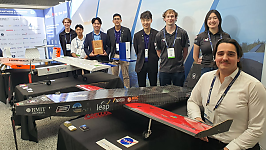


A robotics team of the Royal Australian Navy has developed a drone prototype, designed to improve critical incident response times.
HMAS Cerberus’ Robotics Club has developed a drone prototype — referred to as a Marine Evolutions Response Vessel (MERV) — which can be used to provide Royal Australian Navy warships with live video footage during a critical incident, helping to boost response times.
According to Defence, the drone — a scaled-down version of the RAN’s current seaboat — can autonomously patrol incident areas, with the video footage streamed in real-time to a ship for viewing by command.
The drone is designed to be used for a range of critical incident responses, including a man overboard incident, patrolling naval waters, intercepting and interrogating trespassing vessels and towing targets for live firing.
The land-based prototype is made from plywood and fibre-glass and propelled by a 3D-printed water-cooled brushless motor, made at the Centre for Innovation at Fleet Base East.
“Being able to produce these components through these emerging technologies has allowed the robotics club to test designs in conjunction with safety considerations and refine the final product,” head of the robotics club, Chief Petty Officer Electronics Technician Allan Winning, said.
“This has allowed us to move forward in implementing this system to display at this year’s Autonomous Warrior event.”
[Related: DroneShield receives first order under EU Police contract]

Want to see more stories from trusted news sources?
Make Defence Connect a preferred news source on Google.
Click here to add Defence Connect as a preferred news source.