

 iscover
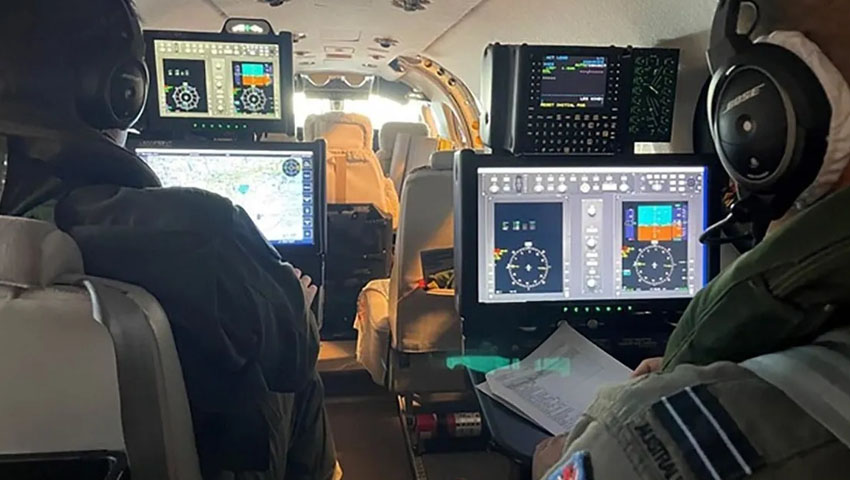
RAAF’s No. 32 Squadron has trained navigators with a new digital console onboard its KA350, which has replaced paper maps and chart systems.
The “next-generation” mission airborne training system (MATS) mirrors ground simulators and can provide recruits with instant feedback, realistic emulations of events and provide post-mission analysis.
It has been developed by Jet Aviation in collaboration with Sydney-based software company Cirrus and Defence’s own Capability Acquisition and Sustainment Group.
The Institute of Aviation Medicine also provided specialist design and technical input to help replace the old-fashioned system in place for nearly two decades.
It will also be used by Air Mission Training School (AMTS) and based at RAAF Base East Sale.
Commander of C Flight at AMTS Squadron Leader Charles Tomlinson said the way navigators used to be trained involved a lot of traditional paper.
“MATS is a very different system that allows us to inject training scenarios directly into the on-board console so trainees can fly realistic missions on a high-fidelity system, taking all the aircraft’s technical requirements into account,” SQNLDR Tomlinson said.
“This is a comprehensive and immersive next-generation training system that sets students up for success, whether they go on to specialise in air combat, maritime or air mobility roles.”

Commander of Air Force Training Group Air Commodore Gregory Frisina said, “It has taken a year, but it is awesome news that Air Force Training Group now has a functional airborne training system that mirrors ground simulator systems.
“This system could also open the door for engagement with Indo-Pacific partners in accordance with Air Force strategy.”
The KA350 King Air is a twin-engine turboprop used for training of Air Force Mission Aircrew and Navy Aviation Warfare Officers.
It can be configured for a variety of specialist roles, including air logistic support, imagery, surveillance and electronic warfare.
RAAF has 12 KA350 King Airs, which all belong to No. 32 Squadron – eight of these are the ex-38 Squadron aircraft and the other four are leased from Hawker Pacific.
Want to see more stories from trusted news sources?
Make Defence Connect a preferred news source on Google.
Click here to add Defence Connect as a preferred news source.