

 iscover





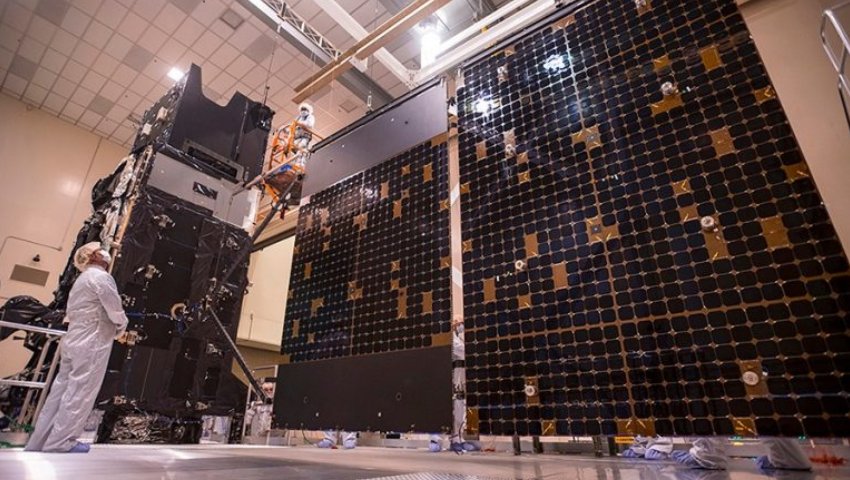
The companies have achieved three critical milestones in the joint development of a missile warning sensor payload.
Northrop Grumman and Ball Aerospace have completed three rounds of tests in the production cycle for the Next Generation Overhead Persistent Infrared (Next Gen OPIR) Geosynchronous Earth Orbit (GEO) Engineering Development Unit (EDU) payload.
The rounds included ambient functional testing, thermal vacuum chamber testing and acoustic testing, which simulated life in orbit to ensure the payload is prepared for the harsh space environment.
The payload — developed for the US Space Force’s Lockheed Martin-built GEO missile warning satellites — features flight-quality components and integrated hardware and software to reduce risk, prove technology readiness and validate the digital models.
“Our Northrop Grumman and Ball Aerospace team is on track to deliver the flight payload of this critical national defense system in 2023,” Bob Mehltretter, vice president, strategic force programs, Northrop Grumman, said.
“The payload is ready to operate in a space environment under extreme temperature conditions and will meet all mission performance requirements.”
The first GEO satellite launch is scheduled for 2025.
“Testing the OPIR EDU payload is an important step to delivering a capability that is critical to the mission needs of our customers and our national security,” Deirdre Walsh, vice president, strategic operations at Ball Aerospace, said.
“The completion of this milestone by the Northrop Grumman and Ball Aerospace team is due to decades of experience with modern, agile infrared sensor development.”
Once operational, the missile warning system is expected to detect and track current and emerging threats from hostile entities around the globe.
The capability is the latest evolution of the US Space Force’s missile warning satellite constellation.
[Related: Northrop Grumman appoints new corporate VP of global operations]

Want to see more stories from trusted news sources?
Make Defence Connect a preferred news source on Google.
Click here to add Defence Connect as a preferred news source.