

 iscover





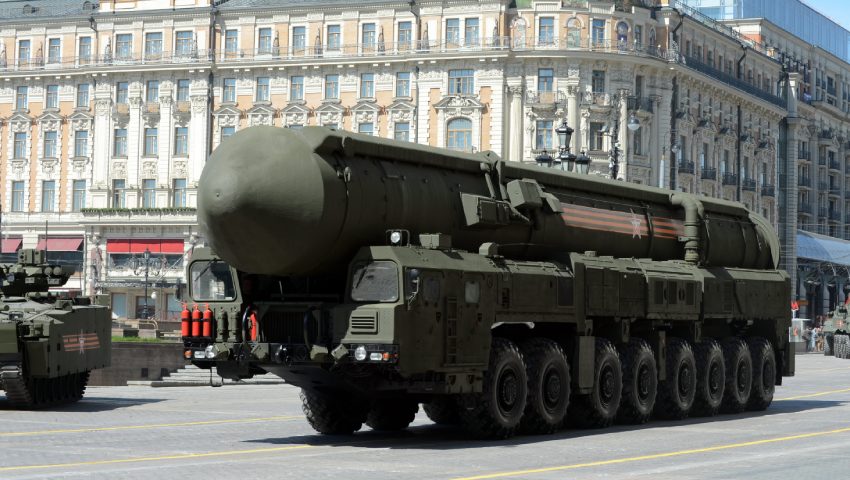
The Kremlin has confirmed the launch of a long-range missile from northwest Russia, which President Vladimir Putin said serves to make adversaries “think twice”.
Russia has test-launched its new nuclear-capable intercontinental ballistic missile (ICBM), known as “Sarmat”, from Plesetsk in northwest Russia on Wednesday (20 April) at 3pm Moscow time.
The missile reportedly travelled nearly 6,000 kilometres, hitting targets in the Kamchatka Peninsula.
According to Russian President Vladimir Putin, the missile is capable of “overcoming all modern means of anti-missile defence”.
“It has no analogues in the world and won’t have for a long time to come," Putin said.
“…This truly unique weapon will strengthen the combat potential of our armed forces, reliably ensure the security of Russia from external threats and make those who, in the heat of aggressive rhetoric, try to threaten our country, think twice.”
The test launch comes amid Russia’s ongoing assault on Ukraine following its invasion in late February.
President Putin has previously threatened to use nuclear weapons, ordering Russia’s nuclear forces to be on high alert, claiming the country has been provoked by NATO.
“Top officials in leading NATO countries have allowed themselves to make aggressive comments about our country,” he said.
Late last year, the Russian Federation also conducted an anti-satellite weapons test against one of its own targets.
The tests are estimated to have generated over 1,500 pieces of trackable orbital debris, potentially creating hundreds of thousands of smaller fragments.
The debris is travelling in the “high traffic zone” of low-Earth orbit, close to both the International Space Station and the Chinese Space Station.
The anti-satellite test was condemned by the United States and its allies.
The Combined Space Operations (CSpO) Initiative Principals Board – comprising representatives from Australia, Canada, France, Germany, New Zealand, the UK, and the US – recently met in Cape Canaveral, Florida to discuss co-operation on space security.
Representatives expressed “strong concerns” over the test’s generation of space debris, estimated to total over 1,500 pieces of trackable orbital waste, potentially creating hundreds of thousands of smaller fragments.
[Related: CSpO members condemn Russia’s anti-satellite missile test ]

Want to see more stories from trusted news sources?
Make Defence Connect a preferred news source on Google.
Click here to add Defence Connect as a preferred news source.