

 iscover






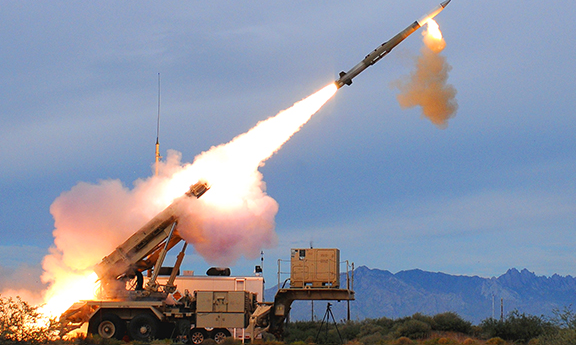
Lockheed Martin trialled their multi-domain capabilities during the recent US Indo-Pacific Command’s Valiant Shield 2022, putting their DIAMONDShield battle management system and Virtualized Aegis Weapon System (VAWS) to the test.
Valiant Shield, a 12-day training exercise located between Guam and various locations across the Pacific, is a biennial training activity that forms the basis of the US Indo-Pacific Command’s integrated deterrence strategy, integrating thousands of US military personnel, as well as over 200 ships, aircraft and vehicles.
The exercise was an opportunity to trial Lockheed Martin’s new artificial intelligence capabilities via the DIAMONDShield battle management system (BMS), designed to facilitate faster and better decision-making by commanders on the battlefield by delivery decision aids and recommendations.
The company deployed 14 engineers to trial the BMS and VAWS across defensive and offensive manoeuvres that also integrated into the Lockheed Martin High Mobility Artillery Rocket System (HIMARS) and PAC-3 Missile Segment Enhancement (MSE).
Following the BMS’ delivery of decision aids to commanders, the VAWS digitally utilised targeting data to control assets such as the PAC-3 MSE and HIMARS, termed “digital force orders”.
“We recognise our customers’ need to rapidly integrate emerging technologies into mission-focused solutions,” Joe Ferrara, Lockheed Martin’s advanced concepts director, said.
“Through experiments like Valiant Shield, we are learning collaboratively with our customers to advance Joint All Domain Operations, with the intent of delivering capability faster to the warfighter.”
Such operations are expected to streamline the command and control process.
“Real-time feedback from the operators that live this daily is invaluable,” Andrew Cook, Lockheed Martin’s technical lead supporting Valiant Shield, said.
“You see what works well for them, what features they might struggle with, and what we could do to make their jobs easier and faster. As an industry partner, we are constantly trying to understand the most pressing needs, engineer solutions to them, and incorporate feedback on what we built. The faster we can get that feedback, the faster we can turn around new innovations.”
The company has confirmed that feedback will be integrated to deliver yet further improvements to multi-domain operations ahead of the next exercise.
[Related: US Army taps Lockheed Martin for energy storage program]
Want to see more stories from trusted news sources?
Make Defence Connect a preferred news source on Google.
Click here to add Defence Connect as a preferred news source.