

 iscover
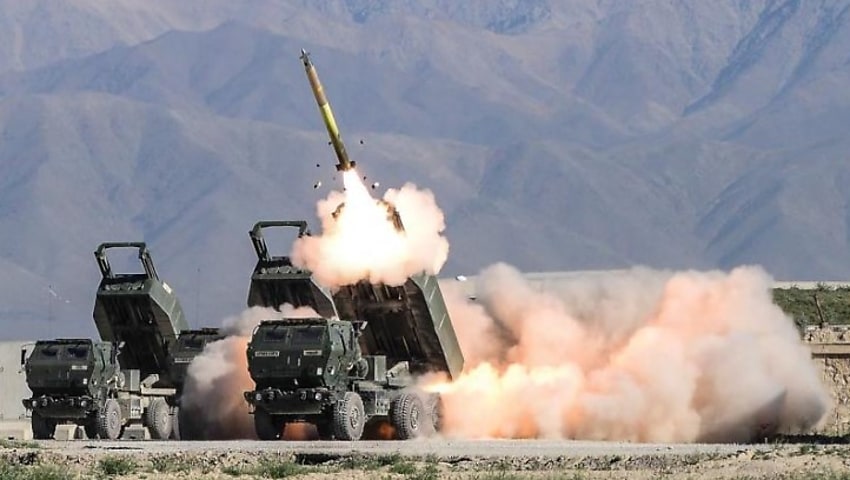
The Australian Army has celebrated the acquisition of HIMARS systems as an historic achievement with the new ability to accurately hit surface targets hundreds of kilometres away with guided missiles.
The high mobility artillery rocket systems are the first land-based, surface-to-surface missile system acquired in Defence’s future long-range strike capability.
The Australian Defence Force is contracted to receive 20 of the six-wheeled, all-terrain launchers for the Royal Australian Artillery, with initial delivery in 2025 and final operating capability planned for 2029.
The American-designed Lockheed Martin system has a range of 300 kilometres and each launcher module contains either six guided rockets or a single tactical missile.
Major Stephen Bowles of Fires Modernisation-Army said HIMARS could eventually be a primary, combined-arms weapon.
“They’re impressive, they’re battle-tested. We can see them being used in Ukraine and they are constantly being exercised in the Indo-Pacific,” MAJ Bowles said.
“We do plan to grow the RAA by one battery in phase one of the acquisition. In later phases we’re looking to grow to an additional regiment over the next decade.
“It’ll reinvent how Army fights. We currently operate by fires supporting manoeuvre, after HIMARS it’ll potentially be manoeuvre supporting fire.”

HIMARS have been used by Ukraine defence forces in the Russo-Ukraine war and also in live-fire during Exercise Talisman Sabre 2021 at Shoalwater Bay. MAJ Bowles said Australia had big enough training areas to support firing the long-range ammunition.
“It looked lethal, looked impressive, and was just a rapid insertion,” he said.
“Shoot and move. It was something that I’d never seen before, beyond any sort of live-fire engagement I’ve ever seen in Defence.
“It’s survivable because you can shoot and move far quicker and use all existing roads. It’s lighter as well. We can get it on to landing helicopter docks and especially C-130s and C-17s (aircraft) for transporting.
“What we’re looking at is a truck that carries an integrated, launcher-module system. So for operators, any of the issues they will come across will most likely be simple, mechanical ones.”

Want to see more stories from trusted news sources?
Make Defence Connect a preferred news source on Google.
Click here to add Defence Connect as a preferred news source.