

 iscover
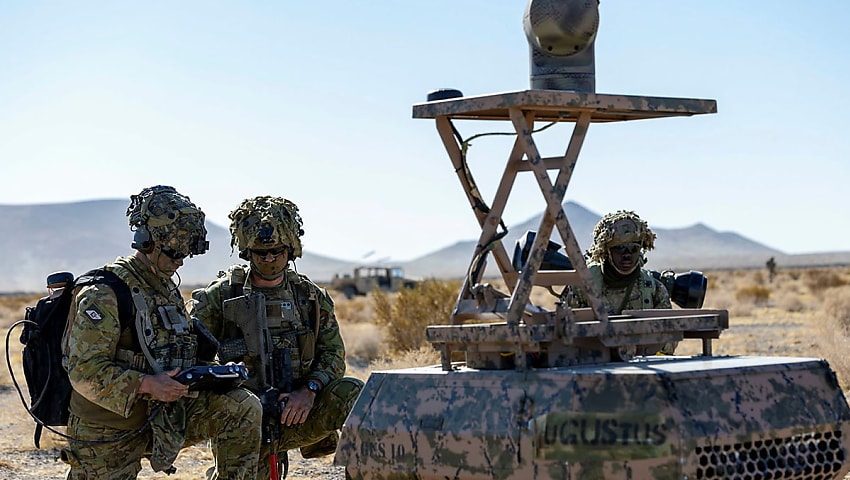
The Australian Army has partnered with military personnel from the US, UK, Canada, New Zealand and France as part of Project Convergence to help it adapt to new challenges and operating concepts across the multi-domain environment.
In a bid to strengthen its operational capabilities, the Australian Army has partnered with international counterparts to enhance national defence and fast-track the integration of cutting-edge technology across all warfighting domains. The move underscores Australia’s commitment to remaining at the forefront of military innovation amid an increasingly complex security landscape in the Indo-Pacific and beyond.
At the heart of these initiatives is Project Convergence, a US-led campaign that utilises persistent experimentation as a platform for learning. The project is designed to help armed forces adapt to evolving challenges across land, air, sea, space, and cyber domains.
By fostering an environment where new technologies and tactics can be trialled in realistic conditions, the exercise aims to transform military operations for the modern era.
Approximately 140 Australian Army personnel and support staff were recently deployed to California to take part in Project Convergence Capstone 5 (PCC5). This operation saw them working shoulder-to-shoulder with military colleagues from the US, UK, Canada, New Zealand, and France.
The cross-training involved a series of simulated warfighting scenarios that tested readiness and advanced technological integration, reinforcing long-standing defence ties with like-minded allies.
Major General Richard Vagg, the Australian Army’s Head Land Capability, said the purpose of the simulations was to subject soldiers to realistic combat scenarios.
“The scenarios focus on how to leverage advanced technology – such as robotics and autonomous systems, air defence, and strike-related capabilities – to gain a decisive battlefield advantage," he said.

Major General Vagg emphasised that these experiments not only enhance combat readiness but also build the technical and tactical skills of an integrated force.
“The chance to innovate alongside our trusted allies in a time of heightened strategic competition enhances our national defence. Experiments such as PCC5 allow us to work shoulder-to-shoulder with like-minded partners and ensure the success of our emerging long-range strike and automated capabilities.”
The findings and innovations emerging from PCC5 will help shape preparations for Exercise Talisman Sabre 2025 – a large-scale, biennial military exercise that further tests the capabilities of the joint force. This exercise is part of a broader strategic review aimed at risk reduction and ensuring that all systems and capabilities are ready for future challenges.
This latest collaboration is significant as it represents an evolving approach to military training and operational preparedness. By integrating new technologies and fostering international collaboration, Australia is not only reinforcing its defence capabilities but also contributing to a collective, global security framework.
The deployment to California and the learning outcomes from PCC5 highlight a proactive stance to not only keep pace with global technological advancements but also lead in the evolution of future warfare strategies.
With strategic partnerships and innovative experiments, Australia’s military is well-positioned to meet the demands of a dynamic and uncertain security environment, ensuring that the nation remains resilient and ready for whatever challenges lie ahead.

Want to see more stories from trusted news sources?
Make Defence Connect a preferred news source on Google.
Click here to add Defence Connect as a preferred news source.