

 iscover
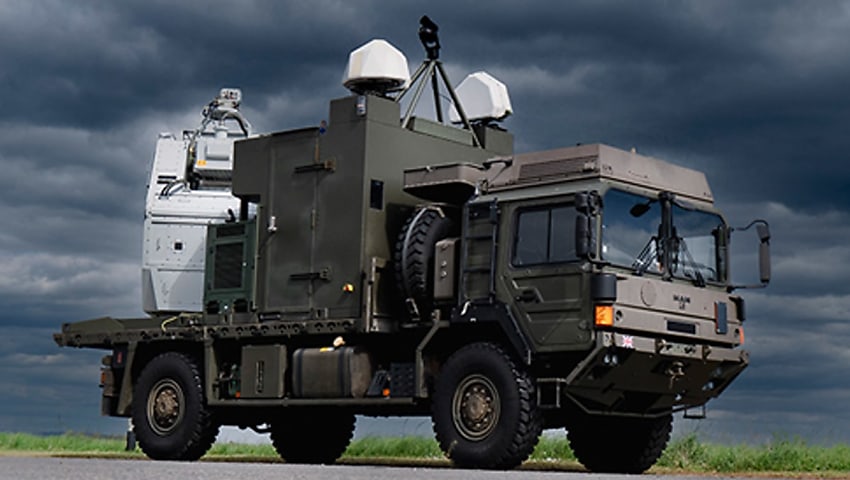
The United Kingdom’s military forces have trialled a new counter-drone weapon system demonstrator designed to track, target and defeat drone swarms.
The radio frequency directed energy weapon demonstrator, which reportedly uses a type of radio frequency directed energy to neutralise multiple targets simultaneously with near-instant effect, was deployed by British soldiers at a weapons range in West Wales and was the largest counter-drone swarm exercise the British Army has conducted to date.
It uses high frequency radio waves to disrupt or damage critical electronic components inside drones, causing them to crash or malfunction.
The successful trial comes as drone swarms are increasingly seen in use in front-line combat in Ukraine. UK Defence Intelligence estimates that last year, Ukraine had to defend against attacks from more than 18,000 drones.
“This significant experiment exemplifies the strength of British innovation – driven by our homegrown industry, technology firms and scientific talent,” said Maria Eagle MP, Minister for Defence Procurement and Industry.
“We continue to strengthen our defence sector, adding more cutting-edge capabilities to keep the UK secure at home and strong abroad, while making defence an engine for growth across our towns and cities.”
RF DEW systems can defeat airborne targets at ranges of up to 1 kilometre and are effective against threats, which cannot be jammed using electronic warfare. The UK government has invested more than £40 million in RF DEW research and development to date, supporting 135 highly skilled jobs in Northern Ireland and the south-east of England.
“Thales continues to be at the forefront of this pioneering technology, and we are proud to continue the research and development in this sector alongside our partners in government,” said Nigel MacVean, managing director of Thales Integrated Airspace - protection systems.

The RF DEW demonstrator has been developed by an industry consortium led by Thales UK. Successful experiments included the Army taking down two swarms of drones in a single engagement. The project saw more than 100 drones being tracked, engaged and defeated using the weapon across all trials.
Sergeant Mayers, a senior remotely piloted air systems operator from 106 Regiment Royal Artillery, had the honour of being the first British soldier to bring down drones using a radio frequency weapon.
“RF DEW is an exciting concept. We found the demonstrator quick to learn and easy to use. With improvements on range and power, which could come with further development, this would be a great asset to layered air defence,” Mayers said.
Thales, which led the development of the RF DEW demonstrator, employ around 100 highly skilled engineering and manufacturing staff in Northern Ireland on the project and there are a further 30–35 highly skilled supply chain jobs in Chelmsford, Essex, that directly contribute to the development of the weapon demonstrator.

Want to see more stories from trusted news sources?
Make Defence Connect a preferred news source on Google.
Click here to add Defence Connect as a preferred news source.