

 iscover
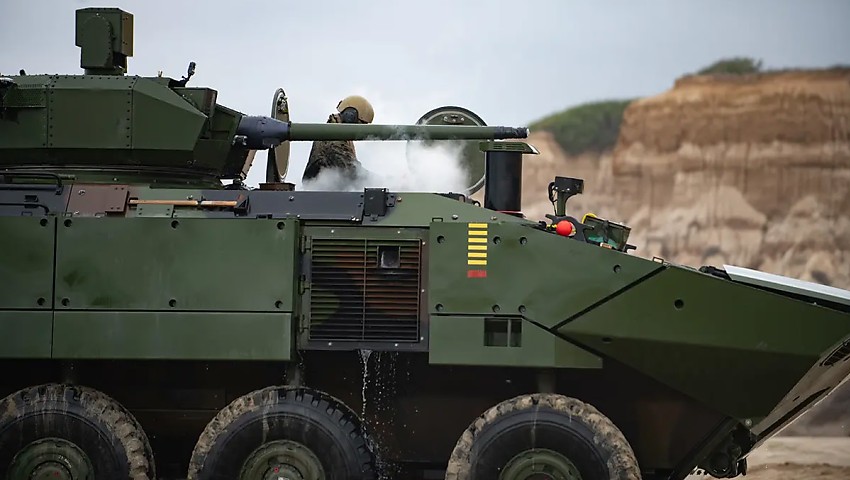
The US Marine Corps has awarded BAE Systems a US$188.5 million (AU$295 million) full-rate production contract for 30 Amphibious Combat Vehicle-30mm vehicles, which includes fielding support, spares and test equipment.
This is the first award under the full-rate production lot 5/6 contract for the Amphibious Combat Vehicle (ACV) program, marking a key milestone in the ongoing modernisation of the United States Marine Corps’ armoured fleet.
The latest award specifically covers the ACV-30 variant, which integrates a medium-calibre remote turret system (RTS). While the RTS is being procured under a separate contract, it will be integrated into the vehicle at the Naval Information Warfare Center Atlantic. The ACV-30 is designed to transport troops, mission-essential equipment and various payloads while offering enhanced lethality and protection to Marines in combat zones. The lightweight turret system is engineered to preserve the mobility of the platform despite the addition of advanced firepower.
“The ACV is tested and proven to be incredibly adaptable – it not only swims, but it’s also optimised for ship-to-shore, island-hopping and advanced land operations,” said Rebecca McGrane, vice president of Amphibious Programs at BAE Systems. “With enhanced direct-fire lethality via the 30mm fully stabilised weapon system, the ACV-30 helps to ensure Marines are ready for any mission, land or sea.”
The ACV program is a key component of the US Marine Corps’ efforts to replace its ageing Amphibious Assault Vehicle fleet with a modern, versatile platform capable of operating in increasingly contested environments, including littoral and expeditionary theatres.
In addition to the ACV-30, BAE Systems is currently under contract to produce two other ACV variants: the ACV-Personnel (ACV-P) and the ACV-Command (ACV-C). The ACV-P is capable of transporting 13 fully combat-equipped Marines along with a three-person crew. Meanwhile, the ACV-C is outfitted with multiple workstations to support command and control operations, allowing Marines to manage battlefield awareness and coordinate actions effectively.
The company is also developing three prototype ACV-Recovery (ACV-R) vehicles, which will support field maintenance, vehicle recovery and repairs for front-line assault amphibian units. These capabilities are seen as vital for sustaining operations in remote or contested environments.
Manufacturing and integration work for the ACV-30 is set to take place across BAE Systems’ facilities in York, Pennsylvania; Johnstown, Pennsylvania; and Charleston, South Carolina. Production is expected to continue through to the third quarter of 2026.
Want to see more stories from trusted news sources?
Make Defence Connect a preferred news source on Google.
Click here to add Defence Connect as a preferred news source.